
Kazakhstan Between Rock Art, Canyons and Steppe
Accommodation in Kazakhstan
Kazakhstan brings together the heritage of the Silk Road and the Baikonur Cosmodrome with landscapes ranging from deserts to alpine regions. Its cultural destinations also offer a variety of experiences, from ancient rock carvings and Timurid architecture to sacred sites in Mangystau. When planning your trip, it is therefore worth starting with the experiences that interest you most.
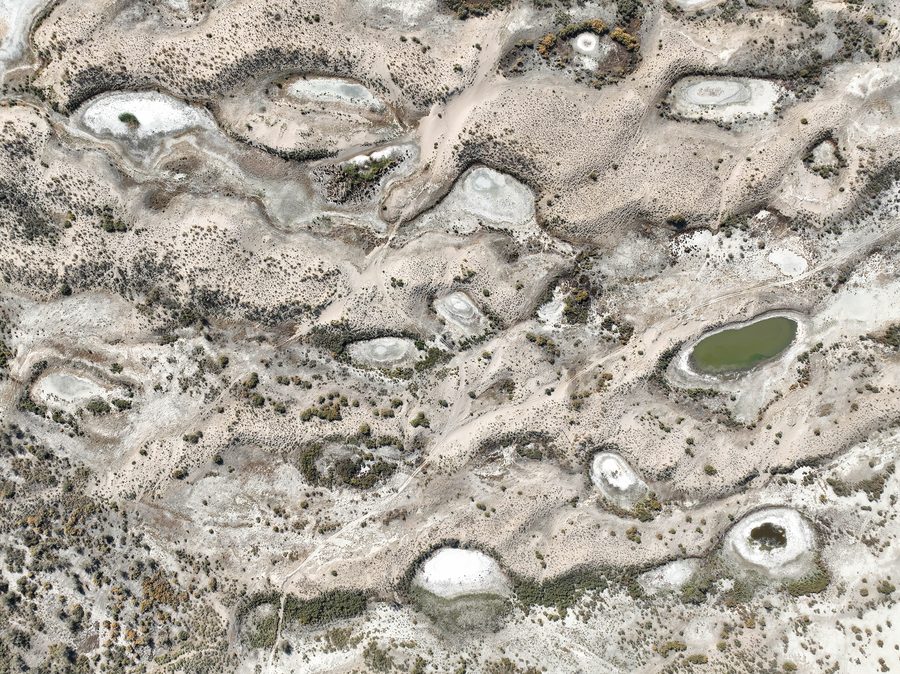 Salt flats in the Pribalkhash sanctuary near Balkhash, Kazakhstan.
Photo: Nikolai Bulykin, CC BY-SA 4.0
Rock Art, Architectural History and Sacred Sites
The Archaeological Landscape of Tanbaly comprises about 5,000 petroglyphs. They are spread across 48 complexes with associated settlements and burial grounds. The depictions bear witness to livestock keeping, social organisation and the rituals of pastoral communities. Tanbaly thus offers insight into different aspects of life at the time; the landscape consists not only of individual rock carvings, but also includes traces of settlements and burials.
Another cultural highlight is the Mausoleum of Khoja Ahmed Yasawi in Turkestan, formerly known as Yasi. It was built under Timur between 1389 and 1405 and is considered one of the largest and best-preserved examples of Timurid architecture. At 38.7 metres tall, the structure shapes our understanding of the architecture of this period. Those interested in history and architecture will find a clear contrast here with the prehistoric rock carvings of Tanbaly.
In Mangystau, the Rock Mosques and Associated Sacred Sites comprise five sites carved into the rock, with extensive adjacent burial grounds. These sites have been important pilgrimage destinations for centuries. Together, they form a distinct cultural focus for the region: the rock architecture and cemeteries are part of the same setting, while the long pilgrimage tradition highlights the religious significance of the sites.
Canyons, Lakes and Steppe Landscapes
Charyn Canyon is a natural monument made of sedimentary rock. The rocks are about 12 million years old, and the steep canyon walls reach heights of 150 to 300 metres. The Valley of Castles lies within the canyon: it is about 2 kilometres long and 20 to 80 metres wide.
The route “Four canyons of the Charyn River in the Almaty region” offers another way to explore the Charyn landscape. It passes through the Kurtogai Valley, the Temirlik River Canyon, Uzyn-Bulak Canyon and the Valley of Castles. Charyn National Park is about 200 kilometres east of Almaty, along the Kulja Highway, where there is a paved road. For choosing a holiday rental, this location is a useful point of reference if the national park is one of your planned trip highlights.
The wetlands of Saryarka also tell a story of movement across the landscape: they are important stopover and crossroads for the Central Asian bird migration route. Waterbirds travel from Africa, Europe and South Asia to their breeding grounds in western and eastern Siberia. Saryarka’s steppe areas provide a valuable refuge for more than half of the species in the region’s steppe flora. Threatened bird species and the endangered saiga also find refuge there. If you are interested in migratory birds and steppe ecology, you can make these natural features a distinct focus of your trip alongside the canyon landscapes.
Lower Kolsai Lake, Kolsai-1, lies at an altitude of about 1,818 metres in a coniferous forest gorge. Fishing is permitted at the lake, but swimming is prohibited. This restriction is important when planning a stay by the water: fishing and swimming are not equally available options here. Its elevation and wooded gorge also give the lake a different landscape character from the dry canyon and desert regions.
Altyn-Emel State National Park is part of the UNESCO Biosphere Reserve Network and includes the Aktau and Katutau mountain ranges, the Ili Valley and desert landscapes. The Aygaitas Singing Dune is about 150 metres high and produces a characteristic humming sound as the grains of sand move. Rare kulan, gazelles and caracals live in the national park; its rich flora also includes more than 1,800 plant species. Altyn-Emel thus combines striking geological landscapes with a diverse range of animal and plant life.
Spaceflight History and Regional Orientation
The Baikonur Cosmodrome is the world’s first and largest cosmodrome. In 1961, Yuri Gagarin launched from there on his first orbital spaceflight. The first artificial Earth satellites, interplanetary probes and crews of the International Space Station were also launched from Baikonur. The history of spaceflight thus adds another theme to Kazakhstan’s cultural and natural highlights. Which destinations you prioritise may therefore depend on whether you want to focus more on nature, historic sites or the history of spaceflight.
For regional orientation, you can find the corresponding pages here: Zhangeldi District, Aqmola, Qaraghandy, North Kazakhstan, Qysylorda, Pavlodar, West Kazakhstan, South Kazakhstan, Zhambyl, Atyrau, Mangghystau, East Kazakhstan, Almaty, Karaganda, Qostanai, Aqtöbe and Astana.
