
South Kazakhstan: History and the Tian Shan
Accommodation in South Kazakhstan
South Kazakhstan offers many different reasons to travel: historic buildings and medieval settlements, as well as hiking, trekking and mountaineering. If you are looking for a holiday apartment, you can first consider whether cultural sites, pilgrimage traditions or active days in the mountains should be your focus. This helps tailor your search to the experiences that matter most to you.
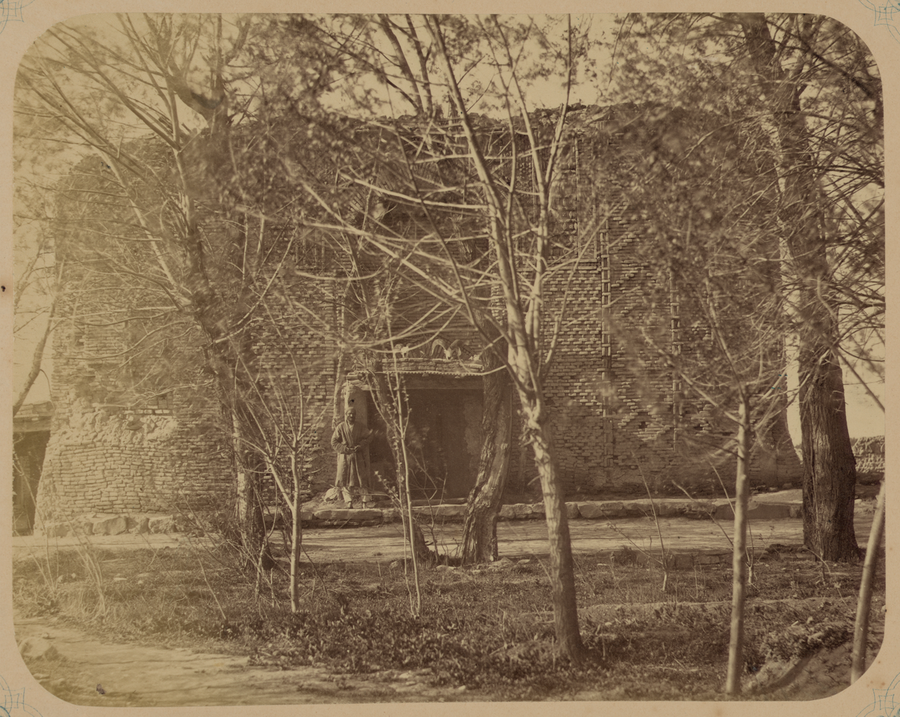 A historic mausoleum in Taraz, reflecting the region’s Silk Road heritage.
Photo: Bogaevskii, Nikolai V., 1843-1912 via Source, Public domain
Mausoleums, Settlements and the Silk Road
The Mausoleum of Khoja Ahmed Yasawi in Turkistan was built between 1389 and 1405. In Kazakhstan, it is one of the largest and best-preserved examples of Timurid architecture, standing 38.7 metres tall. Its construction period and architecture give the site a specific historical dimension, distinct from the traces of older settlements.
Sauran was a medieval settlement in the Turkistan region, with a history spanning the 6th to the 14th century. High circular walls and towers made it an especially well-fortified settlement. Those interested in defensive architecture will find a different subject here than at Otrar: before the Mongol invasion, Otrar was one of the largest cities in Central Asia and an important hub on the Great Silk Road.
The Turkistan region offers numerous ancient cities and ruins where you can explore the past of the Great Silk Road. Otrar and Sauran represent different perspectives: the importance of a city in the trade network on the one hand, and the fortification of a settlement on the other. This distinction helps you define the historical focus of a trip more precisely, rather than seeing the sites simply as similar ruins.
Pilgrimage Traditions and Architecture
The present-day Mausoleum of Arystan Bab was built between the 14th and 16th centuries. A legend associated with the mausoleum tells that a pilgrimage to study with Yasawi begins with a visit to Arystan Bab. The tradition links the two names through a religious story and gives the site a meaning beyond its architectural history alone.
Another architectural facet can be found in the village of Kaskasu: the Orthodox church there dates from the late 19th century. Its construction is described in concrete terms by its fired-brick walls and rubble-stone foundation. Together with the mausoleums and medieval settlements, it shows how varied the historical subjects to discover in South Kazakhstan can be.
Mountain Landscapes and Active Experiences
Aksu-Zhabagly is the oldest state nature reserve in Central Asia. It was established in 1926 on the slopes of the western Tian Shan. The protected area is also part of a transboundary complex proposed for UNESCO World Heritage listing as the “Western Tian Shan.” The proposed listing should be distinguished from the reserve’s history and existing protected status.
There are also regional options for active days: mountain trekking and hiking are among the popular activities for travellers in the Turkistan region. Mountaineering opportunities are available in the western Tian Shan. If outdoor exercise is important to your trip, take the specific route and its conditions into account when planning; the activities mentioned do not imply a particular itinerary.
Use Your Travel Priorities to Guide Your Accommodation Search
When choosing where to stay, it helps to weigh your interests. Would you like to focus on historic buildings, Silk Road history and pilgrimage traditions, or on hiking, trekking and mountaineering? If members of your travel group have different interests, considering this question early can help provide direction. Base your holiday apartment search on the places and experiences that will matter most to your trip.
Discover More Destinations
Discover more destinations: Amangeldy, Saryagash, Sayram District, Kenesaryk, Birgulyuk, Kentau, Kokterek, Vtoraya Pyatiletka.
For the overarching travel overview: Kazakhstan.

