
Vacation apartment in the Republic of Karelia
Accommodation in Republic Of Karelia
Republic of Karelia: lakes, forests, and the question of the right base
Republic of Karelia is a region that explains itself at a glance: lakes, forests, and taiga shape the impression, and the division into White Karelia, Olonets Karelia, and Ladoga Karelia helps with orientation. For families, that is useful because here the right base should fit the desired travel pace more than it would in a compact city region.
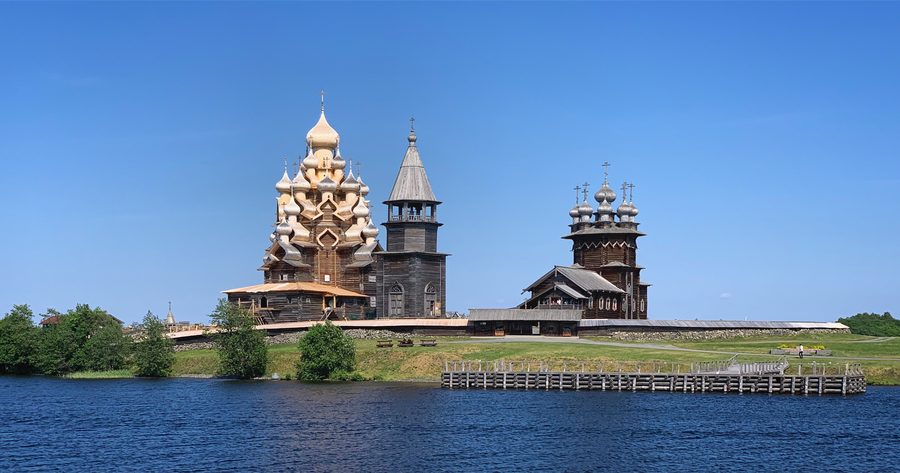 Kizhi Pogost on Kizhi Island, the classic wooden-church landmark of Lake Onega.
Photo: Sergei Gussev via Source, CC BY 2.0
Kizhi Pogost on Kizhi Island, the classic wooden-church landmark of Lake Onega.
Photo: Sergei Gussev via Source, CC BY 2.0
So choosing Karelia means deciding not only between places, but between different travel moods: more of a city anchor, more quiet close to nature, or a stay with a distinctive cultural highlight on Lake Onega.
Quick facts about the Republic of Karelia
- Karelia is a historic region in northeastern Europe; the Russian part is called the Republic of Karelia.
- The Russian part is traditionally divided into White Karelia, Olonets Karelia, and Ladoga Karelia.
- The region is known for its lakes, rivers, forests, and taiga.
- In summer, the White Nights shape the region; in winter, snowy landscapes emerge.
Lakes, forests, and taiga
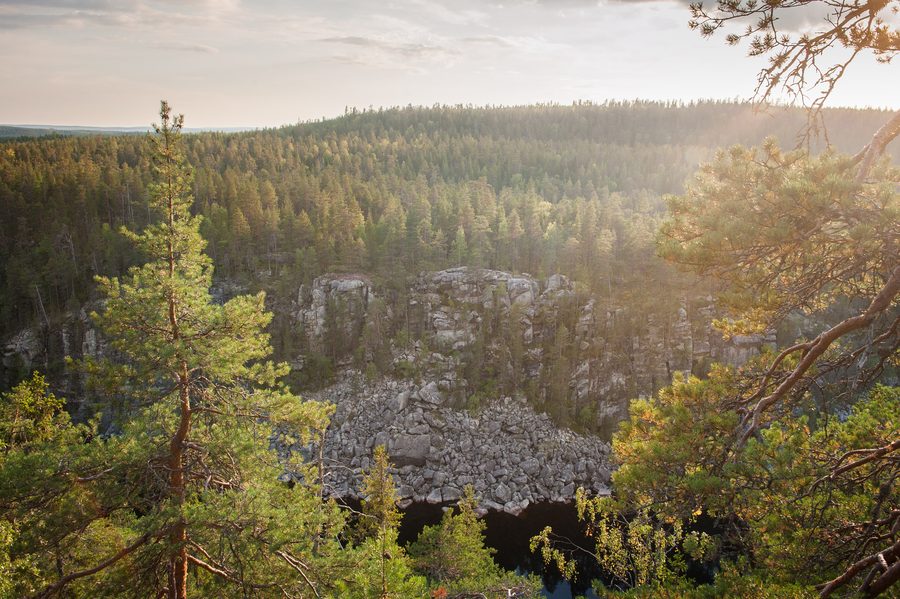
This landscape is why Karelia is especially appealing for families when nature days make up a large part of the holiday. The many lakes and forests give the stay room to breathe, and the season changes the picture noticeably: in summer, the White Nights shape the long evenings, while in winter snow and winter outdoor experiences come to the fore.
The fewer place changes you want, the more important it becomes to choose a base that matches the selected subregion and the desired daily rhythm.
Which base works best for families
For an urban starting point, Petrozavodsk is the strongest anchor. It fits if you want a clear starting point with a city connection. If, on the other hand, you want peace and nature to take center stage, a base in the right subregion is usually a better fit than a purely urban anchor.
For a national overview, go back to accommodations in Russia.
Kizhi and the Onega side
The island of Kizhi in Lake Onega is known as a UNESCO site for its wooden churches. It is one of the region's strongest cultural anchors and makes the Lake Onega area interesting if you want to combine nature with a distinctive excursion.
That is especially helpful for families: it makes the region tangible not only through its landscape, but also through a clear place to visit.
Named district and place forms
The following links are intentionally kept understated. Where the same district or the same place root appears in several forms, the matching entries are listed together.
District forms with the same administrative basis
- Belomorskiy rayon / Belomorsky District: two spellings of the same district.
- Kondopozhskiy rayon / Kondopozhsky District: two spellings of the same district.
- Loukhskiy rayon / Loukhsky District: two spellings of the same district.
- Medvezhyegorskiy rayon / Medvezhyegorsky District: two spellings of the same district.
- Pitkyarantskiy rayon / Pitkyarantsky District: two spellings of the same district.
- Prionezhskiy rayon / Prionezhsky District: two spellings of the same district.
Place and area forms with a shared place root
- Gorod Sortavala / gorod Sortavala / Sortavala: three name forms for the same city anchor.
- Pryazha / Pryazhinskiy rayon: two closely related catalog forms with a shared place root.
- Suojarwi / Suoyarvsky District: two closely related catalog forms with a shared place root.
More destinations in the Republic of Karelia
Frequently asked questions about the Republic of Karelia
Why does the division into White Karelia, Olonets Karelia, and Ladoga Karelia help when choosing a base?
Because the region is large and the subregions have different travel moods. That makes it easier to match the base to peace, movement, and the part of the region you want to focus on.
Why is Petrozavodsk such an obvious choice for a stay with children?
Petrozavodsk is the region's strongest city anchor. That is practical when you want to guide a family from one clear starting point rather than through many changing places.
What makes Kizhi special as an excursion point in Karelia?
Kizhi is known as a UNESCO site for its wooden churches and gives the Lake Onega side a strong cultural profile. That makes the excursion easy to picture, even if you are only looking for one standout highlight.
Which season shows Karelia most strongly: summer or winter?
Both sides are clearly different: in summer, the White Nights and nature days shape the picture, while in winter snow and other outdoor experiences take over. That contrast is exactly why choosing the travel season matters.


.jpeg)