
Soest: Medieval History, Museums and Nature
Accommodation in Soest
The Soest district combines historic towns and villages with the fields and meadows of the Soest Börde, river meadows and extensive woodland. In Soest itself, museums, churches and guided tours offer insights into the city’s history. During your stay, you can choose between cultural discoveries and activities in the surrounding countryside.
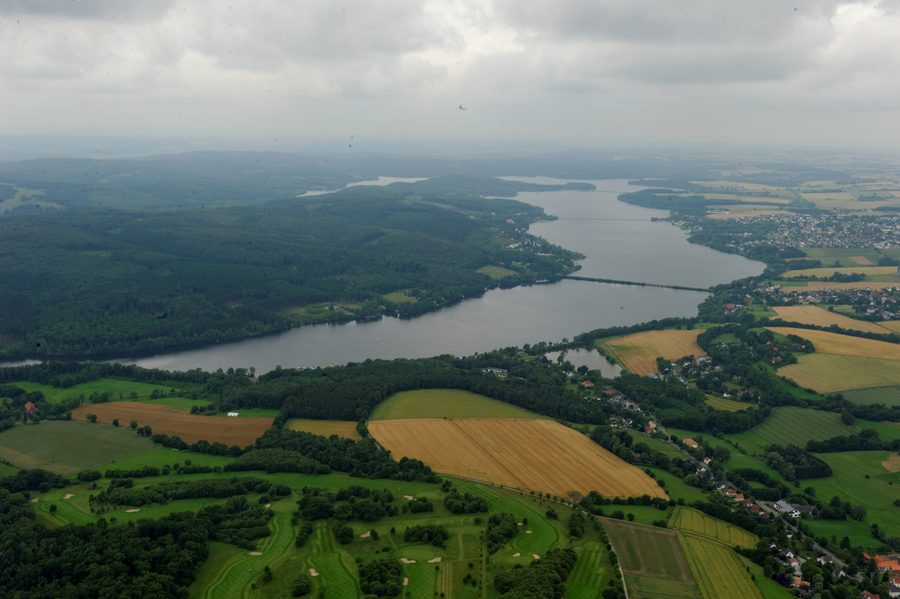 Der Möhnesee mit Wamel und der umliegenden Landschaft
Photo: Petra Klawikowski via Wikimedia Commons, CC BY-SA 3.0
Der Möhnesee mit Wamel und der umliegenden Landschaft
Photo: Petra Klawikowski via Wikimedia Commons, CC BY-SA 3.0
Discover the city’s history
The Osthofentor Museum provides an overview of Soest’s history spanning more than 1,000 years and the city’s topographical development. Its exhibition includes information panels, large-format texts, photos, graphics and a model of the city. The model complements the written and visual information with a three-dimensional representation of the city.
The LiebesLeben_Museum in Soest offers a different approach. It describes itself as a modern science centre where participation, interaction, experimentation and learning take centre stage. The museum is aimed at people aged 5 to 95. For families travelling with children of different ages, this broad age range is a helpful guide when choosing activities to enjoy together.
Art, churches and the Middle Ages
The Wilhelm Morgner Museum with RAUM SCHROTH presents temporary exhibitions as well as a permanent exhibition of Soest Expressionist Wilhelm Morgner. The Burghof Museum focuses on the history of the city and its churches. It also displays copper engravings by Heinrich Aldegrever, who lived from 1502 to around 1555, and the exhibition “Everyday Life in the Middle Ages”. The two museums offer different perspectives, ranging from art and religious and urban history to everyday life in times gone by.
One of the city’s most distinctive churches is St. Mary’s Church in the Meadow, also known as the “Meadow Church”. It is one of Germany’s finest High Gothic hall churches; the foundation stone for the present parish church was laid in 1313. Its 14th-century stained glass windows are considered the most significant in Westphalia. The church is also known for the “Westphalian Last Supper”, created around 1500. It therefore offers several specific points of interest for visitors interested in Gothic architecture, stained glass or historic art.
The Soest Feud is another part of the city’s medieval heritage: the festival takes place in Soest every two years and brings together more than 900 participants from 12 European nations. It is a special kind of event whose schedule you can take into account when planning your trip.
Countryside and outdoor activities
In the southern part of the Soest district, the Arnsberg Forest Nature Park is home to the largest contiguous woodland in North Rhine-Westphalia. Together with the river meadows, the open spaces of the Soest Börde, and fields and meadows, it creates a varied landscape. The district offers opportunities for cycling, hiking and water sports; other activities include climbing, skydiving, gliding and relaxing in gardens.
The Soest climbing park has specific admission requirements: it is open to people at least 1.40 m tall on operating days. Children at least 1.30 m tall and aged 6 or over may use courses 1 and 2 when accompanied by an adult. If you are travelling with children, this information can help you assess whether each family member can take part.
If you would prefer to discover Soest with a guide, you can choose from around 30 themed tours. These include historical walks, culinary tours such as the Soest Menu Safari, and evening events such as the Moonlight Promenade. Each format has its own focus: city history, food or an evening walk.
When choosing a holiday apartment, consider what you want your stay to focus on: Soest’s museums, churches and guided tours, or the countryside and activities in the district. Choose your location according to which aspect matters most for your trip.
Other places in the district
For more options on where to stay in the district, you can also find information about Welver, Erwitte, Bad Sassendorf, Möhnesee, Anröchte, Warstein, Soest, Lippstadt, Werl, Geseke, Vellinghausen, Wickede, Rüthen, Lippetal and Ense.
For the overview of the wider region: North Rhine-Westphalia.

