
Welver: Cycling Routes and Monastic History
Accommodation in Welver
Welver brings together active outdoor routes and a rich local history. Six circular hiking trails, several cycling routes and Kirchwelver’s past as a monastic village offer different ways to explore the area. If you’re looking for a holiday apartment in Welver, it’s worth first deciding what you’d like to focus on: getting active on marked trails, a bike ride to a particular destination or historical discoveries.
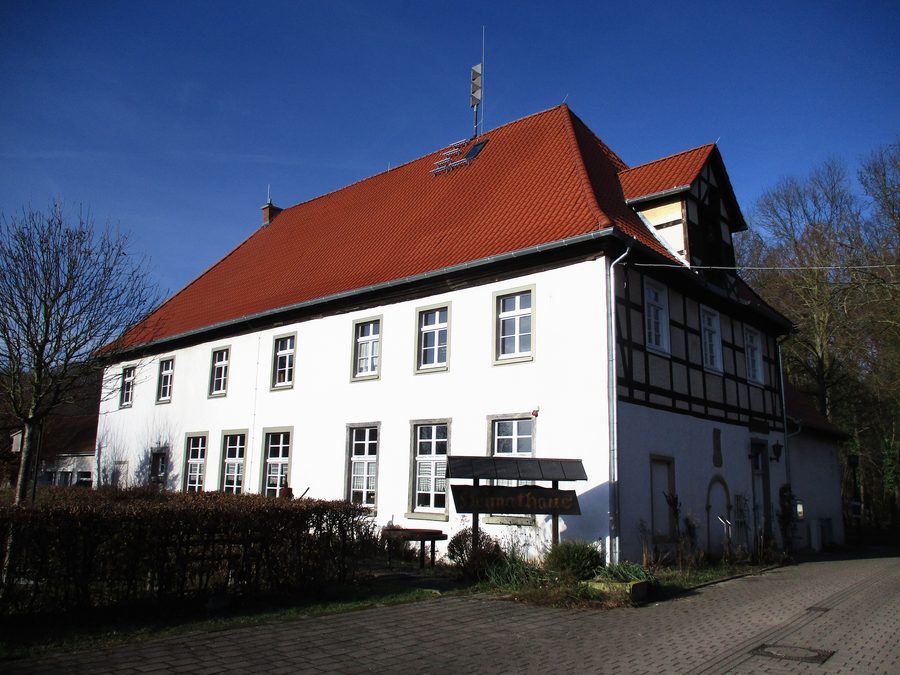 Im ehemaligen Back- und Brauhaus des Klosters Welver befindet sich heute das Heimatmuseum.
Photo: Dat doris via Wikimedia Commons, CC BY 4.0
Hiking and Cycling Routes by Length and Theme
Welver has six circular hiking trails ranging from 2.5 to around 14 kilometres, marked along the way. A large information board in the car park at Kirchwelver shows their routes. The range of distances makes it easier to plan how much of the day you’d like to spend walking and choose between a shorter loop and a longer route. Follow the trail markers on site and check current trail conditions.
The northern cycling route in Welver is 30 kilometres long, designated as a cultural route, and passes historic cultural landmarks in the municipality. A family-friendly short cycling route covers just under 10 kilometres through the Staatsforst, also known as Reiherwald, to Haus Nehlen in Berwicke. Its shorter distance sets it clearly apart from the cultural route; check local route conditions before setting off.
The Alleys Cycling Route between Unna and Welver ends just a few hundred metres from the geographical centre of Westphalia. The memorial stone on the edge of the village of Scheidingen, in the direction of Illingen, marks this centre and is located within the municipality of Welver.
Kirchwelver’s Monastic History and Architectural Traces
Kirchwelver is a former monastic village. The Romanesque church, probably built in the 11th or 12th century, was extended by Cistercian nuns in 1240 and given a tower; it was subsequently used as a monastery church. For more than 100 years, it was shared by the Reformed congregation and the Catholic nunnery. In 1700, the nuns consecrated a new Baroque monastery church. The village’s history thus encompasses several phases of construction and use.
A nearly completed bridge stands between Beckumer Straße in Kirchwelver and Kettlerholz in Dorfwelver. It is part of a planned road project that was never completed.
In the Wider Destination of Soest
The district of Soest combines river floodplains, the fields and meadows of the Soest Börde, extensive woodland, charming villages and historic towns. The southern part of the district contains the largest contiguous forest area in North Rhine-Westphalia, in Arnsberg Forest Nature Park. In Soest, the Osthofentor Museum offers an overview of the city’s more than 1,000-year history and topographical development, with information panels, large-format text, photos, graphics and a scale model of the city.
The LiebesLeben_Museum in Soest describes itself as a modern science centre. Its focus is on hands-on activities, interaction, experimentation and learning, and it welcomes people of all ages from 5 to 95.
Compare hotels and holiday rentals in Welver by price and availability for your travel dates.
Advertisement · We may receive a commission if you book.Discover More Destinations
Discover more destinations: Ense, Werl, Vellinghausen, Möhnesee, Geseke, Anröchte, Soest, Bad Sassendorf.
Back to the main travel guide: Soest.

