
Discover Warmia-Masuria
Accommodation in Warmia-Masuria
Warmia-Masuria invites you to explore its waterscapes, protected natural areas and history as different focal points for a trip. More than 3,000 lakes and other bodies of water, each covering more than one hectare, define the region. It also has waterways such as the Krutynia and Gothic castles in several towns. If you are looking for an apartment or holiday home, you can start by considering which of these aspects of the region you would like to shape your trip.
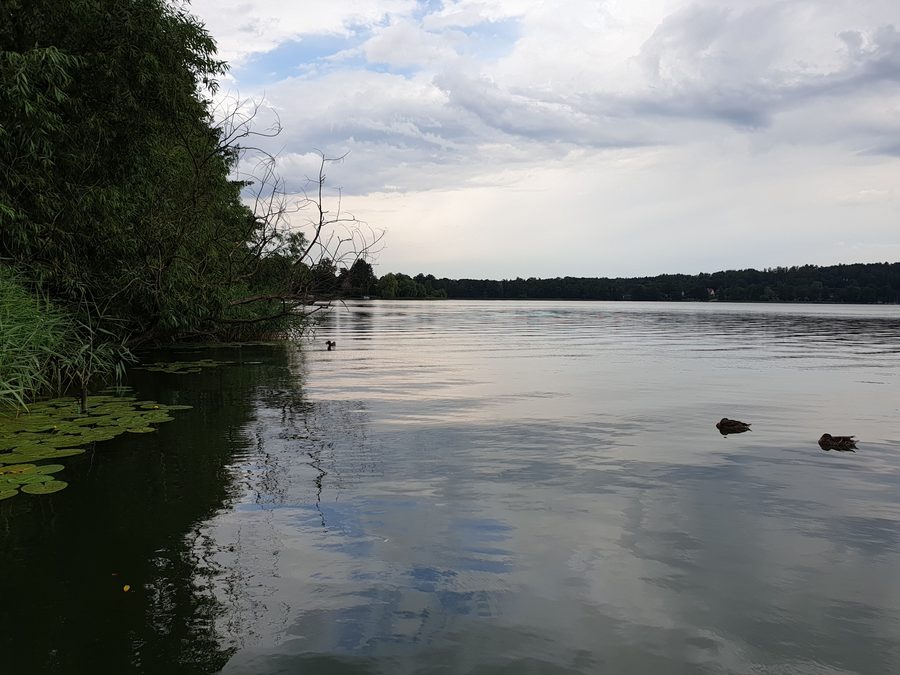 Der Czos-See bei Mrągowo zeigt die seenreiche Landschaft von Ermland-Masuren.
Photo: MichalPL via Wikimedia Commons, CC BY-SA 4.0
Der Czos-See bei Mrągowo zeigt die seenreiche Landschaft von Ermland-Masuren.
Photo: MichalPL via Wikimedia Commons, CC BY-SA 4.0
Lakes and protected landscapes
The Masurian Lake District includes Śniardwy and Mamry, the two largest lakes in Poland. The Masurian Landscape Park, in the southeast of the Warmia-Masuria Voivodeship, is a distinct natural area. Its landscapes include forests, open agricultural areas and bodies of water; the park extends across three counties and seven municipalities.
The landscape park encompasses 60 lakes, including Śniardwy, Poland’s largest lake, as well as 11 nature reserves. More than 90 percent of its area overlaps with the MAB Masurian Lakes Biosphere Reserve. It is the only biosphere reserve of this kind in the voivodeship. These details give the natural area a distinct profile: its character is shaped by forests and open landscapes as well as lakes. When planning your holiday, you can decide whether to focus mainly on the lake district or the protected landscapes.
Waterways and active exploration
The Krutynia is well suited to canoe trips. It flows from Jezioro Warpuńskie to Jezioro Bełdany and passes through Puszcza Piska Forest; it is considered one of Poland’s most picturesque waterways. This makes it a specific option for travellers looking to include a canoe trip in their time in Warmia-Masuria. PTTK branches in Warmia and Masuria also organise orienteering rallies, hiking and cycling rallies, canoe trips, boat excursions, regional sightseeing trips, and leisure and sports activities.
The Masurian section of the Green Velo route also offers a useful guide for planning your trip: it passes through Węgorzewo and continues via Banie Mazurskie through the hilly Mazury Garbate region to Gołdap. If you are interested in cycling, you can consider this route as a focus in its own right, alongside the region’s waterways and natural landscapes.
Gothic castles and distinctive cultural sites
In Olsztyn, a castle built in the Gothic style in the 14th century is now home to the Museum of Warmia and Masuria. It features a permanent Copernicus exhibition. Among its notable exhibits is an astronomical table made by Nicolaus Copernicus himself in 1517 for studying the equinoxes. This connects a visit to the history of astronomy, while the castle retains its character as a medieval building.
The Bishop’s Castle in Lidzbark Warmiński was built in the second half of the 14th century. It is one of Poland’s most significant and best-preserved examples of Gothic defensive architecture designed for representation. The castle hosts numerous permanent and temporary exhibitions, covering subjects ranging from archaeology and historical weapons to Gothic art and crafts, sculpture, and old and modern painting. Olsztyn and Lidzbark Warmiński thus offer different ways to explore history and art.
Other red-brick Gothic castles can be found in Reszel, Nidzica, Kętrzyn and Ostróda; the buildings mentioned include Teutonic, chapter and bishop’s castles. Another architectural destination is the Święta Lipka pilgrimage sanctuary: this Baroque religious complex comprises the Church of the Visitation of the Blessed Virgin Mary, a surrounding cloister with corner chapels, and a single-nave monastery building. The memorial sites at the Grunwald battlefield include a monument, an amphitheatre and a museum opened in 1963.
Regional cuisine and practical information
The Culinary Heritage of Warmia-Masuria-Powiśle network offers products and dishes made from natural ingredients according to traditional recipes through food producers and food-service businesses. Regional food is another way to explore the cultural side of a trip.
More than 40 tourist information centres across the voivodeship provide information on local and regional attractions, accommodation, dining, cultural offerings, hiking and cycling routes, and events. They also offer city maps, maps of the surrounding area and regional guidebooks in several language versions. For further regional orientation, you can explore the subregions individually: Piski, Olsztyn, Kętrzyński, Nidzicki, Lidzbarski, Ostródzki, Mrągowski, Giżycko, Olecki, Bartoszyce, Elbląg, Braniewo, Ełk, Iławski, Szczycieński, Gołdap, Węgorzewski, Działdowo, Nowomiejski, Nowe Miasto Lubawskie and Olsztyński. This lets you focus your search for a suitable holiday rental on the parts of the region that best match your interests.
For the broader travel overview: Poland.

