
Rhön-Grabfeld: Discover Nature and Culture
Accommodation in Rhön-Grabfeld
Rhön-Grabfeld combines protected landscapes with impressive traces of regional history. In the UNESCO Rhön Biosphere Reserve, discoveries range from moorland and basalt formations to fortified churches, museums and a monastery with its own brewery. When planning your holiday, you have a genuine choice: should the landscape take centre stage, are you interested in culture and history, or would you like to spread both across different days out?
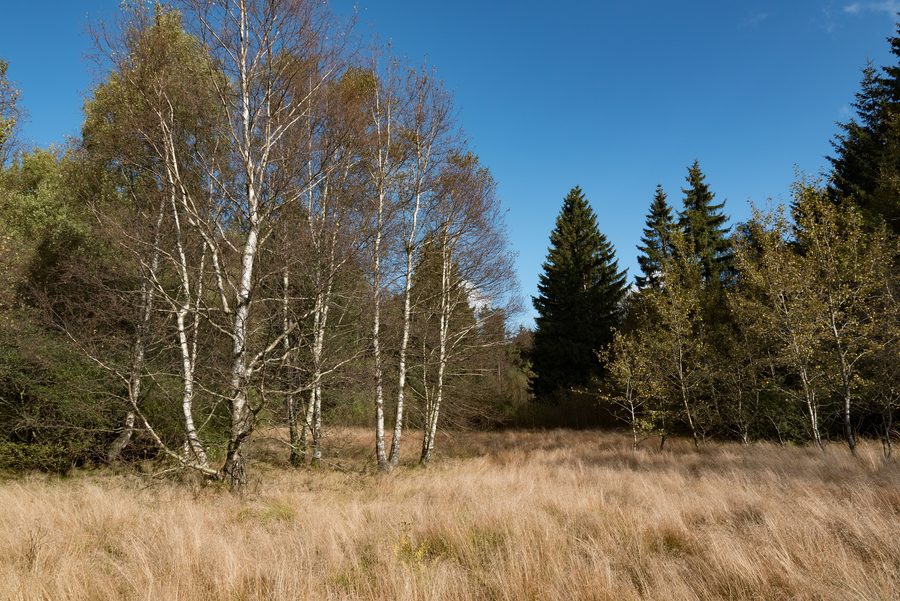 Das Schwarze Moor gehört zu den besonderen Natur- und Moorlandschaften der Rhön.
Photo: Tilman2007 via Wikimedia Commons, CC BY-SA 4.0
Das Schwarze Moor gehört zu den besonderen Natur- und Moorlandschaften der Rhön.
Photo: Tilman2007 via Wikimedia Commons, CC BY-SA 4.0
Moorland, basalt and hiking trails
The Lange Rhön is Bavaria’s largest nature reserve outside the Alps. The particularly protected natural area includes the Black Moor, which lies in a core zone of the UNESCO Biosphere Reserve. A wooden boardwalk leads through parts of the moor, with information panels explaining the route. An observation tower also offers views of the Black Moor. If you are interested in the landscape and its special features, you can plan these stops as nature experiences in their own right during your stay.
At Gangolfsberg, nature conservation and geological history come together: the nature forest reserve there is part of the biosphere reserve’s core zone. You can also explore the basalt column wall along the nature trail. It formed between 30 and 10 million years ago during volcanic activity in the Rhön. The trail is about 2.5 km long; sturdy footwear is required. Guided tours for groups are available on request. These specific details can help you fit the excursion into your day’s plans. For more hiking opportunities in the district, the premium hiking trail “DER HOCHRHÖNER” is another option to consider.
At 928 m, Kreuzberg is the highest mountain in Rhön-Grabfeld district. In addition to its elevation, the monastery with its pilgrimage church defines the area: a Franciscan monastery with its own brewery has been based there since 1644. Kreuzberg Monastery is considered a spiritual centre in Lower Franconia. When choosing your excursions, you can decide whether you would like to explore the natural surroundings, the monastery’s religious character, or both.
Fortified churches and living history
Ostheim vor der Rhön is home to Germany’s largest and particularly well-preserved fortified church. It was declared a monument of national importance in 2003. The fortified churches museum in Ostheim presents a dozen more fortified churches from the region, including those in Nordheim, Oberstreu and Kaltensundheim. If you are interested in architecture and regional history, you will find not only this striking complex but also an overview of other examples.
At the Franconian Open-Air Museum in Fladungen, rural everyday life in Lower Franconia and the Rhön is presented through faithfully reconstructed houses and farmsteads. The museum grounds cover around 12 hectares and include around 30 historic buildings, including farmhouses, workshops and a village school. The exhibition explores 350 years of rural life. Hands-on activities related to crafts and traditions complement the theme, including demonstrations, practical courses and events. This offers different ways to explore an interest in culture, from viewing historic buildings to taking part in practical activities.
The Hainberg Barracks Documentation Centre offers another perspective on regional history: it documents a Cold War border garrison and is located in Doku-Z Mellrichstadt. The Wechterswinkel Monastery District Cultural Centre is dedicated to art, music, literature and lifestyle. The gallery on the ground floor displays contemporary art, with a focus on sculpture. In the Old Hospital in Mellrichstadt, the district gallery presents the district’s collection of significant paintings and sculptures from the Baroque period to the present; all the works have a regional connection.
Regional impressions and places to explore
A visit to the Old Hospital also includes a museum café serving homemade cakes, which are also available in the museum garden during the warmer months. If you would like to round off a day after visiting a museum with a meal or refreshments, this is another detail to consider. Wechterswinkel bus stop is just a short walk from Wechterswinkel Monastery. The Rhön-Zügle museum railway travels through the Streutal valley using steam and diesel locomotives, adding a train ride to the range of possible excursion themes.
To explore other places in Rhön-Grabfeld, you can find Niederlauer, Saal an der Saale, Bad Königshofen Im Grabfeld, Hausen, Stockheim, Wollbach, Heustreu, Bastheim, Unsleben, Höchheim, Willmars, Nordheim Vor Der Rhön, Sulzdorf, Rödelmaier, Ostheim Vor Der Rhön, Sandberg, Sulzfeld Im Grabfeld, Bischofsheim An Der Rhön, Mellrichstadt, Bad Neustadt An Der Saale, Oberelsbach and Fladungen.
When choosing your holiday apartment, you can consider which of these themes matter most to you on holiday: protected nature and hiking trails, cultural visits, or insights into history and regional art. Rhön-Grabfeld offers a variety of reasons to explore, without requiring you to limit yourself to just one kind of excursion.
For the overall travel overview: Bavaria.

