
Obergünzburg: Hiking, Churches and Collections
Accommodation in Obergünzburg
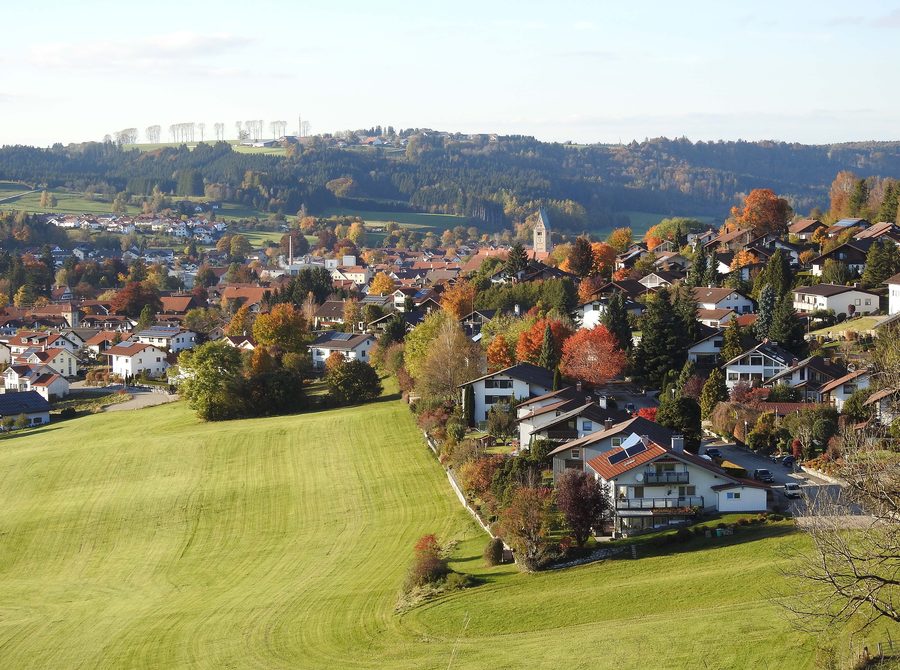
Obergünzburg combines hiking trails along the Günz with historic churches and collections. When planning your trip, you have an appealing choice: would you like to spend most of your time outdoors on the trails, or are you especially interested in church architecture and local history? These different themes give your stay distinct focuses—without requiring you to limit yourself to just one kind of discovery.
Local History Between Market Rights and Church Architecture
In 1407, Obergünzburg was granted market rights under Emperor Rupprecht of Heidelberg. Another historical milestone is St. Martin’s parish church, which was consecrated around 1480. It was built as a fortified church to protect the townspeople in times of war. Numerous stucco and fresco artworks adorn the church’s interior. Today’s St. Nicholas Church was built between 1450 and 1500. Together, these architectural and historical details tell of different chapters in the town’s development.
The former rectory, dating from 1753, is also part of the town’s history: it houses collections of folk culture and local history. The South Seas Collection offers a different perspective. It comprises around 1,450 everyday and cultural objects, mainly from the Admiralty Islands, New Ireland and the northern Solomon Islands. Those interested in collections will find here, alongside local history, a glimpse of objects from the island regions named above.
Hiking Trails Along the Günz and Through the Teufelsküche
Obergünzburg is a starting point for hiking trips along trails beside the Günz or through the rocky maze of the Teufelsküche to Ronsberg. This offers a choice of different landscapes: a route along the river or one through the striking rock formation. The Günztal Nature Experience Trail is an educational trail for children, with information about different tree species, and is also suitable for Nordic walking. For families who enjoy learning about nature along the way, it combines exercise with a closer look at tree species.
Another hiking trail runs through the Günz Valley, passing the Reverdys Spring. This route adds another walk through the Günz Valley to the selection. As trail conditions can change, check them before setting out. That way, you can decide whether to focus on the river landscape, the Teufelsküche or the nature trail.
Weekly Market and Excursions in the Ostallgäu
The weekly market in Obergünzburg takes place on Fridays from 1 to 5 p.m. every other week, in odd-numbered weeks. If you would like to plan your stay around it, check the times again before you arrive.
The wider travel destination of Ostallgäu opens up a broader geographical perspective. In the southwest, the mountains in the Ostallgäu district belong to the Vilser Gebirge; in the southeast, to the Ammergebirge. At 2,082 metres, the Hochplatte is the highest mountain in the Ostallgäu. The cycling network is regional in scope, too: the Ostallgäu Cycle Travel Region includes routes that extend across the whole of Ostallgäu. Each route is 25 to 76 kilometres long, consistently signposted and has its own theme. These cycling options offer a different approach to planning than the hiking trails starting in Obergünzburg. If you want to focus your trip on the town, the Günz, Teufelsküche, nature trail and churches take centre stage; for a broader itinerary, the regional cycling routes may be of interest.
When looking for a holiday apartment, it helps to decide on your focus first: should Obergünzburg, with its hiking trails and local history, shape your stay, or are you planning at the level of the Ostallgäu?
Discover More Destinations
Discover more destinations: Marktoberdorf, Mauerstetten, Ronsberg, Pforzen, Nesselwang, Schwangau, Oberostendorf, Unterthingau.
Back to the main travel guide: Ostallgäu.

