
Holiday apartment in Langeland
Accommodation in Langeland
Langeland is a long Danish island for families who want to combine days by the coast, nature watching, historical discoveries, and quiet island moments. Beaches, bays, distinctive hills, and wide coastal views shape the landscape. Add to that small harbor towns, traces from the Ice Age, and free-roaming horses, which make nature experiences especially vivid.
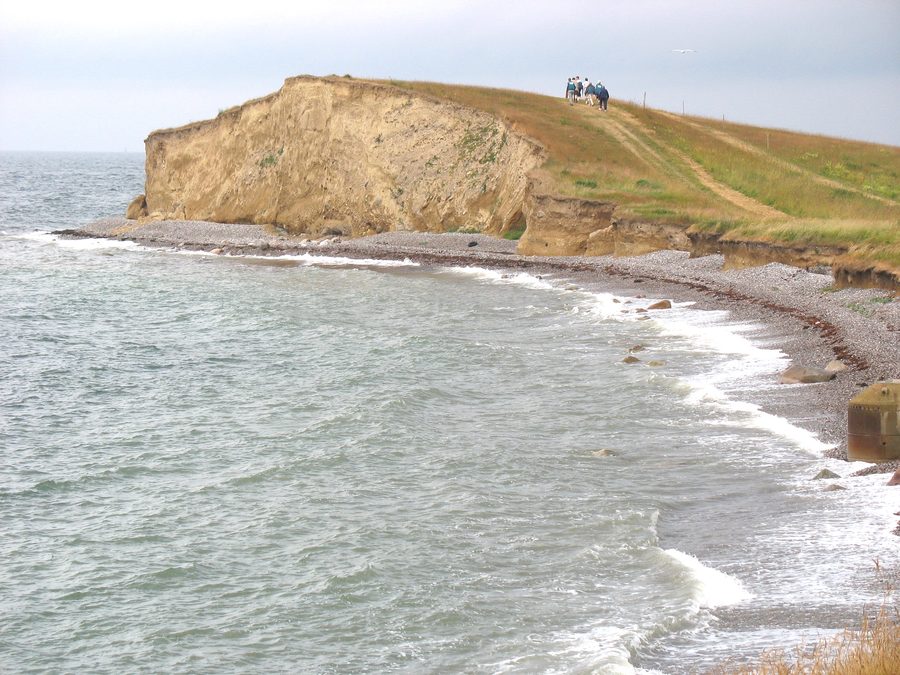 Gulstav Klint an der südlichen Spitze Langelands
Photo: Hubertus45 via Wikimedia Commons, CC BY-SA 3.0
Gulstav Klint an der südlichen Spitze Langelands
Photo: Hubertus45 via Wikimedia Commons, CC BY-SA 3.0
Quick facts about Langeland
- Langeland is part of the UNESCO Global Geopark South Funen Archipelago.
- The island is connected by bridges to Siø and therefore to Funen.
- Examples of nature include Hat Hills, Ristinge Klint, Lindelse Nor, and the nature area of Skovsgaard.
- Free-roaming horses live outdoors year-round in several nature areas.
- Low light pollution can make stargazing possible when weather and visibility conditions are suitable.
Exploring landscape and nature together
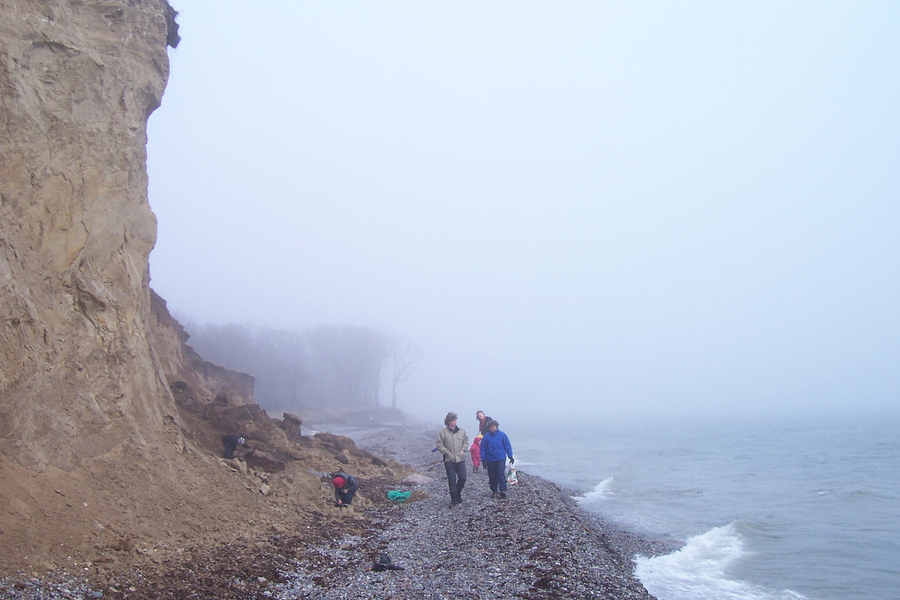
The Ice Age landscape can be seen in several places on Langeland. Hat Hills, cliffs, bays, and expansive views give walks and excursions different accents. Ristinge Klint, Lindelse Nor, and the nature area of Skovsgaard are selected examples of the island’s landscape diversity. Coastal erosion also shows that the landscape is not static, but continues to be shaped by natural processes.
For families with children of different ages, this offers a practical advantage: one day can be spent on the coast and exploring the landscape, while another can focus more strongly on nature watching. Free-roaming horses shape the island’s character in several nature areas. However, sightings cannot be guaranteed; it makes sense to treat nature experiences as a possibility rather than a fixed program.
Culture, history, and quiet evening moments
Langeland adds visible historical traces to its nature side. Dolmens and passage graves make the island’s history tangible at specific places. Art and crafts are also part of the island’s cultural side and offer another direction for planning the day. This makes it possible to put together a holiday with coast, nature watching, historical monuments, and art and craft experiences without having to make any single activity the centerpiece.
Evenings can also become part of the island experience: low light pollution makes Langeland interesting for stargazing. Whether the view of the night sky works out depends on weather and visibility. If you appreciate the atmosphere of towns and harbors, you can include Rudkøbing as a point of reference. Rudkøbing is Langeland’s largest town; you should check any additional specific advantages of accommodation there in the individual listing.
Plan your travel dates flexibly
When planning a trip to Langeland, it is worth not limiting yourself to just one type of vacation day. The coast and landscape, nature watching, historical monuments, and art and crafts open up different possibilities; with changing weather or visibility conditions, the mix of experiences remains adaptable. Stargazing is a special evening option, but it should only be planned when conditions are suitable.
Which holiday base suits your plans?
First choose the mix of experiences, and only then the apartment or holiday home. If coast, landscape, and peaceful nature experiences are meant to define the holiday, the desired proximity to the coast or to nature is a sensible first search criterion. If you are looking more strongly for a connection to a larger island town, Rudkøbing offers a logical orientation point. Smaller places and rural locations remain further options, without any blanket assumption about their character.
Reaching Langeland is possible via the bridge connection to Siø and Funen. Current travel times, traffic conditions, and specific routes between accommodation and excursion destinations are therefore not fixed. When choosing, check which experiences are especially important for your family and how much mobility you want to allow for them. That way, the base stays suited to your holiday pace, even if coast, nature, and culture are combined.
Places on Langeland
For your individual choice of place, here are the island’s localities: Bagenkop, Botofte, Bøstrup, Dageløkke, Emmerbølle, Ennebølle, Fodslette, Fuglsbølle, Helsned, Hennetved, Hesselbjerg, Hov, Humble, Illebølle, Klavsebølle, Kragholm, Lejbølle, Lindelse, Lohals, Løkkeby, Magleby, Nordenbro, Nordstrand, Ore, Østerhuse, Ristinge, Rudkøbing, Sædballe, Snoede, Søndenbro, Sønder Longelse, Spodsbjerg, Stoense, Tranekær and Tryggelev.
Frequently asked questions about Langeland
What makes Langeland especially appealing for families?
The combination of coast, Ice Age-shaped nature, free-roaming horses, historical monuments, and indoor and outdoor experiences makes for varied holiday days.
Which experiences can be combined on Langeland?
Coastal walks and nature destinations can be combined with geology, historical monuments, art, crafts, and, when conditions are suitable, stargazing.
Is Rudkøbing a useful reference point when looking for accommodation?
Rudkøbing is Langeland’s largest town and therefore a logical reference point for travelers who prefer a larger island town. You should check any further advantages for the specific listing.
If you would like to compare Langeland with other holiday regions on Funen, you can find the main entry point at Funen.


