
Rębiszów: Nature, Trails and History
Accommodation in Rębiszów
Rębiszów lies in one of the most picturesque parts of the Isergebirgsvorland. The village brings together natural scenery and traces of its cultural and industrial history: forests and bodies of water are part of the landscape, along with St Anthony’s Church, the Millennium Cross and the “Moloch” basalt loading facility. Its variety appeals to travellers who do not want to limit their interests to nature or history. You can shape your trip around the landscape, outdoor activities or history, and get to know different sides of the village.
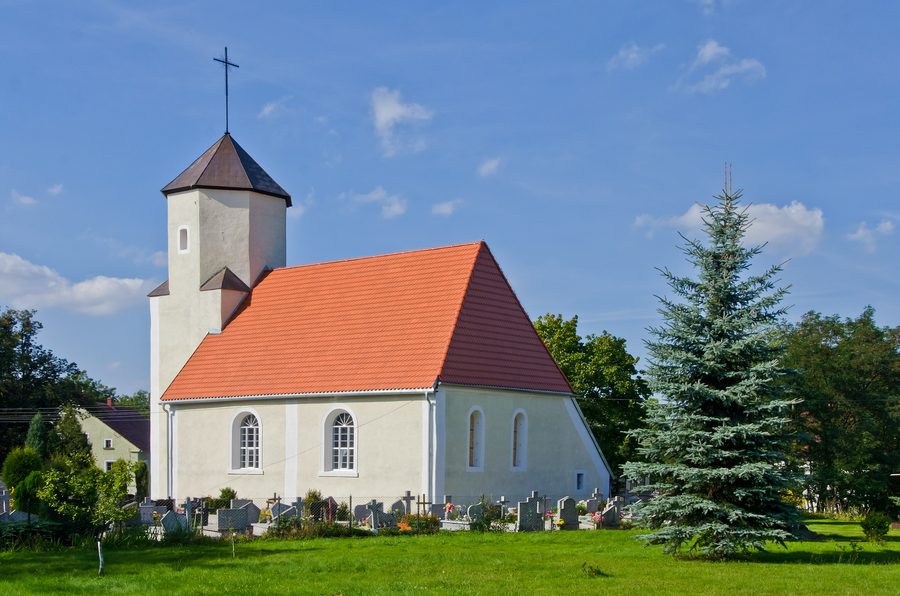 The Church of the Visitation of the Blessed Virgin Mary in Rębiszów.
Photo: Enamo via Wikimedia Commons, CC BY-SA 3.0 pl
The Church of the Visitation of the Blessed Virgin Mary in Rębiszów.
Photo: Enamo via Wikimedia Commons, CC BY-SA 3.0 pl
Forests, Ponds and Places to Visit
More than 40 percent of Rębiszów’s area is forested. The forests are suitable for walks, mushroom picking, birdwatching and cycling. These activities offer different perspectives on the landscape: you can explore on foot, focus on birds or plan a bike ride. The Stawy Rębiszowskie ponds are an important part of the local ecosystem. The flooded former quarries are also destinations for local outings. The forests offer active ways to enjoy nature, while the ponds also reflect the ecological side of the landscape.
The Cesarska Lipa and the Hiking Trail
One particularly striking natural landmark is the Cesarska Lipa. The broad-crowned lime tree is several hundred years old, is considered a symbol of Rębiszów and is also a destination for walks. Its seasonal character changes noticeably: in summer, it offers a naturally shaded place to rest; in autumn, the colour of its leaves catches the eye. The natural shade of summer contrasts with the striking colours of autumn. The blue Rębiszów–Pobiedna hiking trail is 17 kilometres long.
Architecture and Regional History
The built heritage and commemorative sites offer a range of different perspectives. St Anthony’s Church in Rębiszów dates from the 16th century and features late Gothic and Renaissance elements. It provides a tangible point of interest for travellers interested in historic architectural styles. Alongside the Cesarska Lipa, the Millennium Cross commemorates the celebrations marking the year 2000. The “Moloch” basalt loading facility represents a different kind of historic site: its architecture is austere and industrial in character, while the facility is also considered an important testament to the region’s mining and transport history. The church, the cross and Moloch thus represent different aspects of history: architectural styles, a jubilee, and mining and transport.
Choose a Focus for Your Stay
When looking for a holiday apartment in Rębiszów, you can choose one to suit your preferred way of travelling. If you plan to go for walks, pick mushrooms, watch birds or cycle, the forests offer a clear focus on nature. Those more interested in architecture and the past will find different points of interest in St Anthony’s Church, the Millennium Cross and Moloch. If you would like to combine both, you can use nature and history as themes to guide your stay.
Discover more destinations: Mlądz, Tarczyn, Golejów, Mirsk, Lubomierz, Wleń, Pasiecznik, Löwenberg In Schlesien
Go to the broader travel overview: Löwenberg In Schlesien.

