
Kwieciszewo: Churches and Town History
Accommodation in Kwieciszewo
Kwieciszewo combines a triangular market square and small-town buildings with churches from different historical periods. It is also associated with a meeting held in 1144. Those interested in local history will find several different points of interest here to help plan their trip.
Market Square and the Town’s Past
The triangular market square and small-town buildings bear witness to Kwieciszewo’s urban past. The square gives this history a tangible presence in the townscape. An important turning point came in 1873, when Kwieciszewo lost its town rights. The market square, the buildings and the date each tell a different part of local history: the town’s layout reflects its former urban character, while 1873 marks a clearly dated turning point.
Churches and Historical Layers
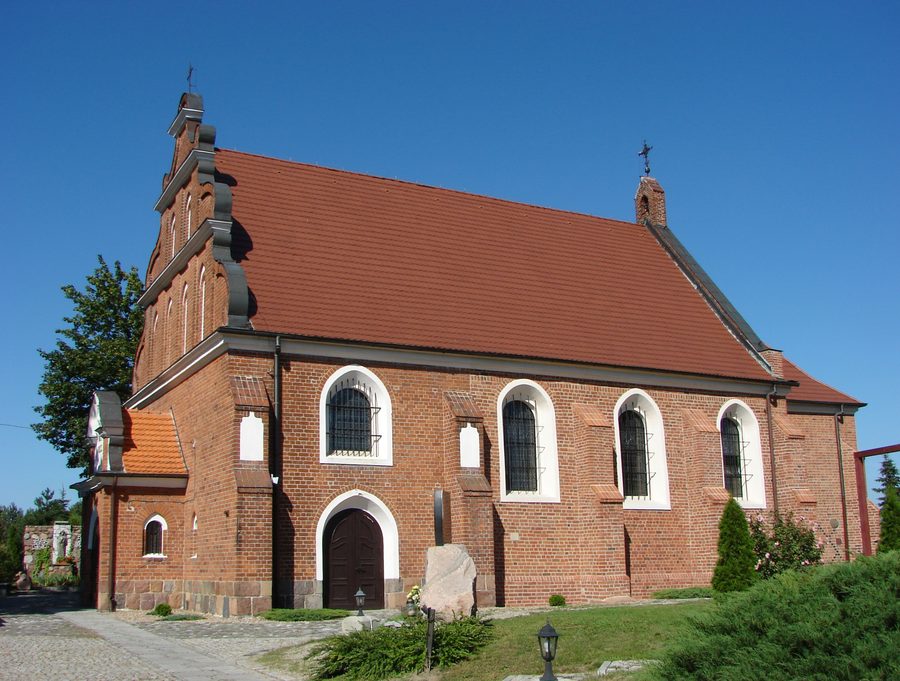
The late Gothic Church of St. Mary Magdalene was built in 1522 and is the oldest historic monument in Kwieciszewo. Its construction date provides a specific point in time alongside its art-historical classification. Another church in Kwieciszewo is the former Protestant church, built in the Neoclassical style between 1834 and 1838. The two construction periods mark different points in time: 1522 contrasts with the period from 1834 to 1838.
Kwieciszewo’s parish church has a distinct historical connection: it stands on the site of an early medieval fortified settlement. This is not about when the church was built, but about the historical significance of its location. The building’s history and its connection to an earlier settlement can therefore be seen as two different ways of exploring local history.
A specific event is also associated with Kwieciszewo. In 1144, a meeting of the sons of Bolesław III Wrymouth took place here. This date adds another historical layer to the churches’ construction periods and makes Kwieciszewo the setting for a precisely dated historical meeting.
Cultural Themes in the Wider Destination of Mogilno
The wider destination of Mogilno offers additional, distinct cultural and historical themes. The Fara - kościół św. Jakuba Apostoła in Mogilno is a Gothic church dating from 1511. Its main altar features a painting of Saint James the Greater from the 18th century. Also in Mogilno, the Klasztor pobenedyktyński and its church were built by Benedictines in the 11th century. The complex stands on a small hill on the northeastern shore of Jezioro Mogileńskie. The church retains its original form as a Romanesque basilica, with Gothic, Renaissance and Baroque accents. The western crypt of the Klasztor pobenedyktyński is described as one of three crypts of its kind in Europe.
The Muzeum Ziemi Mogileńskiej in Mogilno also explores various aspects of regional history. Its permanent exhibition, “Dzieje ziemi mogileńskiej,” includes guild documents and historical banners from 1919, 1923, 1927, 1929 and 1946. The exhibition “Pradzieje ziemi mogileńskiej” features tools as well as everyday and ritual objects. Its timeline runs from the Neolithic through the Bronze and Iron Ages to the Middle Ages and modern era. Another exhibition explores the region’s folk culture and art, crafts and everyday life.
The distinction is useful when choosing the focus of your trip: Kwieciszewo centres on its market square, local history and the different connections to its churches, while the wider destination of Mogilno adds its own themes relating to churches, the monastery and the museum.
Discover More Destinations
Discover more destinations: Wójcin, Chabsko, Mielenko, Strzelno, Izdby, Mogilno
Return to the wider travel overview: Mogilno.

