
Discover Alpen: Church and Bönninghardt
Accommodation in Alpen
Alpen reveals two very different aspects of its history and landscape: the town’s Reformed church history and the settlement and woodland heritage of the Bönninghardt. The Protestant church dates back to the early 17th century; a sod hut, old sweet chestnut trees and the woodlands offer further perspectives on the Bönninghardt. Depending on whether you are more interested in architecture and historical ways of life or in woods and walks, you can focus your travel plans on different things.
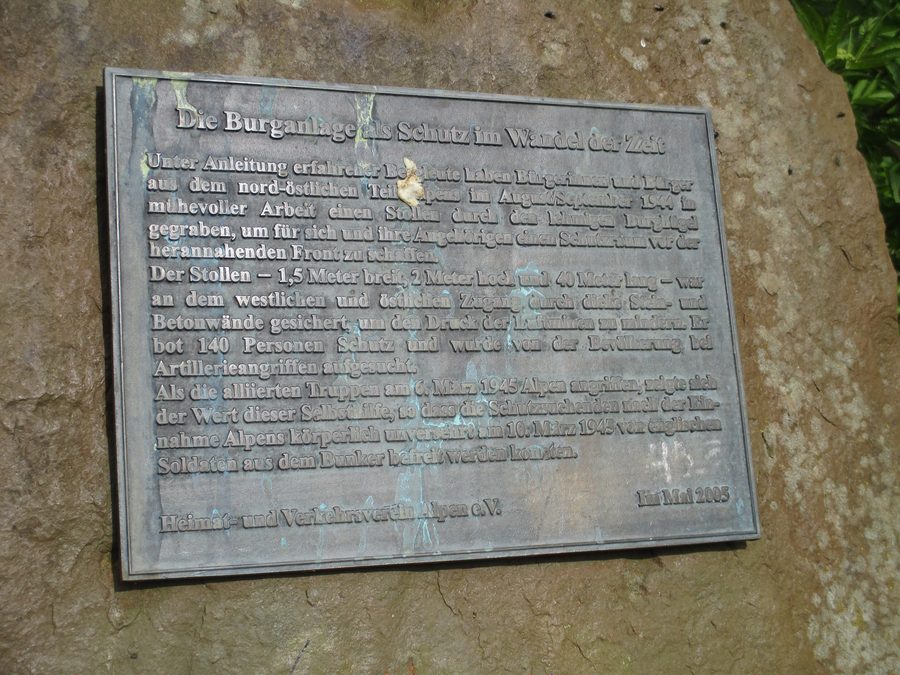 Die Motte der Niederungsburg Alpen mit einer Gedenktafel zum während des Zweiten Weltkriegs angelegten Schutzstollen.
Photo: Dat doris via Wikimedia Commons, CC BY-SA 4.0
Die Motte der Niederungsburg Alpen mit einer Gedenktafel zum während des Zweiten Weltkriegs angelegten Schutzstollen.
Photo: Dat doris via Wikimedia Commons, CC BY-SA 4.0
Church history in Alpen
The Protestant church in Alpen was built in 1602–1603. It is considered the oldest early Baroque church building on the Lower Rhine and the oldest Reformed parish church in Germany. Its construction period, early Baroque style and Reformed tradition give the town a distinctive cultural and historical significance. A bronze monument to Electress Amalia of the Palatinate stands beside the church.
Bönninghardt: settlement history and woodland
The sod hut on the Bönninghardt offers another historical perspective. Its walls are made of wooden logs and layers of grass sod. Old farming tools and the interior furnishings illustrate what life there used to be like. The first settlers arrived on the Bönninghardt around 1770; they and their descendants lived there in very poor conditions until the beginning of the 20th century. The building methods and settlement history thus stand side by side as tangible topics.
There are also old sweet chestnut trees on the Bönninghardt, known as house trees; their abundance there is considered unique. The woodlands are suitable for walks and family outings. There is also a forest playground on the Bönninghardt. For your travel plans, Alpen’s cultural history and nature offer different points of focus.
Further perspectives in the broader Wesel travel destination
In the broader Wesel travel destination, the LVR-Archaeological Park Xanten adds the Roman city of Colonia Ulpia Traiana to the story of history: the park is located on its site and is Germany’s largest open-air archaeological museum. The LVR-Roman Museum displays numerous original finds from the city and the two legionary camps. The finds tell the story of the Roman city’s origins, heyday and downfall. Regular demonstrations, festivals and a wide range of activities to watch and take part in are held in the park and museum. If you are planning to attend a specific event, check the latest dates, as individual dates and offerings may change.
Another nature destination in the broader Wesel travel destination is Bislicher Insel in Xanten. It is one of the last near-natural floodplain landscapes on the Lower Rhine and is largely protected as a nature reserve. In winter, the nature reserve provides a home for several thousand Arctic geese, especially greylag and barnacle geese. Three observation huts along the path offer views of the water; with a little luck, you can spot numerous bird species there. The winter goose population and observation huts give a visit a different seasonal focus from the woodland attractions of the Bönninghardt.
When choosing your holiday rental in Alpen, you can decide whether to focus mainly on local attractions or also include other destinations in the broader Wesel travel destination. The church, settlement history and woodland offer different interests to shape your travel plans around.
Discover more destinations: Moers, Voerde, Voshövel, Hünxe, Sonsbeck, Schermbeck.
See the broader travel guide: Wesel.
More about the destination
Useful information for planning your trip:

-Burg_Alpen-Motte-Infotafel_Schutzstollen.jpg)