
Rohrsen: Local History and the Weser Cycle Path
Accommodation in Rohrsen
Rohrsen can be explored through two specific themes: its local history and the Weser Cycle Path, which runs through the village. The Old School and the Alte Schanze represent different historical traces; the cycle path adds an active perspective. When planning your holiday, it is therefore worth considering whether you are more interested in Rohrsen for its history or as a stop along the cycle path.
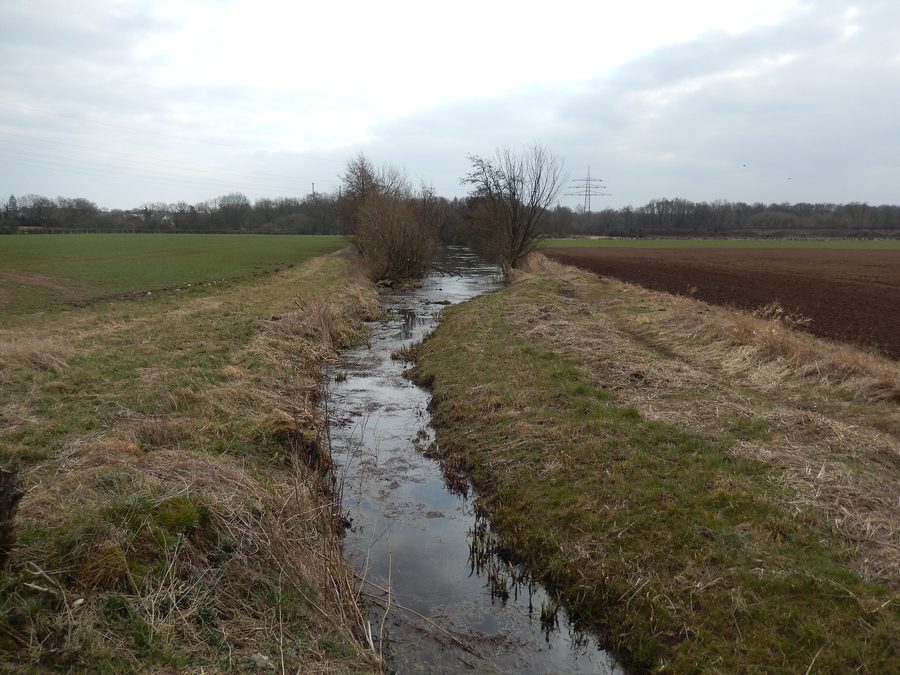 Seegraben im Naturschutzgebiet Drakenburger Marsch
Photo: Gerd Fahrenhorst via Wikimedia Commons, CC BY 4.0
History and Orientation in Rohrsen
Rohrsen’s Old School was built in the village centre in the late 19th century. It can only be viewed from the outside, so you can appreciate the building as part of the village landscape but cannot explore its interior.
The Alte Schanze near the Weser dates from a different historical context: Swedish troops built it in 1640 during the Thirty Years’ War. Today, it remains as a mound of sand. An information board points out the Alte Schanze, and signs in Rohrsen show the way to it. Its preserved form makes clear that this historic site now appears as an earthen mound.
Cycling Through Rohrsen
The Weser Cycle Path runs through Rohrsen. The ADFC describes the route through the village as scenic and away from the main road. Those travelling along the cycle path can therefore experience Rohrsen as part of the route. Check current trail conditions before setting out, as specific route conditions may change.
When choosing a holiday apartment, you can plan around these differences: would you like to visit historic sites, or would you prefer cycling to play a bigger part in your stay? For cycling trips, it is worth checking trail conditions; the Old School can only be viewed from the outside.
More Destinations in the Wider Nienburg Travel Destination
Within the wider Nienburg travel destination, the Nienburg Museum offers its own cultural and historical focus. Housed in three historic buildings, it presents the development of the Central Weser region from the presence of the first people to the present day. Its main building is the Fresenhof, a manor house dating from the 16th century. The museum also includes the Asparagus Museum, the Biedermeier Garden and a lapidarium; the Neoclassical villa offers further insights into the 19th century. These themes offer a different perspective from the individual historic sites in Rohrsen.
The Dinosaur Park Münchehagen opens up a much earlier period: more than 300 dinosaur footprints bear witness to a time around 140 million years ago. Hands-on activities aimed particularly at young children include excavating a 25-metre-long skeleton. Here, evidence of the very early history of the Earth meets a practical activity for young visitors.
Loccum Abbey is a monastic house built in 1163. Schinna Monastery, in the Schinna district of the municipality of Stolzenau, is considered a monument of significance beyond the region. In Bücken, the collegiate church of St. Maternian et St. Nicolai houses important art treasures, including a triumphal cross from 1230 and richly illustrated stained-glass windows from the 13th century.
For the wider travel overview: Heemsen.

