
Delmenhorst: City History, Nature and Culture
Accommodation in Delmenhorst
Expansive meadows, old trees and broad waterways define the Graft parklands in the heart of Delmenhorst. At the same time, Burginsel, museums and historic buildings tell the story of the city’s development – from its medieval castle to its industrial history. This lets you shape your stay around a wide range of interests: nature and urban green spaces are just as much an option as art, theatre and local history.
 Die Burginsel verbindet Grünraum mit sichtbaren Spuren der Delmenhorster Stadtgeschichte.
Photo: Corradox via Wikimedia Commons, CC BY-SA 4.0
Die Burginsel verbindet Grünraum mit sichtbaren Spuren der Delmenhorster Stadtgeschichte.
Photo: Corradox via Wikimedia Commons, CC BY-SA 4.0
Graft Parklands and Nature along the Delme
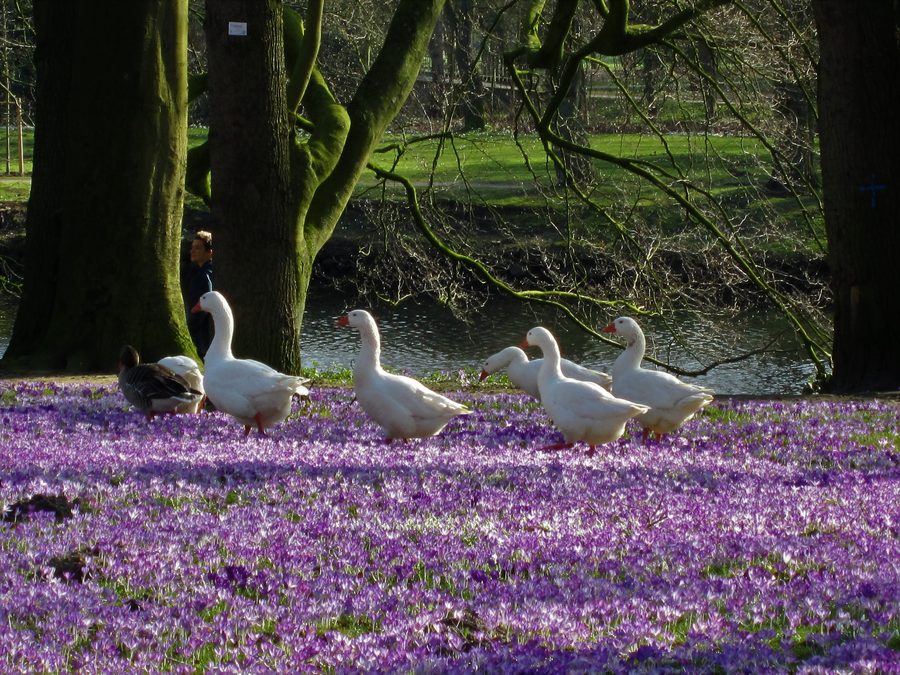
The Graft parklands are an extensive park in the city centre. The Wiekhorn-Graftanlagen landscape conservation area covers 183 hectares in the heart of Delmenhorst. Its mature trees provide habitat for diverse and abundant breeding bird populations. Partly wooded areas, adjoining waterways and meadows also create living conditions for numerous bat species. If you are particularly interested in landscapes and wildlife, you will find several specific nature topics here to explore as you discover the city.
The “An der Delme durch Delmenhorst” Natura Trail is a hiking route about 7 kilometres long. It starts on Burginsel in the Graft parklands; the trail runs along protected stretches of the Lower Delme and the Ochtum within the city. These river stretches provide habitat for fish. The approximate route length is a useful guide if you would like to plan a hike during your stay.
City History, Art and Theatre
On Burginsel, a count’s garden house and the foundations of the former moated castle bring to life Delmenhorst’s origins as the residence of Count Otto of Oldenburg. The Northwest German Museum of Industrial Culture offers a different perspective on the city: Housed in several historic buildings, it traces its development from a medieval castle to a major industrial city in the 20th century. Its main exhibition topics include the early days of industrialisation, jute and linoleum, art and design in Delmenhorst, migration, and the period after the Second World War up to the end of the clothing company Delmod in 2009.
Individual buildings also tell the story of different chapters in the city’s history. The City Museum is housed in the factory’s first engine house, built in 1884. The 44-metre-high water tower is a landmark of Delmenhorst. In the Protestant church built in 1614, the coffins of Count Anton II of Delmenhorst, his wife and his children are displayed in the family crypt. For contemporary art, Haus Coburg is the municipal gallery; it also hosts special exhibitions on socially relevant topics.
The Kleines Haus Theatre offers concerts, theatre ranging from classical to modern, comedy, operetta and children’s theatre. GraftTherme complements this selection with relaxation, leisure and sports activities. If you are interested in different forms of culture, you can weigh these options separately when planning your stay, rather than focusing on a single theme.
Places and Experiences around the City
In Delmenhorst-Hasbergen, the Hasbergen watermill stands on the Delme; it is also known as the Hasberger Dorfmühle and is now used as a museum mill. A historic railway connection offers another distinctive experience: the Jan Harpstedt narrow-gauge railway travels with an old steam locomotive and historic carriages from Harpstedt to Delmenhorst through rural communities. On a guided city tour, participants explore the city centre and its history with Jan Tut, introduced as a former cigar maker and municipal night watchman.
The weekly market is also part of the city centre scene: regional fresh market produce is on offer at Rathausplatz on Wednesdays and Saturdays, including fruit, vegetables, fish, meat and cold cuts, baked goods and flowers. You can take the market days into account when planning your trip if regional produce is part of what you are looking for.
Choosing the Right Location for Your Stay
If you mainly want to explore the Graft parklands and the city centre, you can consider the location within Delmenhorst as a separate criterion when searching for a holiday apartment. For a stay focused more on art, theatre or city history, the places described offer a range of thematic points of interest; this does not imply that any of them are close to one another. For excursions focused on the rural communities along the narrow-gauge railway or the museum mill in Hasbergen, you can choose different priorities. For an overview at the town level, follow the link to Delmenhorst.
For the broader travel overview: Lower Saxony.
More Destinations
More places under the same destination:

