
Babenhausen between castle history and the Günz Valley
Accommodation in Babenhausen
Babenhausen combines a striking castle complex with the Günz Valley and cultural sites whose history spans several centuries. The castle complex stands on the edge of a plateau; its imposing west front dominates the market square, which unfolds in the valley below. Architectural history and sacred art form the cultural focus, complemented by opportunities to enjoy the water and cycling. If you are looking for a holiday apartment for your stay, you can consider whether historical impressions or exercise and leisure activities will play a greater role in your trip.
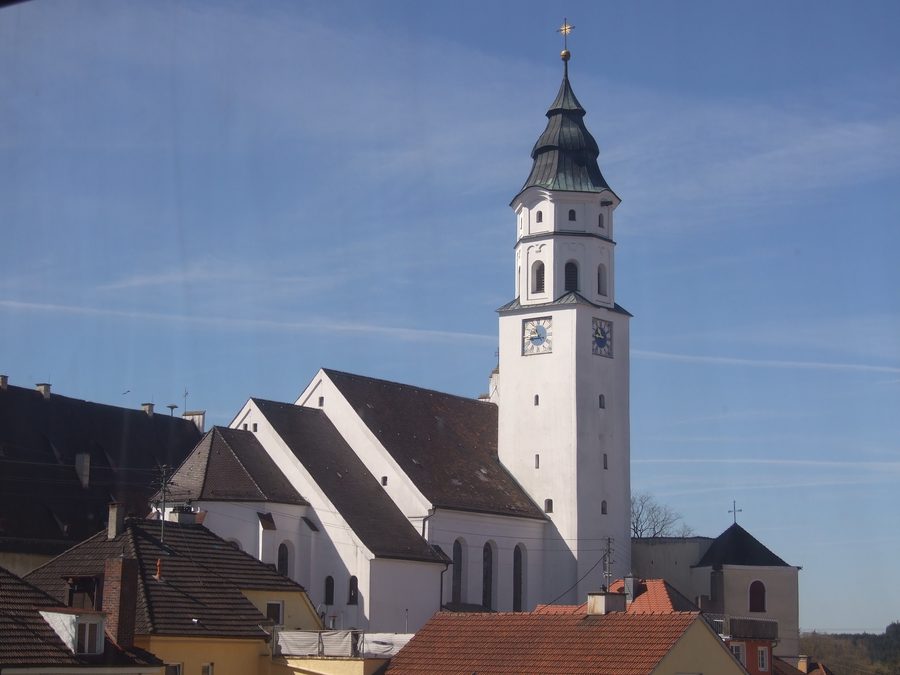 Die St.-Andreas-Kirche gehört zu den prägenden Bauwerken in Babenhausen.
Photo: Tobias Maier via Wikimedia Commons, CC BY-SA 3.0
Die St.-Andreas-Kirche gehört zu den prägenden Bauwerken in Babenhausen.
Photo: Tobias Maier via Wikimedia Commons, CC BY-SA 3.0
Castle complex and townscape
The Babenhausen Castle and Market ensemble includes more than the castle building. It comprises the entire castle grounds, including the castle garden within the surrounding walls, as well as the associated service and administrative buildings. The market square and Stadtgasse on the slope of the castle hill are also part of it. The name therefore refers to an ensemble of the castle grounds, service buildings and market area. Its position on the edge of the plateau and its imposing west front give the complex a distinctive appearance above the market square in the Günz Valley.
Fugger Castle traces its origins to a 13th-century fortress and was expanded into the present-day castle in the 16th century. These two dates mark different phases in its history: its medieval origins and its later expansion. The Fugger Museum has been located in the castle since 1955 and remains permanently closed until further notice. The exhibition description lists twelve rooms and objects illustrating goldsmithing, glass, porcelain, sculptures, weapons, books, furniture and sacred art. These document six centuries of family and European history.
Churches and art from different centuries
The parish church of St. Andreas dates from the 15th century and was given a Baroque makeover. It includes the Rechberg Chapel, with tombs dating to around 1470. The church’s stair tower also contains a Crucifixion group dating to around 1520. These details offer different points of interest: the tombs reflect the funerary culture of the late Middle Ages, while the Crucifixion group represents sacred visual art from the early 16th century. Those with a particular interest in churches and historical art will find specific subjects here, each distinct from the others.
Another religious site is the Gottesackerkapelle (cemetery chapel). Built in 1722, it features a Dance of Death cycle. The Aspenkapelle adds a Catholic pilgrimage chapel to this focus: dedicated to St. Mary, it dates to around 1700 and was renovated in the 19th century. The parish church, cemetery chapel and pilgrimage chapel thus represent different religious functions and historical periods. When planning your trip, this variety can help you weigh up architectural history, funerary art, religious imagery and pilgrimage as distinct interests.
Cycle path, water and leisure
There are also options for days focused on activity. The Günztal Cycle Path passes through Babenhausen and is around 92 kilometres long. It runs mainly along quiet side roads and farm tracks, has no significant climbs and is well suited to children. Its total length makes it a longer route option; the details about its route and climbs describe the character of the cycle path. Families considering a bike tour can take these features into account when planning.
Babenhausen also has a swimming lake or outdoor swimming pool with a sunbathing lawn, as well as outdoor facilities for beach volleyball, boules and football. So, alongside historical attractions, water and a range of activities are also options to consider during your stay. Depending on whether you plan to cycle, spend time by the water or explore the local culture, these offerings may determine what kind of holiday apartment you look for in Babenhausen.
You can also explore Sontheim, Mindelheim, Stetten, Erkheim, Bad Grönenbach, Winterrieden, Illerwinkel and Pfaffenhausen on our pages for other towns.
For the broader travel overview: Unterallgäu.

