
Discover Mering: the Paar, churches and history
Accommodation in Mering
The Badanger recreational area is located in the heart of Mering, right on the Paar. The town’s many churches and chapels are also among its attractions; some were built a very long time ago. Mering therefore offers several starting points for planning your trip: the Paar and a long architectural history. When choosing a holiday apartment in Mering, you can consider whether you would like to focus your stay mainly on Badanger and the Paar, or on the churches and their history.
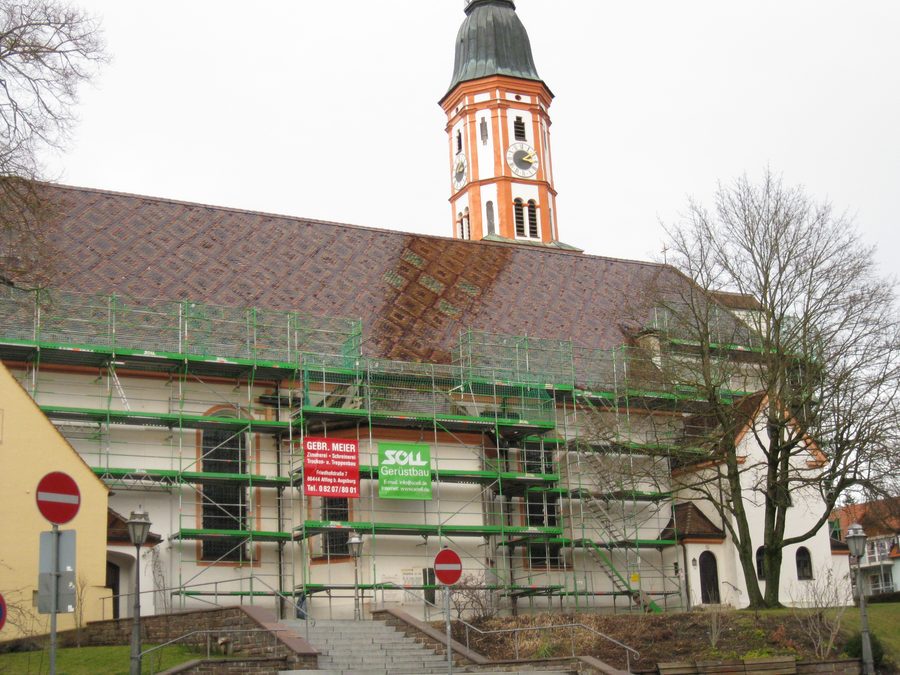 Die barocke Pfarrkirche St. Michael ist ein markanter Bezugspunkt im Ortszentrum von Mering.
Photo: Cholo Aleman via Wikimedia Commons, CC BY-SA 3.0
Die barocke Pfarrkirche St. Michael ist ein markanter Bezugspunkt im Ortszentrum von Mering.
Photo: Cholo Aleman via Wikimedia Commons, CC BY-SA 3.0
Badanger, the Paar and places in the market town
Badanger is a recreational area in the heart of Mering, directly on the Paar. The Sperlingsbrunnen fountain and the recreational grounds at Badanger are among the places you might come to love in Mering. The market square, meanwhile, is a popular meeting place for Mering’s residents. These places represent different aspects of local life: the river landscape, a named fountain and the town’s meeting place.
The outdoor swimming pool is also part of Mering’s history: it was built in 1957. Its year of construction is a specific reference point if you are interested in the development of local recreational facilities.
Churches with their own stories
A particularly early example is the Catholic branch church of St. John the Baptist in the district of Meringerzell. It was built in the 10th century and is the oldest church in the market town of Mering. Its long architectural history gives the town’s history a clear point of reference in time, while the many other churches and chapels show the diversity of Mering’s religious attractions.
St. Michael’s parish church also features specific architectural and artistic details. Its Gothic elements include a church arch that was part of a defensive walkway in the Middle Ages, a red marble sculpture at the north entrance and a Madonna on the western interior wall. Ignaz Baldauf designed the church’s ceiling fresco in 1779. These details span everything from the medieval defensive walkway to sculpture and ceiling painting, offering different ways to explore the building’s history.
More routes and architectural history in Aichach-Friedberg
The wider destination of Aichach-Friedberg offers a variety of routes. The Aichach-Friedberg district cycling map features 14 well-signposted themed cycling routes. The hiking brochure “Explore Aichach on foot – The most beautiful walks around Aichach” presents 15 walks and hiking trails in and around Aichach. The 36.8-kilometre Paartal hiking trail follows the middle reaches of the Paar from Aichach to Gut Schenkenau in the district of Neuburg-Schrobenhausen. This lets you choose between a collection of cycling routes, walks and hiking trails around Aichach, and a specifically described hiking route. Check the conditions for the route you choose before setting off.
Architectural history also offers a range of topics. The historic old town of Aichach has changed very little over the centuries. The Wittelsbach Museum is housed in the Unteres Tor gate, while the town museum vividly tells the story of Aichach. The Wittelsbach ancestral castle was located in the Aichach district of Oberwittelsbach; Sisi Castle in Unterwittelsbach served Duke Max in Bavaria as a hunting lodge. In Friedberg, the pilgrimage church of Herrgottsruh was built between 1731 and 1753 and is considered one of the finest examples of Bavarian Rococo. Friedberg Castle traces its origins to a high medieval castle built around 1257 under Duke Ludwig II the Strict.
Another cultural attraction in the wider destination of Aichach-Friedberg is the Inchenhofen Pilgrimage Museum. It is housed in Haus St. Leonhard, a former Cistercian brewery building. Exhibits include iron and wax votive offerings, ploughshares, horseshoes, and neck and hand shackles. The museum documents the importance of Saint Leonhard and St. Leonhard Church as a much-visited pilgrimage destination.
Discover more destinations
Steindorf, Pöttmes, Dasing, Aichach, Schiltberg, Ried, Friedberg, Petersdorf
Back to the main travel overview: Aichach-Friedberg.

