
Holiday apartment in Division No. 1
Accommodation in Division No. 1
Division No. 1 is less a self-explanatory holiday destination than a broad coastal area in eastern Newfoundland. On the Avalon Peninsula, bays, harbour towns, and maritime history meet coastal walks, seabirds, whales, and icebergs. For trip planning, the key question is which mix of experiences suits your family best: nature-focused days by the coast, discovering historic places, proximity to the urban area around St. John's, or a combination of all three.
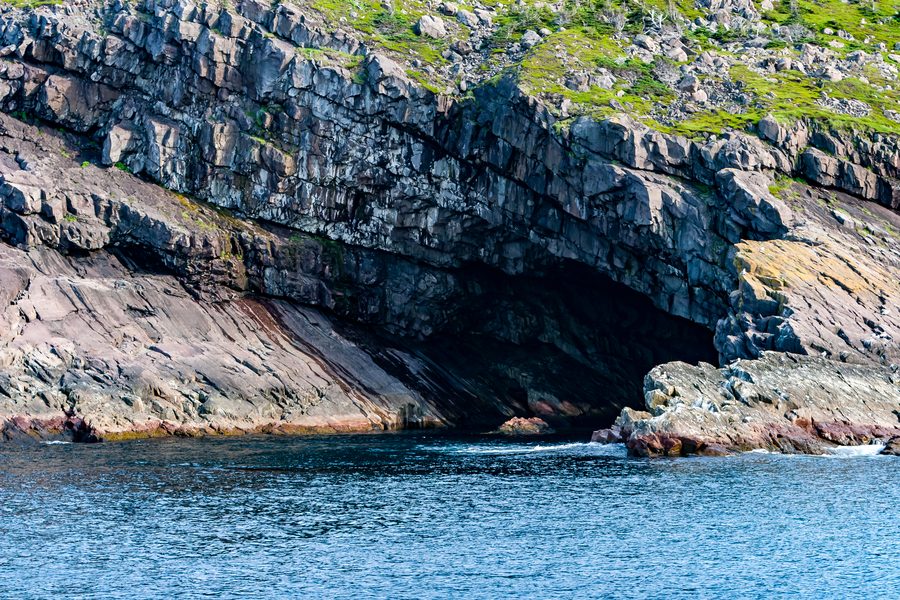 Felsige Küstenlandschaft am östlichen Rand der Avalon-Halbinsel
Photo: Michel Rathwell from Cornwall, Canada via Wikimedia Commons, CC BY 2.0
Felsige Küstenlandschaft am östlichen Rand der Avalon-Halbinsel
Photo: Michel Rathwell from Cornwall, Canada via Wikimedia Commons, CC BY 2.0
Photo: Michel Rathwell from Cornwall, Canada · Source · CC BY 2.0
Quick facts about Division No. 1
- Location: a widely indented coastal area of the Avalon Peninsula in eastern Newfoundland
- Nature: coastal landscapes, icebergs, whales, and nesting migratory birds
- Active: the East Coast Trail includes an extensive network of coastal hiking trails in the Avalon region
- Character: proximity to the city, small coastal communities, and maritime history sit closely together across the wider Avalon region
Coast, wildlife, and active days
The coast is the strongest reason to include Division No. 1 in your travel plans. The Avalon Peninsula combines dramatic rocky scenery with wildlife viewing: icebergs, migrating whales, and seabirds are among the region’s documented highlights. Sightings are not guaranteed, however. If you are travelling with children, this makes it easy to plan a varied holiday: time watching from the shore, an active day along the coast, and quieter shared discoveries can all fit together.
For keen walkers, the East Coast Trail is an important reference point. This extensive coastal trail network makes the Avalon region appealing in principle for active days. You should check in advance which section is suitable for your family in terms of length, difficulty, and accessibility. A place to stay near the coast is especially worthwhile if scenery and hiking are the main focus.
Maritime history and regional cuisine
The visitor experience in Avalon is shaped by more than just the landscape. Seafaring, maritime traditions, and historic outport communities make maritime history a second recurring theme. Regional cuisine and traditions add further cultural context. The result is a trip that combines wildlife and landscape experiences with stories about life by the sea, rather than planning every day as a simple excursion into nature.
Brigus, Dildo, and Witless Bay are specifically named in a verified overview as visitor places in the Avalon region. You can treat these places as concrete reference points for further travel planning; this does not imply shared activities, ranking, or the same infrastructure.
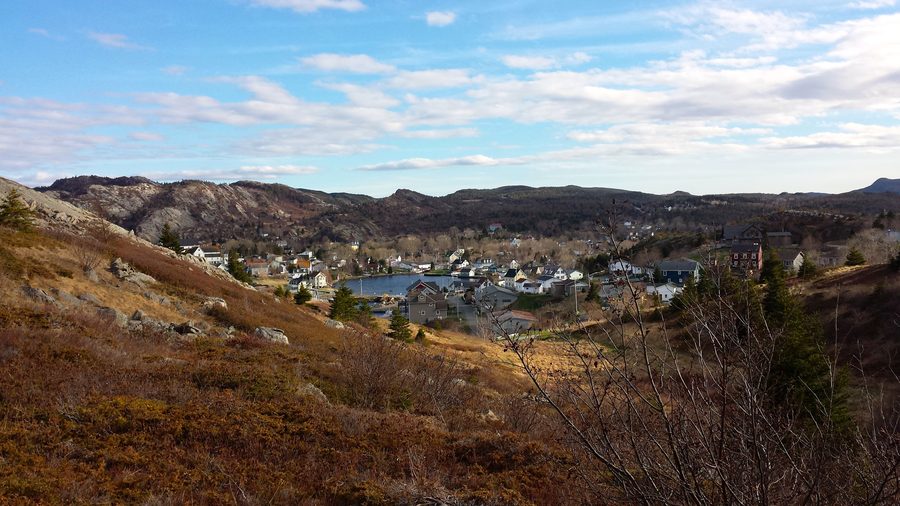
Photo: Grazioso2 · Source · CC BY-SA 4.0
Which location suits your trip?
The key location decision is this: should the accommodation serve mainly as a base for the coast and wildlife viewing, or should it also include the urban surroundings of St. John's? A smaller coastal town is generally better suited to scenery, a maritime atmosphere, and days in nature. Being closer to the urban area is more attractive if you want to include city and cultural activities alongside the coast. The sources confirm these different types of area, but not a ranking of individual places.
Arnold's Cove is a concrete example of a historic, nature-oriented coastal place on the isthmus of the Avalon region. The source links the place with bird and beach themes. Arnold's Cove can be reached by car from St. John's; a rough guide is about an hour and a half. This is just one local example and cannot be transferred to all other destinations.
Because the area is so large and the coastal communities are spread out, you should clarify your planned day trips and how much driving you are comfortable with before booking. A fixed base may suit a clear focus for your holiday; several stages of travel may be more sensible if coast, nature, history, and proximity to the city are all equally important. You should also check whether your accommodation and day plans can adapt to changing weather and viewing conditions.
Discover places in Division No. 1
As a concrete example of a nature-focused coastal place, you will find Arnold's Cove. Other places in the area include Bay Roberts, Carbonear, Clarke's Beach, Conception Bay South, Grates Cove, Green's Harbour, Hant's Harbour, Harbour Grace, Heart's Content, Heart's Delight-Islington, Holyrood, Mount Pearl, Petty Harbour-Maddox Cove, Placentia, Port De Grave, Pouch Cove, Riverhead, Spaniard's Bay, St Mary's, Tors Cove, Trepassey, and Whiteway. The explicitly named visitor selection also includes Brigus, Dildo, and Witless Bay.
Frequently asked questions about Division No. 1
What is Division No. 1 for travellers, exactly?
Division No. 1 is an administrative area within a broad coastal region of the Avalon Peninsula. For visitors, the main attractions are coastal places, bays, maritime history, and proximity to the urban area.
What nature experiences define the region?
Coastal walks, icebergs, whales, and seabirds are the documented nature themes. Sightings and specific routes should be checked seasonally or locally.
Is a coastal town or being near St. John's the better choice?
A coastal town is generally better suited to scenery, wildlife viewing, and a maritime atmosphere. Proximity to the urban area makes sense if you want to include city and cultural activities. No single best base can be derived from that.
To compare with other parts of the province, the next step is Newfoundland and Labrador.

.jpg)
.jpg)