
Krapkowice: Defensive Tower, Oder River History and Urban Heritage
Accommodation in Krapkowice
Krapkowice combines traces of its medieval origins with a distinctive city skyline: the Krapkowicka Baszta, surviving fortifications and a disused railway bridge with a pedestrian walkway offer the city very different points of historical interest. The Oder River is also part of the city’s recorded history. For centuries, Krapkowice consisted of the trading centre on the left bank and Otmęt, an old fishing settlement on the right bank.
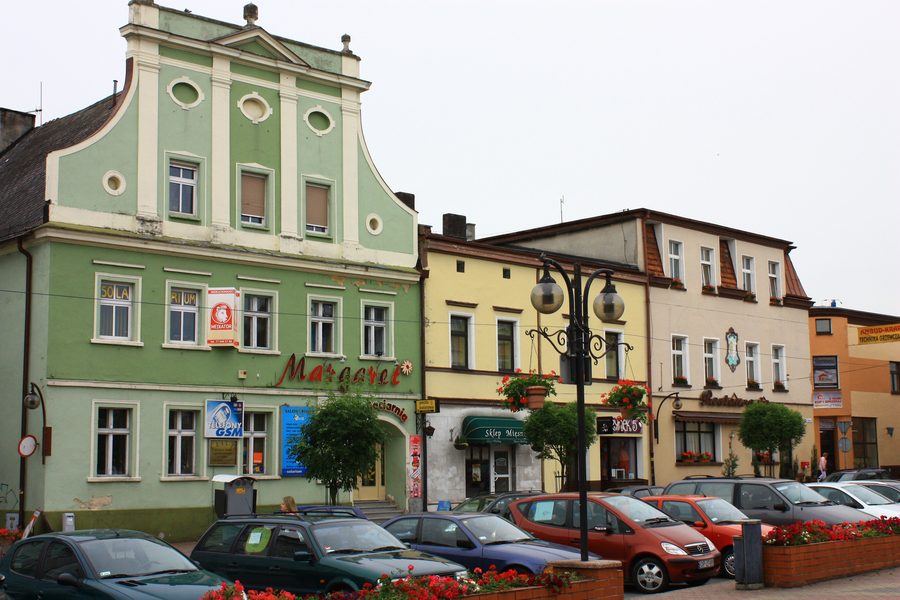 Der Rynek bildet den historischen Mittelpunkt von Krapkowice, umgeben von älteren Gebäuden.
Photo: Dawid Galus via Wikimedia Commons, CC BY-SA 3.0 pl
Der Rynek bildet den historischen Mittelpunkt von Krapkowice, umgeben von älteren Gebäuden.
Photo: Dawid Galus via Wikimedia Commons, CC BY-SA 3.0 pl
Fortifications, Brickwork and Church Art
Among the surviving fortifications is the defensive tower at the Upper Gate, dating from the 14th century. The Krapkowicka Baszta, also known as Wieża Bramy Górnej or Wieża Bramy Prudnickiej, is built of rubble stone in the Gothic-Renaissance style. It was constructed in the second half of the 14th century and remodelled around 1580. A section of the defensive wall adjoins it on Basztowa Street. Further fragments of the wall are located in the northeastern corner of the city; a lowered stretch of wall survives in the southwestern district.
The city’s industrial heritage extends beyond its fortifications: former paper mills, including a handsome red-brick clock tower, and two lime kilns are also listed as technical monuments. Their varied forms and materials give the city’s history a tangible setting—from the defensive tower and masonry to traces of paper production.
St. Nicholas Church also preserves older architectural features. Its present architectural form dates from the late 14th century; despite several alterations, Gothic elements remain, including rib vaults in the presbytery. Its furnishings include a stone baptismal font from the 16th century and a richly decorated monstrance from 1744.
Experience the City’s History as You Explore
The Obuwniczy Szlak leads visitors to interesting sights in Krapkowice by means of shoe symbols marked with QR codes, while sharing the city’s history. The route thus connects its distinctive symbols with the historic places it celebrates. Another recurring tradition is the Krapkowice Hejnał, sounded every day at noon from the Krapkowicka Baszta, the Upper Gate Tower.
The Baszta also has a viewing terrace. From there, you can see the city panorama, Mount St. Anne and the Opawskie Mountains. In less favourable weather, a telescope installed on the terrace may help. If you plan to visit this viewpoint, check current visiting arrangements in advance.
Access to the courtyard of Krapkowice Castle is conditional on the school being open. There is a historic well in the courtyard, probably dating back to the Middle Ages. If you would like to visit the courtyard, check beforehand whether the school is open. This condition is particularly important for planning; the well’s dating remains tentative.
Water Activities and Choosing Accommodation
Krapkowicka Marina offers water sports equipment rental and a campsite. These activities offer a different focus from the medieval buildings and city history. Check in advance which options are currently available.
When choosing a holiday apartment in Krapkowice, consider what you want to focus on during your trip: architecture and historic details, the view from the Baszta, or water sports at the marina. The city offers a range of themes without being limited to a single kind of itinerary. Those interested in history will find distinctive buildings, remnants of walls and furnishings from different centuries; those who would like to include water activities can consider the marina as another point of interest.
Discover More Destinations
Discover more destinations: Zellin, Zdzieszowice, Oleszka, Gogolin, Kujau, Moschen, Mallnie, Kamień Śląski.
Back to the main travel overview: Krapkowice.

