
Großlohra: Monastery, Basilica and Lohra Castle
Accommodation in Großlohra
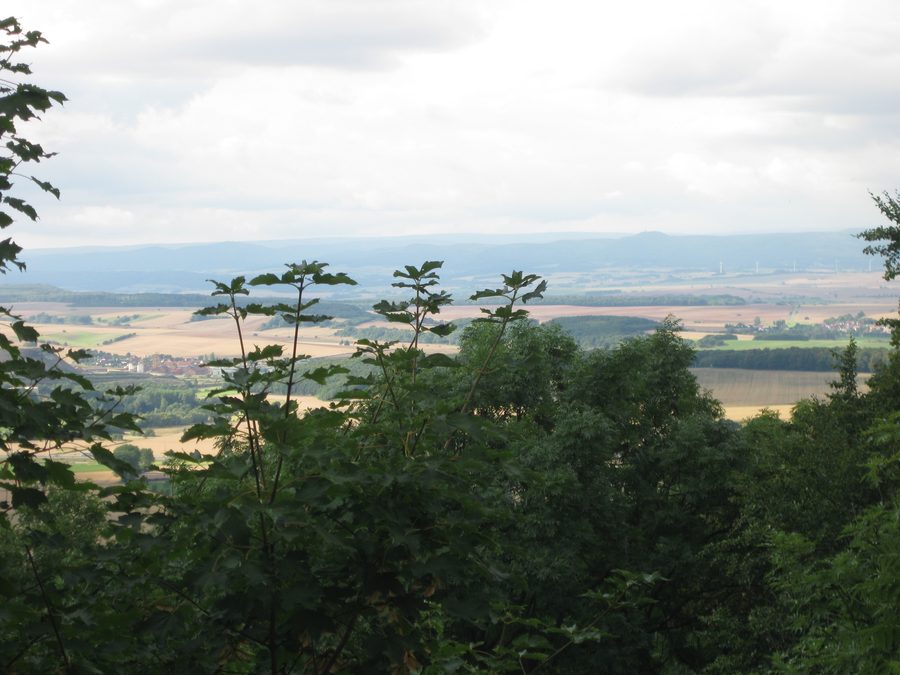
Großlohra is a destination for travellers who want to explore historic buildings and the landscape of the Hainleite. Münchenlohra Monastery, St. Gangolf Basilica and Lohra Castle offer different historical perspectives: a monastery that has stood for centuries, a reconstructed basilica and the ruins of a hilltop castle. The Hainleite 1 circular trail connects three named places. You can plan your stay around your interest in architectural history or around discovering several stops along one route.
The Monastery and Basilica in Münchenlohra
Münchenlohra Monastery has stood on a hill in front of the Hainleite for more than 800 years. Ever since, it has shaped the landscape between the Harz and the Hainleite, and between the Windleite and the Eichsfeld Gate. This connection between monastic history and landscape gives the place a distinctive character, one that can be distinguished from the basilica’s individual architectural history.
St. Gangolf Basilica in Münchenlohra was reconstructed from 1882 to 1885 at the suggestion of Ferdinand von Quast, the Prussian conservator of monuments. It underwent extensive renovation from 1951 to 1957. These two periods tell of different phases in the building’s history: its reconstruction in the 19th century and a later extensive renovation. Münchenlohra Monastery also has a music salon with room for 30 to 40 people.
Lohra Castle and the Hainleite Circular Trail
Today, Lohra Castle is the ruin of a hilltop castle and the westernmost castle on the Hainleite. Those interested in castles and their historical form will find a different focus here than at the monastery and basilica. The castle can be reached via the A 38 motorway. From the Bleicherode exit, follow the road towards Großlohra, through the village to the southwest, and then along the ridge of the Hainleite to the path leading to Lohra Castle.
The Hainleite 1 circular trail connects Lohra Castle, the Münchenlohra pillar basilica and Wöbelsburg Castle. This gives you three specific historic stops to focus on when planning your route. The trail itself offers a way to visit the sights together; no information is given about its length or difficulty. Families can use this selection to decide whether they would rather spend their time at a single building or include all three places as part of one route during their stay.
Pilgrimage Connections and Further Architectural History
Münchenlohra may be a destination or starting point for a pilgrimage. This adds another way to incorporate the place into a trip alongside exploring its monastic history. Another historic stop is the chapel in Elende: built around 1300, it is about 3 km from Münchenlohra and is one of the oldest buildings in the region. The chapel can be considered a separate stop for travellers interested in older buildings.
If you are looking for a holiday apartment in Großlohra, your preferred focus can help guide your plans: the monastery and basilica represent different chapters in architectural history, while Lohra Castle and the circular trail take in other historic places. For a pilgrimage, Münchenlohra itself may be the destination or starting point. This way, you can begin planning your trip with the specific places and themes that make Großlohra distinctive.
For the broader travel overview: Hainleite.

