
Lohnsfeld and travel ideas in the Donnersberg District
Accommodation in Lohnsfeld
When looking for a holiday apartment in Lohnsfeld, the wider destination of the Donnersberg District can also shape your holiday plans. It offers a forested mountain, hiking trails, traces of Celtic settlement and mining, as well as activities related to water and wine, providing ideas for a variety of excursions. First consider what you want your trip to focus on: hiking trails, nature by the water, or discoveries of cultural history.
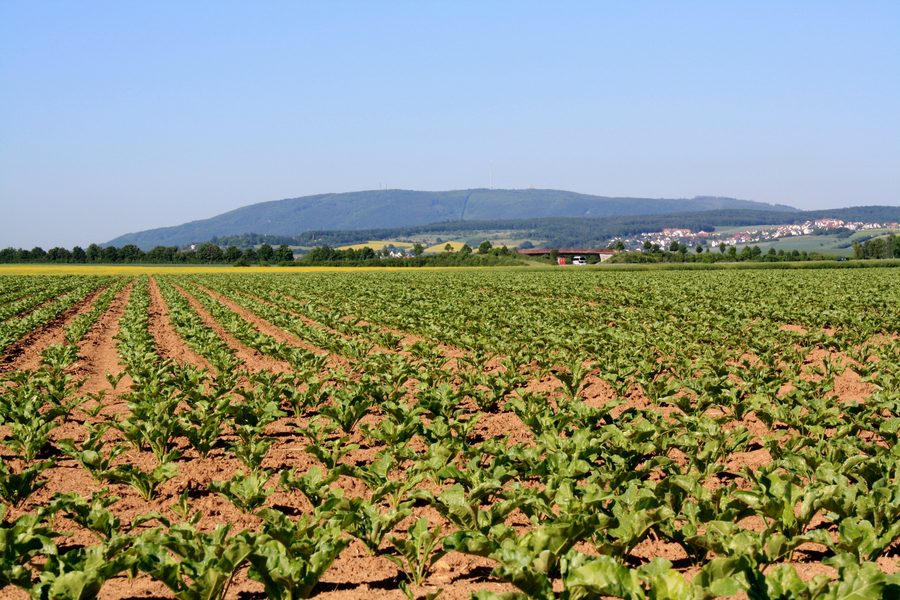 Der Donnersberg ist ein prägendes Landschaftsmerkmal im weiteren Umfeld von Lohnsfeld.
Photo: PhilEOS via Wikimedia Commons, CC BY-SA 3.0
Hiking between forest and mountain
At 687 metres, the Donnersberg is the highest elevation in the Palatinate and a popular hiking destination. It covers about 2,400 hectares, is almost entirely forested, and extends diagonally for up to 7.5 kilometres. The landscape provides a striking setting for a variety of routes in the Donnersberg District.
The Ludwigsturm circular hiking trail is 6.7 kilometres long. It starts at Haus Linn in Dannenfels and leads to the Ludwigsturm. The stone tower is 26.9 metres high and has 142 steps; from the top, views extend across the North Palatinate Uplands, the Palatinate Forest, the Black Forest and the Vosges. The Ludwigsturm is currently closed for renovation work. Another loop leads to the ruins of Wildenstein and is 7.9 kilometres long. These distances make it possible to compare route lengths without implying a walking time.
For those planning a longer hike in stages, the Palatinate High Trail offers a different kind of route: it starts in Winnweiler on the Donnersberg and runs in seven stages through the Palatinate Uplands to Wolfstein. This makes a single circular hike and a multi-day point-to-point hike two distinct approaches to planning.
Celtic history, castle ruins and mining history
A Celtic oppidum on the Donnersberg was once enclosed by the Celtic Ring Wall. It consists of covered remains of a Celtic wall about 8.5 kilometres long, which enclosed the oppidum from around 130 to 60/50 BC. Its scale and long history give the landscape an archaeological perspective distinct from the later traces of mining.
Falkenstein Castle stands on a former volcanic vent and was first mentioned in a document in 1135. Its surroundings provide the setting for the annual Christmas market and the Falkenstein summer tours. If you would like to plan your trip around one of these events, check the specific event dates.
The Celtic Village on the Donnersberg in Steinbach is a traditionally built farmstead settlement that offers an impression of Celtic techniques for building houses. Expert-led tours and changing hands-on activities invite visitors to put their creativity and dexterity to the test. The Celtic Village is temporarily closed for renovation work.
The Weiße Grube visitor mine showcases 600 years of mining history, including medieval mining areas and later mine workings excavated using explosives. The Palatinate Mining Museum in Imsbach focuses on the region’s ores, rocks and fossil fuels, as well as the extraction and processing of iron, manganese, copper, cobalt, gold, silver and mercury. The mine and museum thus offer different ways to explore the region’s mining history.
Water, railways and cycling routes
The Eiswoog brings together several ways to enjoy time by the water: boat trips, water treading, swimming and walks around the lake with a nature trail. The Eiswoog lies in the Palatinate Forest-North Vosges Biosphere Reserve and is considered a natural spectacle throughout the year. A paved, accessible path passes a viewing platform overlooking the lake. The Eiswoog can be reached from Eisenberg by train, by bicycle through the forest or by car.
The Stumpfwaldbahn runs along a narrow-gauge track about four kilometres long. Passengers can board at the Eiswoog, at Bockbachtal station near Kleehof, or at Ramsen West. For journeys between Kleehof and the Eiswoog, the railway uses former mining locomotives that have been converted. If you are planning a ride, check the timetable in advance. The Eiswoog is also a stop on the Barbarossa Cycle Route, which runs through the Palatinate from the Rhine at Worms via Kaiserslautern to Glan-Münchweiler near Kusel.
For mountain biking enthusiasts, a singletrack in the forest near Sippersfeld features root sections and boulders of Bunter sandstone. The obstacles can be ridden on either a more challenging or a gentler line. This choice concerns the line taken on the trail; it is not a general statement about the difficulty of other routes.
Wine and choosing the right focus for your holiday
Wine is also part of the region’s appeal: the Zellertal is one of the northernmost wine-growing areas in the Palatinate and offers opportunities to enjoy local wines and discover wine estates. Weingut Bremer combines wine tastings, a restaurant and an event venue in a historic winery. As opening hours may change, check them before your visit.
Whether you are mainly interested in hiking, water, history or wine will shape the character of your trip. Use these themes to tailor your search for a holiday apartment in Lohnsfeld to your holiday plans.
Discover more destinations: Wartenberg, Kalkofen, Dannenfels, Münchweiler An Der Alsenz, Börrstadt, Alsenz-Obermoschel, Lautersheim, Kirchheimbolanden.
Go to the overview of the wider destination: Donnersberg District.

