
Neuffen: Wine, Castle and City History
Accommodation in Neuffen
Neuffen combines a history of winemaking with distinctive architecture and a hiking trail that starts right in town and leads up to Hohenneuffen Castle. When choosing your holiday apartment, you can base your decision on the mix you’re looking for: in town, discover stories about the church, wine presses and winemaking; the premium hiking trail winds through vineyards and heathland on its way up to the castle. This makes it easy to decide while planning your trip whether you want to focus on local history or an active day in the countryside.
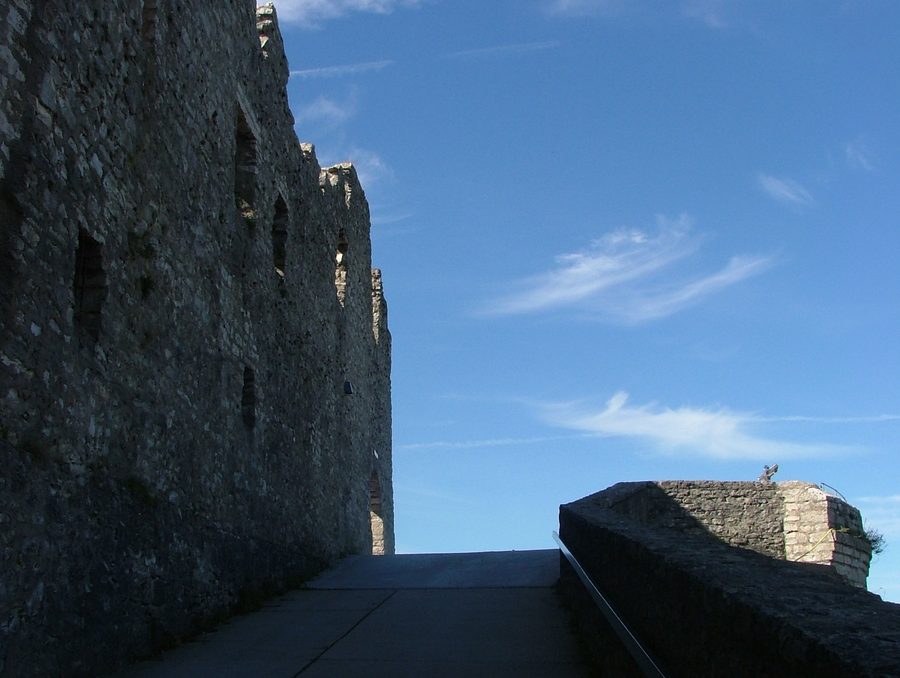 Aufgang zur Festungsruine Hohenneuffen oberhalb von Neuffen.
Photo: Richard Mayer via Wikimedia Commons, CC BY 3.0
Aufgang zur Festungsruine Hohenneuffen oberhalb von Neuffen.
Photo: Richard Mayer via Wikimedia Commons, CC BY 3.0
Town History Between the Church and the Kelterplatz
The barn on Kelterplatz is flanked by two listed buildings. It was built in 2006 as a market barn for a farmers’ or weekly market. Winemaking is closely connected with Neuffen’s history and was first mentioned there in 1239. In the Middle Ages, there were demonstrably four wine presses—a sign of how far back the winemaking tradition goes in the town’s history.
St. Martin’s Church also tells the story of different eras. Its origins probably date back to the 6th century; the church was built to its present dimensions in the first half of the 14th century. One of its remarkable works of art is the Mount of Olives: donated by Albert Schaich in 1504, this stone carving depicts Jesus praying in the Garden of Gethsemane and Judas’s betrayal. It survived the fire disaster.
The Great House by the town wall is a rare surviving example of an aristocratic residence. It houses the town museum and public library. If you’re planning a visit, please check current visiting arrangements in advance. This lets you take the building’s historical significance into account when planning, without assuming a visit will necessarily be possible.
Winemaking and Local Stories
White grape varieties account for 50 percent of Neuffen’s vineyard area: Silvaner, Müller-Thurgau, Kerner, Riesling, Pinot Blanc and Ruländer. Red varieties include Pinot Noir, Pinot Meunier, Dornfelder, Portugieser, Lemberger, Trollinger and Acolon. This variety gives winemaking a distinct profile and adds a contemporary aspect of the local landscape to the historic traces at Kelterplatz.
The town and wine tour focuses on sights and flavors. The first stories at Kelterplatz explore the close connection between the town’s history and its wine history. This offers a different perspective from a visit focused mainly on church architecture or hiking trails: here, local history provides the connecting thread.
Hiking to Hohenneuffen Castle
The “hochgehkeltert” premium hiking trail starts right in Neuffen and leads through vineyards and the Neuffener Heide heathland up to Hohenneuffen Castle, where there is a restaurant with panoramic views. The route therefore connects winemaking, a named landscape and a landmark destination. If you’d like to focus more on exercise and views during your stay, this trail is a practical starting point for planning.
Hohenneuffen Castle is one of the area’s best-known destinations. From there, the view stretches along the Swabian Alb ridge across the Neckar region and the Stuttgart heights to the Black Forest and the Swabian-Franconian Forest. To help you plan other hikes, the Neuffen hiking map features five routes put together with support from the Neuffen local group of the Swabian Alb Association. You can make hiking the focus of your trip or combine it with cultural and historical discoveries in town.
The Wider Landscape
Six distinct landscape regions shape the Esslingen district: the Schurwald, Schönbuch, Filder plain, Neckar Valley, foothills of the Swabian Alb and the Albtrauf escarpment. Orchards are also part of the district’s landscape, with 1.5 million fruit trees. This wider setting complements Neuffen’s attractions without replacing them: winemaking history, town history and the route to the castle remain the key points to guide your trip to Neuffen.
Discover more destinations: Deizisau, Bempflingen, Frickenhausen, Altbach, Holzmaden, Esslingen, Ohmden, Erkenbrechtsweiler.
Go to the main travel overview: Esslingen.

