
Manasterzec: Mount Sobień, the valley and local history
Accommodation in Manasterzec
Manasterzec combines a valley landscape with the Góra Sobień nature reserve and a local history that reaches back to the 15th century. The village lies in the valley of the Janicki stream and partly in the San Valley, between the wooded Szałaszyska ridge and the foothills of the Góry Słonne. The stream and valley landscape thus sit alongside wooded heights; Góra Sobień adds a destination for walks and excursions. If you choose your holiday destination based on nature and history, you can take both sides of Manasterzec into account.
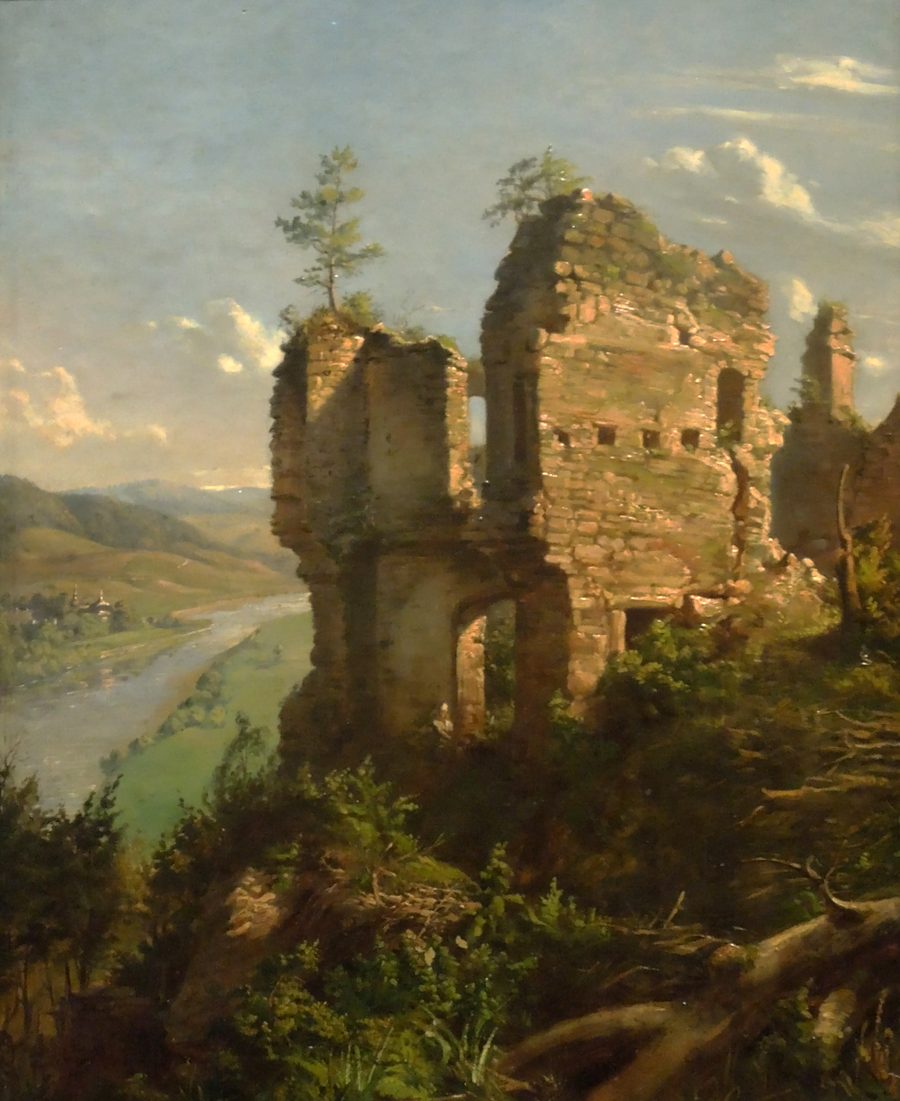 Ruiny zamku Sobień w okolicach Manasterzec
Photo: Andrzej Grabowski (1833–1886) via Wikimedia Commons, Public domain
Ruiny zamku Sobień w okolicach Manasterzec
Photo: Andrzej Grabowski (1833–1886) via Wikimedia Commons, Public domain
Góra Sobień: Nature and castle ruins
The Góra Sobień nature reserve is located in the village of Manasterzec, in the municipality of Lesko. It covers 5.34 hectares and was established on 10 December 1970. The reserve contains the “Góra Sobień” nature trail. The ruins of Sobień Castle lie at the highest point of the hill within the reserve, in the territory of Manasterzec. Góra Sobień is a destination for walks and excursions. The nature trail and the ruins bring two different aspects of the place into focus—natural history and local history.
A notice from the Forest District dated 16 June 2026 described wooden stairs and wooden walkways as visitor infrastructure in connection with an announced visit to the ruins. The notice announcing the reopening of the historic “Sobień” nature trail mentioned new information boards about the history of the Kmita family.
Early local history and the monastery
Manasterzec was probably founded in 1433. The first written reference dates to 1436; by then, the village was already a noble village in the Sobień estates of the Kmita family. The two dates represent different aspects of its early history: 1433 is the probable year of foundation, while 1436 is the year of the first written reference.
In the 18th century, a Basilian monastery stood on a hill between the upper end of Manasterzec and neighbouring Bezmiechowa. The settlement took its name from this monastery. After the monastery was dissolved, the Church of the Dormition of the Blessed Virgin Mary remained until 1875.
The railway line from Zagórz to Krościenko, built in 1873, is also part of the village’s history. It runs near the church; its features include a bridge over the Janicki stream and a road leading to the village. The railway line, stream crossing and road thus form another historical theme alongside the history of the monastery and church.
Manasterzec as a holiday destination
When looking for a holiday apartment, you can use the focus you want for your stay as a guide: would you like to put natural history and landscape first, or are you more interested in the village’s development over several centuries? Góra Sobień and its nature trail offer a concrete starting point for the first question; the early written reference, monastery and railway line provide several historical layers for the second. This way, you can choose Manasterzec based on which of its themes you would like to explore more closely on your trip.
Discover more destinations
Discover more destinations: Bóbrka, Smerek, Kalnica, Wańkowa, Przysłup, Rabe, Mchawa, Zwierzyń.
To the broader travel overview: Leski.

