
Tarnowitz: Mining history and underground routes
Accommodation in Tarnowitz
Tarnowitz combines an impressive mining history with underground visitor routes, some of which you can experience by boat. There is also plenty to discover above ground: Renaissance architecture, collections on local history and a park landscape on former mining land each have their own appeal. When choosing your holiday apartment, you can consider whether you want to focus your trip mainly on the mining world or on architecture, museums and landscapes.
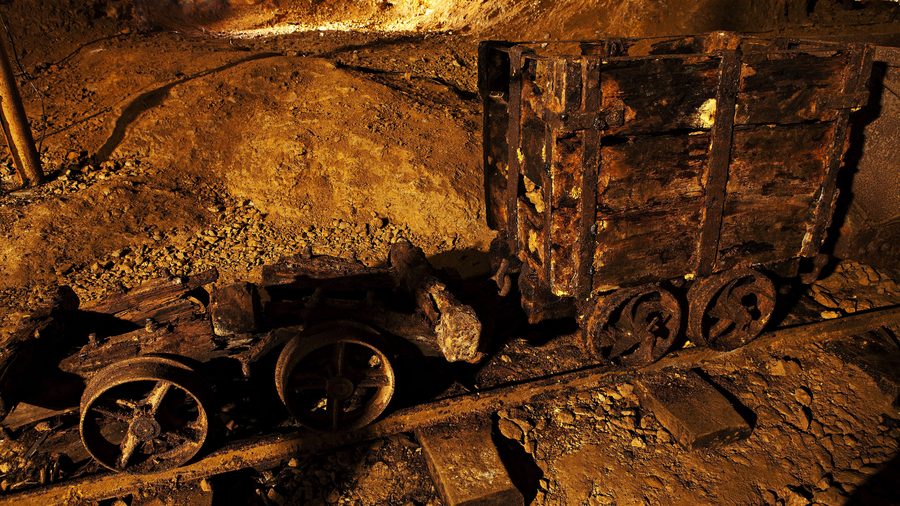 Das historische Silberbergwerk macht die Bergbaugeschichte von Tarnowskie Góry erlebbar.
Photo: Wojt ek via Wikimedia Commons, CC BY 3.0
Das historische Silberbergwerk macht die Bergbaugeschichte von Tarnowskie Góry erlebbar.
Photo: Wojt ek via Wikimedia Commons, CC BY 3.0
Mining history underground
The Sztolnia Czarnego Pstrąga offers a 600-metre underground boat ride and is inscribed on the UNESCO World Heritage List. Shaft No. 13, Ewa, is the entrance to this underground visitor route. This makes mining history tangible not only through exhibits, but also along a route underground. Another underground visitor route that includes a boat ride is part of the Zabytkowa Kopalnia Srebra, which is also part of the UNESCO World Heritage property.
The Kopalnia Zabytkowa Rud Srebronośnych is a 1,700-metre underground visitor route. Boats cover a 270-metre section. These specific distances give this mining experience its own scale: the boat ride at the Sztolnia Czarnego Pstrąga is listed as 600 metres, while for the Kopalnia Zabytkowa Rud Srebronośnych, the length of the entire visitor route and its boat section are specified. Those interested in mining history will therefore find several different ways to explore the subject underground.
Architecture, collections and local history
The Sedlaczek inn building is considered the town’s best-preserved example of historic secular architecture. Renaissance ceilings, portals and vaults define the building. The Muzeum w Tarnowskich Górach offers a different view of the past: it displays mementoes of the town’s history as well as a collection of early modern Western European paintings.
The Church of the Holy Apostles Peter and Paul is also noteworthy for its architecture and furnishings. Its 16th-century tower is almost 60 metres high. Inside, gravestones, a group of stained-glass windows and several high-quality paintings have been preserved. The Dzwonnica Gwarków stands on Plac Gwarków; it was moved there in 1955. These places add religious art, historic architecture and individual records of the town’s development to the picture. The Skansen Maszyn Parowych covers an area of about one hectare, with an industrial landscape and exceptional technological inventions. The Gwarki procession is included on the National List of Intangible Cultural Heritage.
Parkland and routes
Park Miejski is described as the best-preserved, most extensive and most diverse of the parks created on former mining sites. Its origins on former mining land make it a different chapter in regional history from the underground visitor routes: here, the focus is on the transformed landscape. A narrow-gauge railway also runs through Tarnowskie Góry.
For active exploration, the cycling network in Tarnowskie Góry offers more than 30 kilometres of cycle paths, combined walking and cycling paths, and cycle lanes on roads. The Szlak Donnesmarcków, Szlak Gwarków and Szlak UNESCO are also available. An official railway and cycling route leads on foot or by bicycle through Tarnowskie Góry and Park Repecki, then along the Drama towards Zbrosławice. This lets you decide how much to focus on themes such as industrial heritage, local history and outdoor activity, without implying that all the routes mentioned form a single continuous trail.
Culinary and other regional discoveries
One specific culinary event was the 18th Festiwal Śląskie Smaki in the market square of Tarnowskie Góry, held on 2 June 2024. The festival, organised since 2006, features regional dishes and culinary demonstrations. For another cultural highlight, head to Radzionków: the Muzeum Chleba, Szkoły i Ciekawostek has several thousand exhibits on baking, the history of bread and production technology. The Droga Św. Jakuba „Via Regia” also passes through Radzionków. This pilgrimage route is intended for individual pilgrims or small groups, regardless of denomination or nationality, and leads to the cathedral in Santiago de Compostela, Spain.
More local pages for reference: Tarnowskie Góry, Radzionków, Kalety, Wieszowa, Pyrzowice, Miasteczko Śląskie, Nowe Chechło, Ziętek, Boniowice, Świerklaniec, Nowa Wieś Tworoska, Tąpkowice, Krupski Młyn, Księży Las and Szałsza.
For the broader travel overview: Silesia.

