
Prabuty: Architectural History and Birdwatching
Accommodation in Prabuty
Five lions support the three-tier Roland Fountain in Prabuty; its design combines ancient, Romanesque and Gothic elements. The town can be explored through buildings that bring together different periods and stories, including the market square, a surviving city gate, churches and the former bishop’s castle. The Jezioro Liwieniec ornithological reserve offers a different focus. When planning your trip, you can decide whether you are mainly interested in architecture and history or in birdwatching.
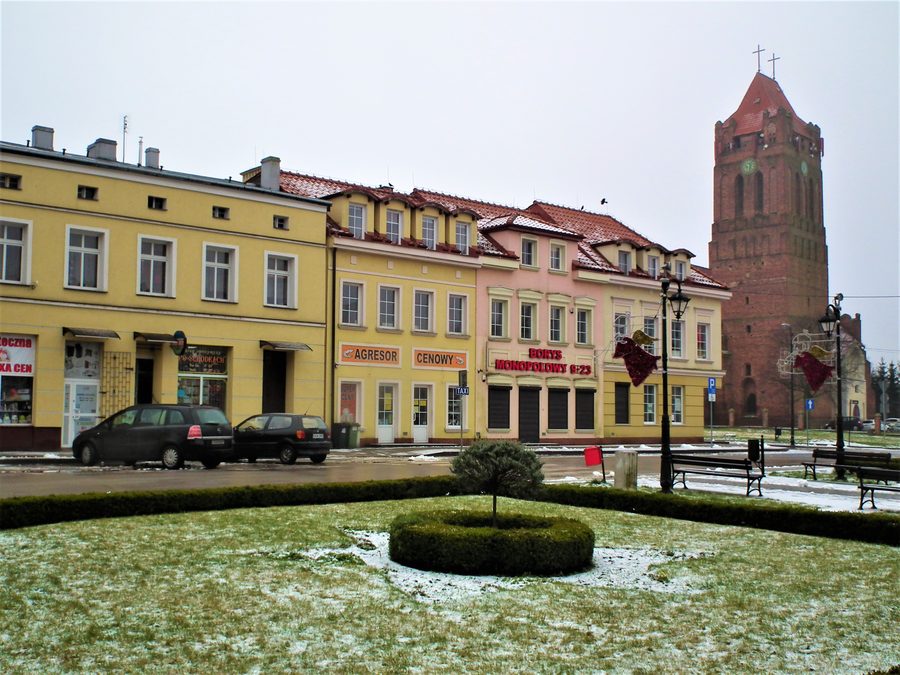
Market Square and the Roland Fountain
The market square is one of the oldest parts of Prabuty and dates from the 14th century. The Roland Fountain, by contrast, was brought here from Berlin only in 1929. The difference in dates brings two aspects of the town’s history to life: the age of the square and the fountain’s later arrival. With its three tiers, the fountain combines ancient, Romanesque and Gothic architectural elements. The five lions supporting it gave it its current name. If you enjoy taking a closer look at individual buildings, you’ll find not only a variety of stylistic features here, but also a specific story about how the fountain came to Prabuty.
Gothic Gate and Distinctive Churches
The Gothic Kwidzyn Gate (Brama Kwidzyńska) is a surviving section of the town walls. It dates from the first half of the 14th century and is five storeys high. Comparing it with the three-tier Roland Fountain highlights different architectural forms without suggesting that the two buildings served the same purpose. Another architectural feature is the Gothic St. Adalbert Co-Cathedral, with its polygonal presbytery and asymmetrical, 49-metre-high tower. “Polygonal” describes an altar area that ends in multiple sides. The details of the gate, fountain and church tower provide specific features that can help distinguish architectural forms.
Church History and Local Memories
Prabuty’s bishop’s castle was the seat of the bishops of Pomesania until the secularization of Prussia in 1525. The Polish Church (Kościół Polski) was built by Bishop Jan I Mnich from 1378 to 1402 as a chapel in honour of the Blessed Virgin Mary. This history encompasses both a religious dedication and the former role of the bishops in the town. The Polish Church also houses a small memorial museum. Its collection includes old machines, tools, furniture, coins, militaria and documents, as well as sculptures by local artists and mementos of the referendum. The collection thus brings together objects from different fields and local memories. If you would like to include the museum in your plans, check visitor information in advance.
Birdwatching at Jezioro Liwieniec
Two viewing scopes have been installed on the edge of the Jezioro Liwieniec ornithological reserve for adults, children and people with disabilities. Information boards with illustrations introduce the bird species that can be observed there. Birdwatching offers a different focus from Prabuty’s architectural history and can be a key part of your travel plans. If you plan to visit the observation point, check the condition of the scopes beforehand.
Plan Your Stay Around Your Interests
When looking for a holiday apartment in Prabuty, you can start by considering what you want to focus on during your stay: the buildings and their history, or birdwatching at Jezioro Liwieniec. Then compare the location of a specific option with your own daily plans. This way, you can choose accommodation based on the experiences you want to prioritise, rather than on a general idea of what a holiday apartment should offer.
Discover more destinations: Kwidzyn, Licze, Rodowo, Grabówko, Sadlinki, Gardeja, Grodziec, Rodowo Male.
Back to the main travel overview: Marienwerder.

