
Białystok – Baroque Residence and Jewish Heritage
Accommodation in Białystok
Białystok can be discovered in many different ways: Branicki Palace represents baroque residential culture, the Jewish Heritage Trail leads to places connected with Jewish history, and the city is also home to a large municipal forest complex. You can choose between architecture, remembrance and nature for your trip—or make these themes the focus of different days of your holiday.
 The Griffin Main Gate at Branicki Palace in Białystok.
Photo: Scotch Mist via Wikimedia Commons, CC BY-SA 4.0
The Griffin Main Gate at Branicki Palace in Białystok.
Photo: Scotch Mist via Wikimedia Commons, CC BY-SA 4.0
Branicki Palace and Gardens
Branicki Palace is considered a well-preserved baroque magnate residence. Those interested in the history of the palace and its family can follow several themed routes: the “Polski Wersal” tourist trail passes through the Branicki palace and gardens. The Branicki Family Trail, in turn, leads to sites associated with the lives and work of Stefan Mikołaj Branicki, Jan Klemens Branicki and Izabela z Poniatowskich. The two trails have different emphases—one on the residence and its grounds, the other on places connected with the family.
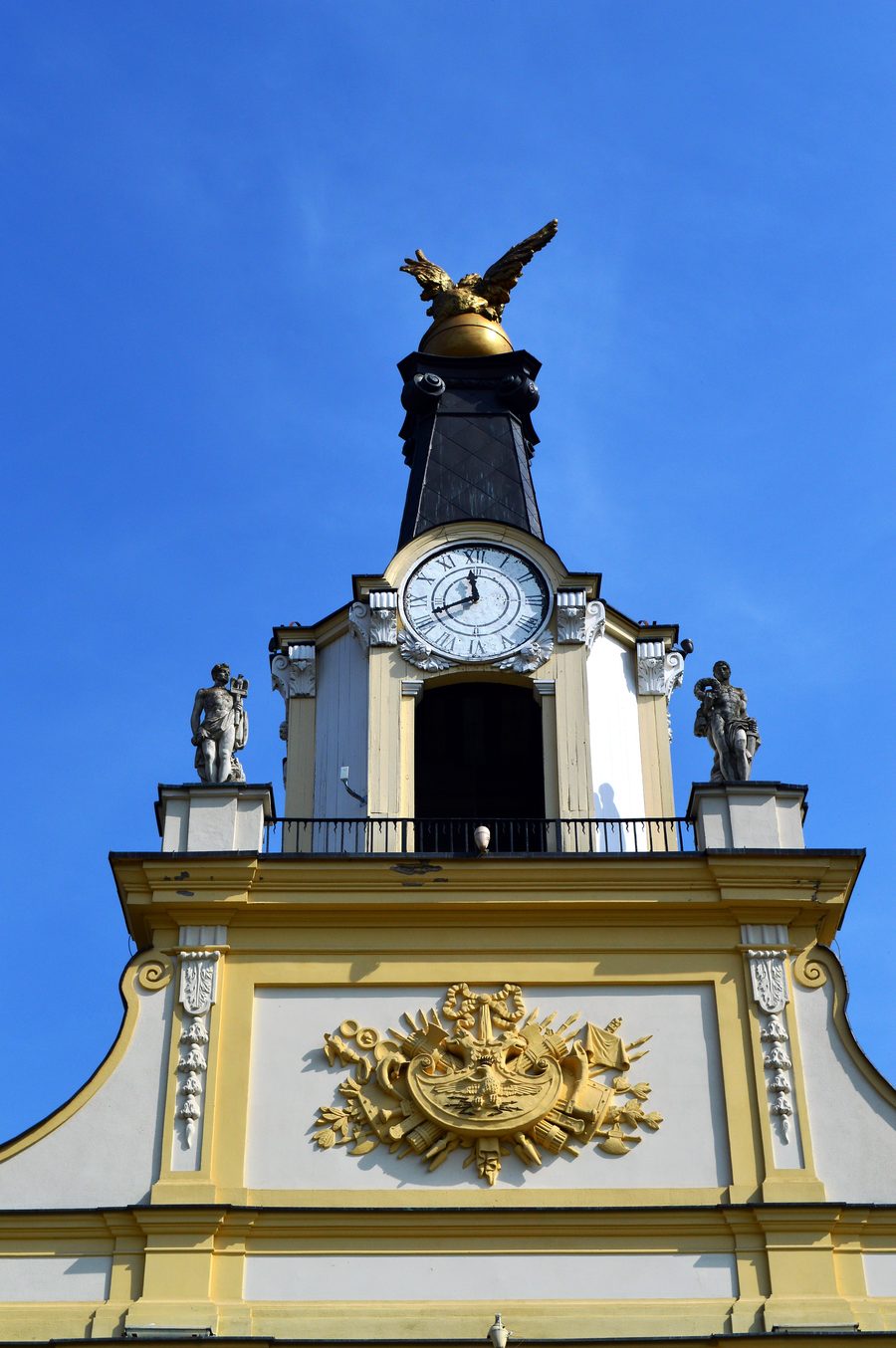
The walk “Spacer w przeszłość Pałacu Branickich w Białymstoku” includes exhibitions on the site’s “medical” history, dating back to the time of the Branicki family. It also takes in the palace cellars, with a multimedia presentation, and selected ceremonial rooms, including the vestibule and the Aula Wielka. The palace also houses the mechanism of one of Poland’s oldest still-functioning tower clocks; the clock can be viewed during the tourist season. Branicki Garden is open free of charge all year round.
City Trails with Different Themes
For a walk focusing on architectural heritage, the Wooden Architecture Trail highlights interesting wooden buildings and clusters of wooden architecture in Białystok. The official Białystok Mural Trail offers another perspective on the city. A printed map from 2019 described different options for exploring it on foot, by bicycle or by bus. These options can help you decide whether you’d like to focus on architecture or mural art.
Jewish Heritage and Remembrance
The Jewish Heritage Trail leads to places and sites associated with the centuries-long presence of the Jewish population in Białystok, with prominent figures and initiatives, and with places of remembrance. A particularly poignant site is the Great Synagogue Memorial. It commemorates the synagogue built between 1903 and 1913 and the events of 27 June 1941: around 800 people were locked inside the synagogue before the building and the surrounding Jewish quarter of Szulhof were set on fire. If you’d like to explore the city’s history through individual sites, you can visit this memorial alongside the other stops on the Heritage Trail.
Forest and Nature in Białystok
Nature is also part of the cityscape: the “Las Zwierzyniecki” nature reserve forms part of a municipal forest complex of around 70 hectares near Park Zwierzyniecki in Białystok. This approximate size describes the forest complex as a whole and gives the nature theme a concrete scale. When planning your trip, you can consider this alongside the city’s cultural themes. If you’d rather spend time outdoors, the Wooden Architecture Trail and the Mural Trail offer other ways to discover Białystok.
When choosing a holiday apartment in Białystok, you can start by thinking about which of these aspects you’d like to shape your stay: baroque residential history, Jewish heritage, nature or a mix of all three.
More destination pages: Grabówka, Niewodnica Kościelna, Oliszki, Uhowo, Poświętne, Tykocin, Jeżewo Stare, Zaścianki.
For the broader travel overview: Białostocki.

