
Discover Eišiškės: Old Town and Jewish local history
Accommodation in Eišiškės
Discover Eišiškės through its architecture and local history. The Old Town is an architectural monument; there is also a registered castle site, the church’s construction history and historical references to the Jewish community. These themes offer different perspectives on the town: its Old Town, a designated heritage site, its architectural history and traces of a community. For travellers interested in culture, this mix offers concrete points of interest to help them consider Eišiškės as a possible destination.
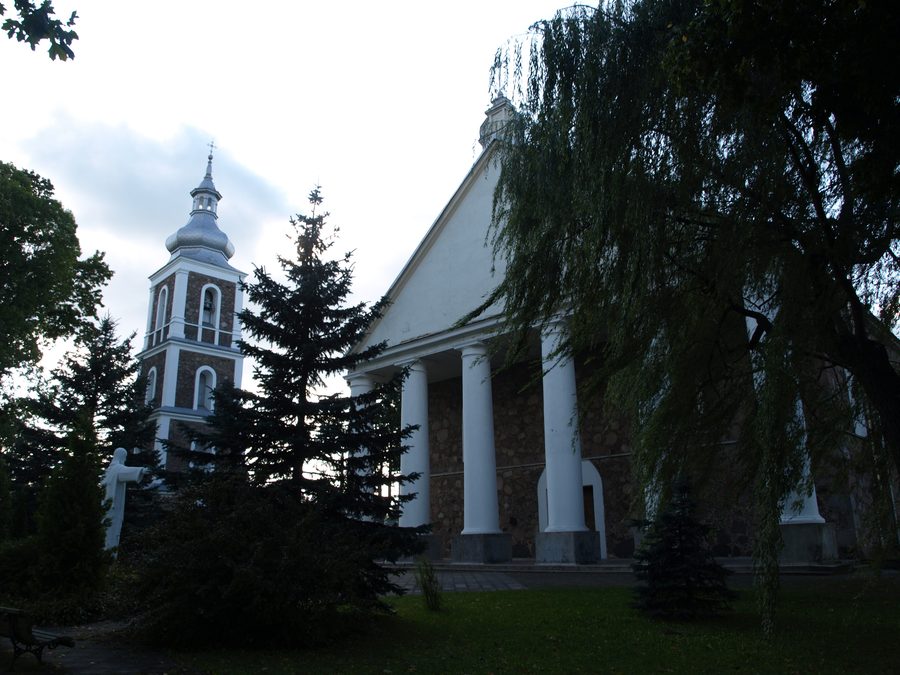 Die Kirche von Eišiškės verweist auf die religiöse und historische Prägung des Ortes.
Photo: Juste via Wikimedia Commons, CC BY-SA 3.0
Old Town, castle site and church
The Old Town of Eišiškės is an architectural monument. The castle site is listed in the Lithuanian Register of Cultural Heritage under number 270. The two references concern different places: one refers to the Old Town, the other to the castle site. Those interested in history can keep these reference points distinct when planning, rather than combining them into a single attraction.
The church in Eišiškės was built between 1847 and 1852 to a design by Teodoras Narbutas. Narbutas was a historian and engineer. The dates place the construction in a specific period; the attribution also names the designer and his two professional roles. For travellers interested not only in a building but also in how it came about, this combination of dates and named attribution offers a precise approach to the architectural history of Eišiškės.
Jewish local history
The complex of the old Jewish cemeteries in Eišiškės is located at Gegužės a. 19. This specific address locates the site in the town. A synagogue on Naujoji gatvė is mentioned in inventories from 1775 and 1776; it has not survived. The dates place the reference in the late 18th century. At the same time, the statement about its survival status makes clear that this was a historical synagogue, not a building that exists today.
In the first half of the 20th century, the courtyard of the Eišiškės synagogue covered almost 162 Ar. This historical area measurement refers to the courtyard, not the synagogue building. It draws attention to a different kind of detail than the inventory entry: here, the focus is on the size of a courtyard at a particular time in history. The time period is therefore just as much a part of the information as the figure itself.
The property of the Jewish community of Eišiškės, called Shulhoyf, was on Naujoji gatvė. The name refers to a specific place belonging to the community, while the street address locates it within the town. To understand the local history, it is helpful to read such names alongside the references to the cemetery, synagogue and courtyard: each gives a distinct reference to different historical places and aspects.
Choose Eišiškės as a destination
If architecture and local history are to shape your travel plans, Eišiškės offers a clear cultural focus. The town brings together an Old Town designated as an architectural monument, the history of its church and specific references to the Jewish community. When choosing a destination, you can consider whether this perspective on history and places suits your holiday. Look for a holiday apartment in Eišiškės if you would like these themes to be at the centre of your stay.
Discover more destinations: Strėva, Karvys, Trakai, Kernavė, Lentvaris, Aluona, Žuklijai, Aukštadvaris.
For the main travel overview: Vilnius County.

