
Accommodation in Lithuania
Accommodation in Lithuania
Lithuania surprises with strong contrasts packed into a small area: on the Baltic Sea, sandy beaches, dunes, and pine forests meet historic towns, island castles, and an inland landscape rich in lakes. This means your family can combine peaceful days by the water, cultural discoveries, and nature experiences — or choose the region that best suits your planned holiday.
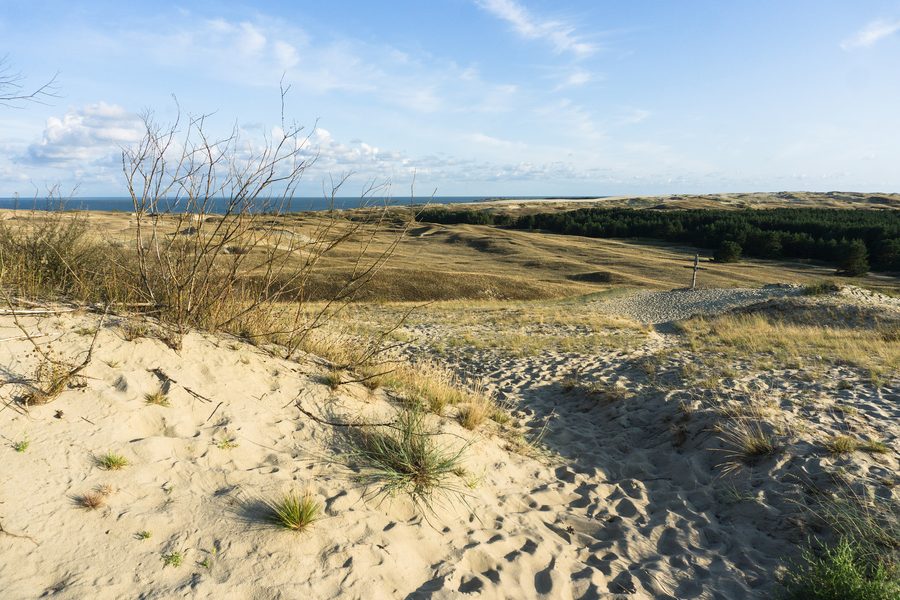 Dünenlandschaft der Kurischen Nehrung an Litauens Ostseeküste.
Photo: Alexey Komarov via Wikimedia Commons, CC BY-SA 4.0
Dünenlandschaft der Kurischen Nehrung an Litauens Ostseeküste.
Photo: Alexey Komarov via Wikimedia Commons, CC BY-SA 4.0
Lithuania at a glance
- Lithuania’s Baltic coast is marked by long sandy beaches, dunes, and the Curonian Spit.
- On the Curonian Spit, dune landscapes, pine forests, and the Baltic coast come together to form a particularly distinctive natural setting.
- Aukštaitija is shaped by many lakes, national parks, and small villages.
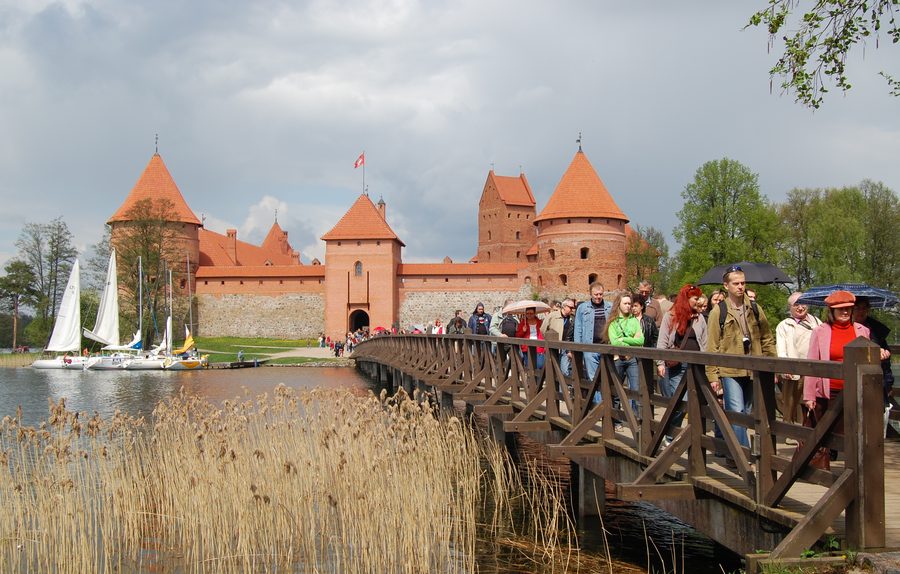
- Trakai combines an impressive island castle with an expansive lake landscape.
- Vilnius is known for its baroque old town and has a clear cultural focus.
- Potatoes, rye bread, dairy products, and mushrooms shape key elements of Lithuanian cuisine.
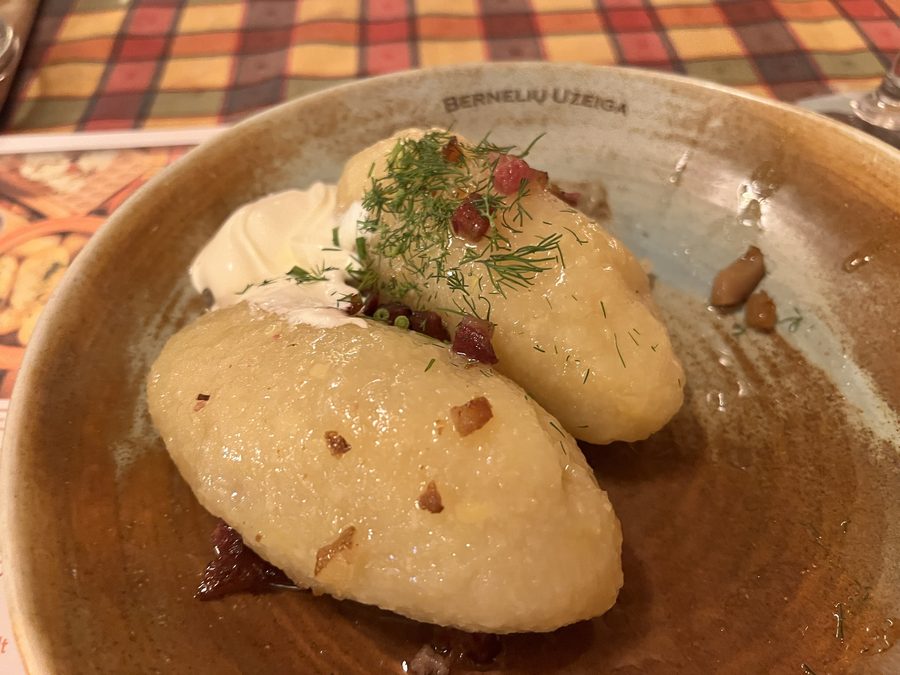
- Cepelinai provide a concrete culinary point of reference for the trip.
Between dunes, lakes, and historic cityscapes
If you want the sea to be the centrepiece of a family holiday, the Curonian Spit offers a truly distinctive landscape experience. Dunes and pine forest add variety to the long sandy beaches; walks and quieter hours by the water can be combined here into a very special coastal holiday setting. The Klaipėda region provides a more local focus around Klaipėda, which is regarded as an access point to the Baltic coast. To judge the exact location of your accommodation, please check whether it suits the stretch of coast and daily rhythm you have in mind.
A different travel feeling awaits inland. Aukštaitija is defined by lakes, national parks, and small villages and offers a clear contrast to the coast: nature days, waterscapes, and a calmer setting take centre stage here. The Utena region can be seen as a local extension of this lake-rich travel picture. If you value nature and shared day trips more highly than a stay by the sea, an inland base is the obvious choice; you should check specific locations and distances yourself before booking.
City and castle as a cultural counterpoint
Vilnius brings history and city life into the trip. The baroque old town shapes the image of Lithuania’s capital; the university, founded in 1579, underlines its long cultural importance. A base close to the city is therefore especially suitable for families who want to experience culture not just as a brief stopover, but as a fixed part of their holiday. The Vilnius region is the right local extension for this city-and-culture profile. When choosing, the main question is whether the accommodation suits your desired stay in the city.
Trakai adds a very specific excursion idea to Vilnius: the island castle stands amid a lake landscape and combines historical discovery with a natural setting. That makes the place a vivid building block for a trip that alternates between cultural and quieter days. The cuisine also tells its own story here: kibinai are part of the Karaim culinary tradition in Trakai.
The right base for your travel plan
The most important decision is less about accommodation in general than about the kind of trip you want: a base near the coast suits you if the Baltic Sea, sandy beaches, dunes, and the Curonian Spit are meant to be the focus. For lakes, national parks, and more rural landscapes, an inland base is the better fit. Anyone putting the baroque old town and urban culture at the centre should look toward Vilnius. A holiday apartment can also be appealing if you want to include regional ingredients and dishes in everyday holiday life; however, that does not automatically mean a particular kitchen setup or shopping option is available.
For a round trip, the contrasts can be combined deliberately: the coast and dunes add a natural accent, Vilnius and Trakai provide city history and castle scenery, while Aukštaitija represents the lake-rich inland. In this way, the choice of accommodation can follow the desired alternation between active, cultural, and quieter days instead of reducing the whole country to just one holiday pattern.
Regional deep dives in four directions
Western options
For a western travel plan, you will find the local focus on Klaipėda with its link to the Baltic coast here, as well as the Tauragė and Telšiai regions.
Vilnius and the southeast
For further regional exploration around the capital, the Vilnius region is the starting point. In addition, the Alytus region leads into a southeastern regional focus.
Central regions
As central regional deep dives, you can then take a closer look at the Kaunas region and the Marijampolė region.
Northern and northeastern options
For further inland and regional decisions, the Panevėžys region, the Šiauliai region, and the Utena region are available. Utena can also be understood as a regional extension alongside the lake-rich Aukštaitija travel picture.
Frequently asked questions about Lithuania
What makes Lithuania varied as a travel destination?
The combination of the Baltic coast and dunes, the lake-rich inland, Vilnius’s baroque old town, and the island castle of Trakai allows for very different holiday experiences. Families can combine nature, culture, and quieter days.
Which type of trip is better: coast, city, or nature?
The coast suits a travel plan with the Baltic Sea, sandy beaches, and dunes. Vilnius puts a cultural city focus at the centre, while Aukštaitija offers a nature-oriented travel picture with lakes, national parks, and small villages. Trakai is ideal as a combination of history and lake scenery.
Which Lithuanian specialties can be part of the trip?
Lithuanian cuisine traditionally uses potatoes, rye bread, dairy products, and mushrooms. Cepelinai are a well-known Lithuanian dish; in Trakai, kibinai belong to the Karaim culinary tradition.


