
Somogyszentpál: Church, Ruin and Narrow-Gauge Railway
Accommodation in Somogyszentpál
Somogyszentpál brings together several different impressions: a Baroque Catholic church, small religious monuments by the roadside, a Tájház featuring folk art, and the medieval remains of the Varjaskéri church ruins. A narrow-gauge railway is also part of the village’s character. You can plan your trip around what interests you most: local history and culture, a walking destination, or observing nature during a train journey.
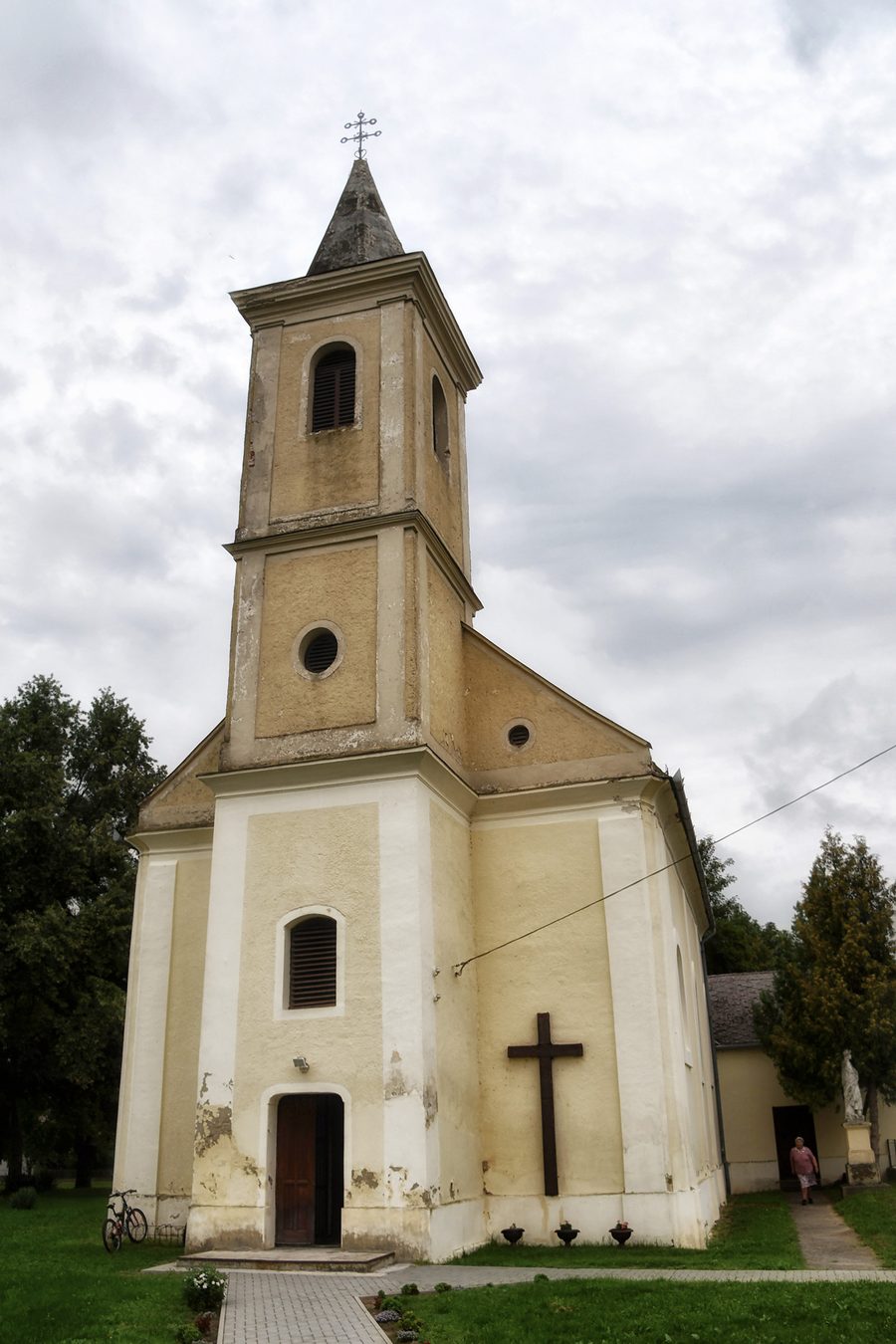 Die Kirche Páduai Szent Antal-templom ist ein dokumentierter Orientierungspunkt im Dorf.
Photo: Pasztilla aka Attila Terbócs via Wikimedia Commons, CC BY-SA 4.0
Church and small religious monuments
The Catholic church was built between 1774 and 1778 in the Baroque style, in honour of Saint Anthony of Padua. Its construction period and dedication give the building a clear historical context. Anyone interested in culture and religious architecture will find a different point of reference here than at the medieval remains of the Varjaskéri church ruins.
The village’s appearance also includes 26 roadside shrines and stone crosses. They are being restored on an ongoing basis. The number and varied forms of these small monuments offer another reason to take a closer look at Somogyszentpál: religious symbols can be found not only in the church, but also along the roads. The ongoing restoration work is part of their present-day story.
In the Tájház, the front room is furnished with traditional folk art. This gives the house its own cultural focus alongside the churches and roadside symbols.
The Varjaskéri church ruins as a walking destination
The Varjaskéri church ruins are considered a popular walking destination. The unpaved path leading there begins at the start of Ady Endre Street. If you plan this outing, bear in mind that the route itself is part of the decision: access is via an unpaved path, not a described paved route. This makes the outing different from a visit focused on the cultural sights in the village.
Only the western entrance and façade wall of the medieval brick church remains. This surviving wall identifies the former church as a ruin, while earth mounds mark further traces of its construction history. These mounds mark the foundation lines of the first and second construction phases, as well as the cemetery wall. At the Varjaskéri church ruins, a surviving wall stands alongside ground plans that can be made out in the landscape. Those interested in historic buildings can look for two kinds of remains here, without mistaking the ruin for a fully preserved church building.
Narrow-gauge railway and nature watching
Somogyszentpál is accessible by the narrow-gauge railway between Balatonfenyves and Somogyszentpál. The railway is another way to include the village in your travel plans. On the journey to Somogyszentpál, you can observe the rich plant and animal life, as well as herds of grazing cattle and buffalo, from the train window. The view from the window draws your attention to the surroundings along the route and differs from the village’s local cultural sights, such as the church, Tájház and small monuments.
If you are travelling with children, you can use the views from the train window as an opportunity to look out for plants and animals together. The outing to the Varjaskéri church ruins, by contrast, calls for a wish to go walking; the church and Tájház appeal to other cultural interests. When choosing a holiday rental in Somogyszentpál, you can therefore consider which of these experiences you would most like to shape your trip: culture in the village, the ruins as a walking destination, or the narrow-gauge railway and its nature watching opportunities.
Other places in the same broader selection include Nagyszakácsi, Balatonberény, Böhönye, Balatonújlak, Kéthely, Balatonszentgyörgy, Tikos and Nikla.
For the broader travel overview: Marcali.

