
Vértesacsa – Church and Föngyöskert
Accommodation in Vértesacsa
Visitors considering Vértesacsa as a possible destination will find two distinct points of interest: the Roman Catholic Church of Szent Kereszt and Föngyöskert. The church represents architectural history, while the garden brings together medicinal plants, Hungarian folk medicine and folk culture. These attractions give the place a distinctive character and help you find a holiday rental to suit your travel group’s interests. First, consider whether architectural history or knowledge of plants should shape your stay more.
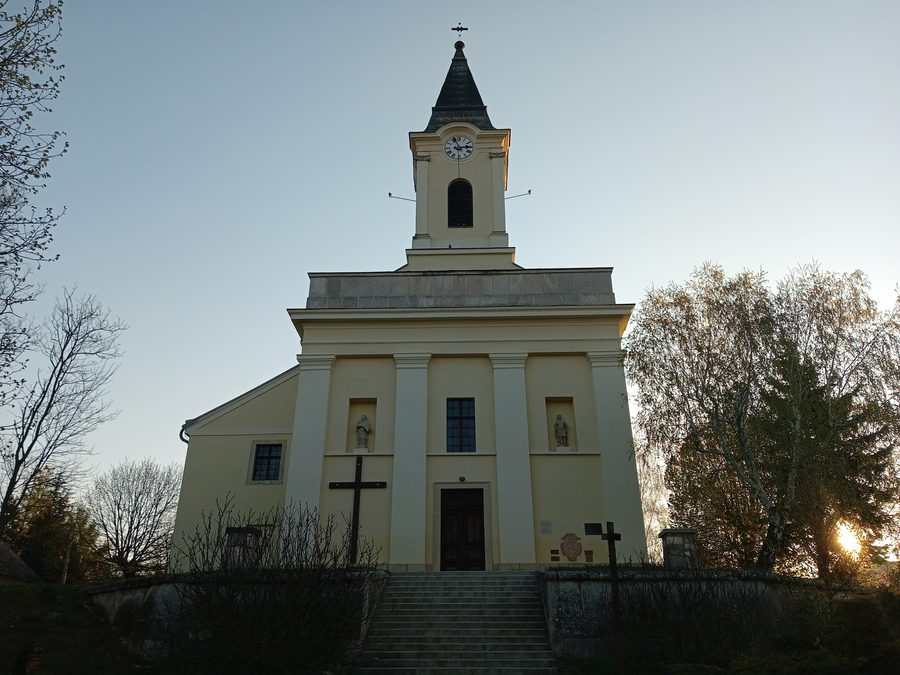 Vértesacsai Szent Kereszt Felmagasztalása Templom
Photo: Locationmanpictures via Wikimedia Commons, CC BY-SA 3.0
Architectural history in Vértesacsa
The present-day Church of Szent Kereszt was built between 1768 and 1780 using medieval ruins. It is regarded as the oldest and most significant architectural monument in Vértesacsa. The combination of medieval remains and the period when the church was built gives its history a clear timeline. For travellers interested in culture, this is a tangible starting point for viewing architecture as part of the town’s history. Those interested in historic buildings can therefore understand the church not only through its dates, but also through the incorporation of the older ruins.
Föngyöskert: plant knowledge and folk culture
Föngyöskert is located at the edge of Vértesacsa, in the direction of Alcsútdoboz, on the hill of the former pasture at Meleg-hegy, and covers just under 10 hectares. The nature trail presents Hungarian folk medicine and folk culture; around 250 medicinal plant species can be seen in the garden. Plants and cultural traditions thus come together as two aspects of the same subject. This combination offers a different perspective from the architectural history of Szent Kereszt and gives your choice of destination its own focus. The two figures also describe different things: just under 10 hectares indicates the size of the site, while around 250 medicinal plant species describes the variety in the collection. If you are especially interested in plant knowledge and folk culture, you can give this focus particular consideration.
Visitor information
The main entrance to Föngyöskert is at the Vértesacsa Szőlőhegy bus stop. The stop’s name is a specific point of reference for planning. If you plan to travel by bus, check the current timetable. Föngyöskert is temporarily closed; before visiting, also check whether the garden is currently accessible.
A nature perspective in the wider destination
The wider destination of Székesfehérvár offers another perspective on the landscape: the reed beds on Lake Velence are home to thousands of waterbirds. This adds a nature-focused note alongside Vértesacsa’s local themes: Szent Kereszt foregrounds architecture and local history, Föngyöskert focuses on medicinal plants, folk medicine and folk culture, while Lake Velence brings its reed landscape and birdlife into view. When choosing your holiday rental, you can consider whether Vértesacsa’s local cultural and plant-related themes or the landscape perspective of the wider destination should be the deciding factor. This lets you consider local interests and the nature themes of Székesfehérvár as distinct areas of focus.
Discover more destinations
Discover more destinations: Vértesboglár, Szár, Csabdi, Tabajd, Csákvár, Bicske, Etyek, Kajászó
Back to the overview of the wider destination: Bicskei.

