
Discover Greece
Accommodation in Greece
Greece offers families far more than just a few days at the beach: between islands, coasts, mountains, cities, and historic places, a trip can be shaped in many different ways. You can focus on the sea and coves, combine scenery and culture, or find your own rhythm with shared meals and changing discoveries.
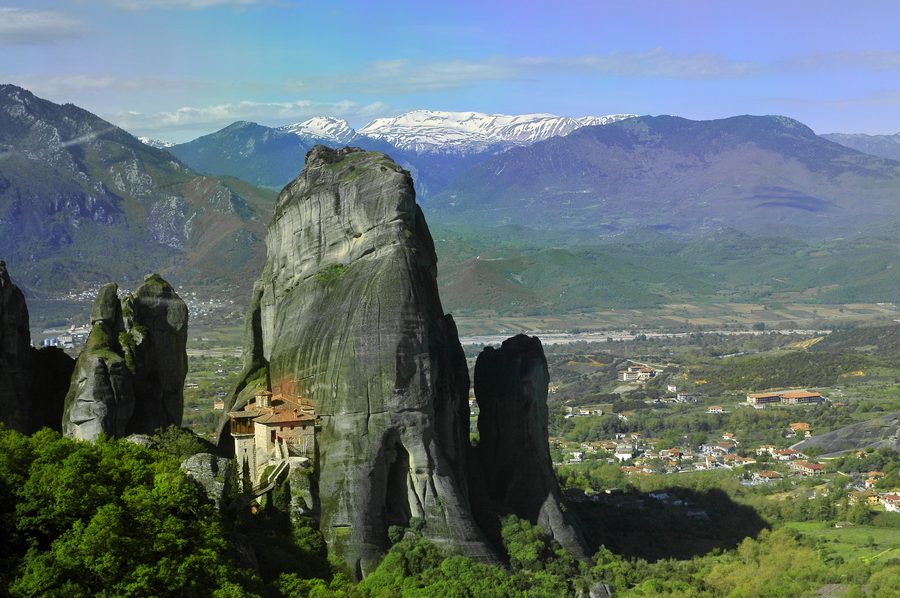 Das Rousanou-Kloster in der Felsenlandschaft von Meteora in Thessalien.
Photo: LBM1948 via Wikimedia Commons, CC BY-SA 4.0
Das Rousanou-Kloster in der Felsenlandschaft von Meteora in Thessalien.
Photo: LBM1948 via Wikimedia Commons, CC BY-SA 4.0
In brief
- Greece consists of 13 regions: nine are mainly on the mainland, and four comprise island groups.
- The island regions include the Ionian Islands, Crete, the North Aegean, and the South Aegean.
- Crete combines long beaches and smaller coves with towns, mountain areas, gorges, olive groves, and cultural sites.
- The monasteries of Meteora stand on striking rock formations in Thessaly and have been a UNESCO World Heritage Site since 1988.
- On the Peloponnese, beaches, coastal towns, olive landscapes, mountains, and historic places come together.
- Mezedes are small starter plates that can be part of Greek food culture when meeting with family or friends; ouzo may be served with them.
Sea, rocks, and history in one destination
The contrast between mainland and islands is precisely what makes the national selection so interesting. An island trip puts coasts, coves, and the island setting itself at the center. On the mainland, coastal towns, scenery, and cultural places can be combined more closely. The division into regions provides orientation, but not every region represents a single, uniform travel experience.
Meteora makes this link between landscape and culture especially vivid: the monasteries on the rocks are not only a historic site, but also a concrete setting for a day of travel in which nature and cultural heritage come together. For families who do not want every day to feel the same, this kind of mix between being outdoors and exploring culture can give the holiday a varied structure.
Which kind of trip suits your plans?
Crete: combining beach, mountains, and culture with intention
Crete is especially varied as an island region: alongside long beaches and smaller coves, the island includes towns, mountain areas, gorges, olive groves, and cultural sites. Anyone wanting to experience these contrasts should not choose accommodation separately from the itinerary. A fixed base can make sense if you prefer a manageable daily rhythm; a deliberately planned trip with two stops may be the right choice if several landscapes matter to you.
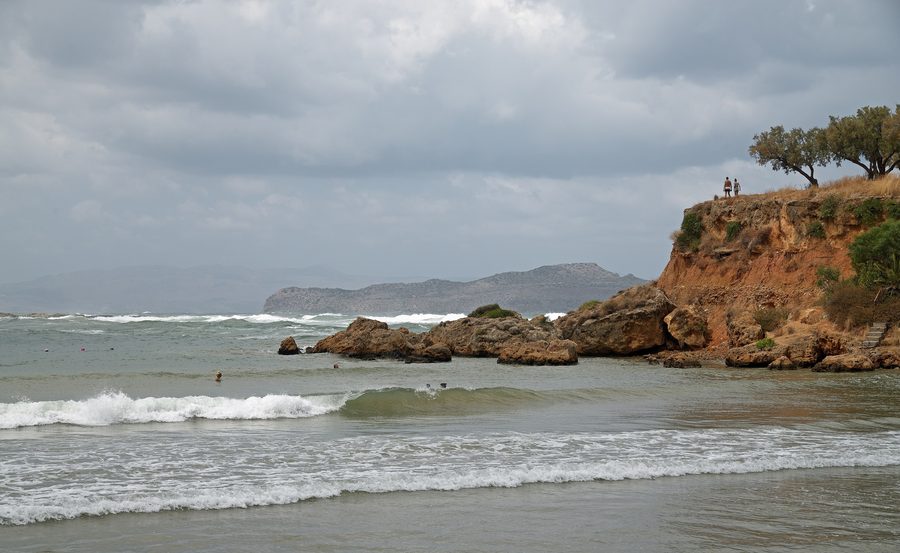
Island regions: coastlines and your own island rhythm
The Ionian Islands are associated with green landscapes, coves, cliffs, and places shaped by Venetian influence. They are therefore an example of an island-focused trip in which coastal scenery and discovering towns go hand in hand. The North Aegean and the South Aegean also belong to the island regions. For this choice, the first question is whether your holiday should be shaped primarily by staying on an island; you can then choose the exact location to suit the days and excursions you have planned.
Mainland: combining coast, scenery, and historic places
The Peloponnese brings together beaches, coastal towns, olive landscapes, mountain regions, historic places, and harbor towns. Epirus, as another mainland option, offers a mix of scenery, coastal towns, and culture. In Thessaly, Meteora gives a trip focused on landscape and cultural heritage a particularly memorable destination.
Other mainland regions directly available are Attica, Central Greece, East Macedonia and Thrace, West Greece, West Macedonia, and Central Macedonia. You can then explore these other mainland regions according to your own interests.
Choose a base that fits your travel plans
The most sensible location in Greece depends on the kind of trip you want: if the coast and quiet days are the focus, the accommodation should suit that priority. If, on the other hand, you want to combine historic places, scenery, and several excursions, it makes more sense to choose a base according to the specific destinations rather than a general country recommendation. On Crete, this consideration is especially important because of the island’s size; on the Peloponnese or in Epirus, the desired mix of coastal towns, scenery, and culture can be decisive.
For families with different interests, accommodation that allows flexible days is helpful: after an active outing, you can take the next day more slowly, plan meals together, and respond to changing weather conditions without having to fix the entire travel schedule. Before booking, always check the exact location and the available features to make sure they suit your own needs.
Discover Greece step by step
Start with the big decision: an island region, Crete, or the mainland? From there, you can define the focus more precisely — perhaps coast and coves, scenery and cultural sites, historical discoveries, or a mix of active and quieter days. This turns Greece’s wide range of options into a concrete travel plan in which region, location, and accommodation follow the experiences you want to have.


