
Discover Auleben: Burial Mounds, Historic Farms and Spring Blossoms
Accommodation in Auleben
Auleben brings together archaeological traces, historic buildings and a distinctive plant life. Around 200 burial mounds, a 16th-century castle and the protected gypsum hills give the village its varied character. There are also exhibitions and insights into local history. If you visit Auleben for hiking and sightseeing, you can tailor your trip to your own interests: nature, architecture or culture.
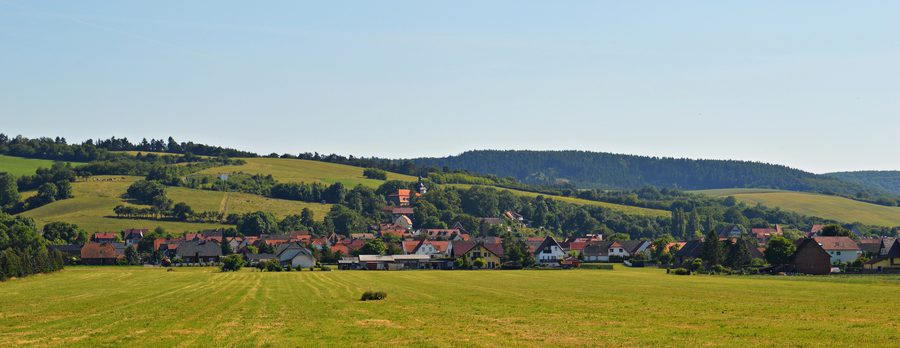 Auleben, ein Ortsteil von Heringen/Helme im thüringischen Landkreis Nordhausen
Photo: Tobias Nordhausen from Sondershausen, Deutschland via Wikimedia Commons, CC BY 2.0
Auleben, ein Ortsteil von Heringen/Helme im thüringischen Landkreis Nordhausen
Photo: Tobias Nordhausen from Sondershausen, Deutschland via Wikimedia Commons, CC BY 2.0
Burial Mounds and Architectural History
Auleben’s archaeological highlights include around 200 burial mounds. The burial ground is considered the largest in northern Thuringia. Auleben Castle also tells the story of the village: the solid, two-storey building, with a half-timbered upper storey and stair tower, has stood since 1518. Wilhelm von Humboldt lived here for a time; the Humboldt Room provides information about this connection.
Another historic ensemble is the New Rüxleber Farm, a former manor estate. Its residential and defensive tower dates from the 14th century. Other features of the complex include a round-arched gateway, a manor house, an outbuilding and a farmyard. These different architectural forms offer plenty to explore for anyone who pays attention to historic architecture while sightseeing in the village.
The Museum of Everyday History is located at the New Rüxleber Farm. It displays objects from everyday life over the past 150 years, including household and writing utensils as well as film equipment, two-wheelers, radios and playback devices. The exhibits span household life, writing, technology and transport. If you are planning a museum visit, check with the museum for current opening hours.
Church, Cultural Centre and Exhibitions
The Baroque hall church of St Peter and St Paul stands on a rise at the southern edge of the village. Its architectural features include a recessed western tower and an expansive churchyard enclosed by a rubble-stone wall. The location and surrounding wall are as much a part of its description as the church building itself.
The permanent exhibition “Sound and Power” is on display in the gallery at the Auleben Cultural Centre. It offers documentary insights into the Schulze organ in the Church of St Peter and St Paul in Auleben. You can enquire with the cultural centre about private events for up to 25 people and individual guided tours. Private wine tastings can be arranged to suit your needs. Please coordinate any planned tours, events or tastings with the cultural centre in advance.
Gypsum Hills and Spring Blossoms
Auleben’s protected gypsum hills are home to many plants that thrive in calcareous, warm conditions. A seasonal highlight is the blooming of pheasant’s eyes and pasqueflowers, considered in Auleben a special herald of spring. As well as sightseeing, nature and the changing seasons are therefore themes to enjoy during a stay in the village.
Auleben is a great place for hiking and sightseeing. When looking for a holiday apartment, you can consider which of these interests you want your trip to focus on: walks and plant life, historic buildings or exhibitions. The village’s history can be explored through several specific examples—from the burial ground to the castle and manor estate, and on to the Museum of Everyday History.
Discover More Destinations
Hamma, Niedersachswerfen, Heringen/Helme, Nordhausen, Harzungen, Niedergebra, Ilfeld, Windehausen
Go to the regional travel overview: Nordhausen.

