
Eschweiler between Blaustein Lake and Eischwiele Fastelovend
Accommodation in Eschweiler
Eschweiler combines experiences at Blaustein Lake with a rich carnival culture and cultural venues such as the Talbahnhof. The traces of the former lignite-mining region are also part of the city’s character: the lake is a local recreation area in a landscape shaped by open-cast mining, and a hiking trail commemorates former villages. This raises a practical question as you plan your trip: would you like to focus on nature and outdoor activities, Fastelovend, or culture and history?
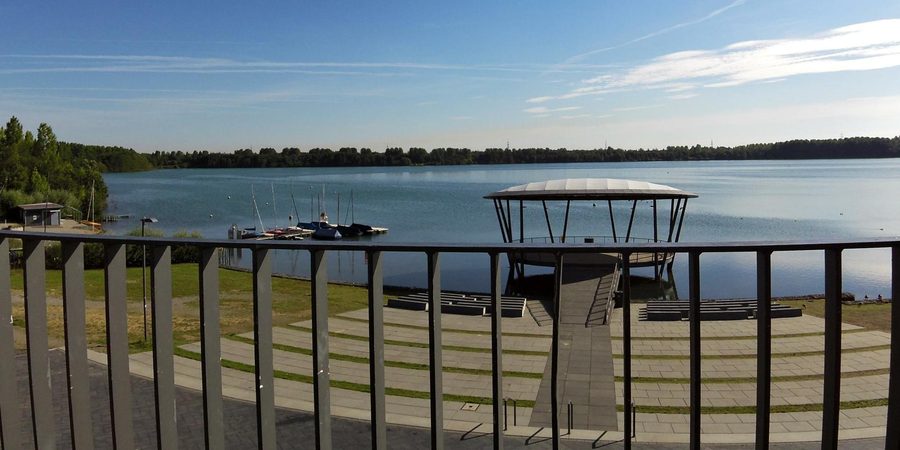
At Blaustein Lake: outdoor activities and remembrance
Blaustein Lake was created as a local recreation area in the former “Zukunft West” lignite-mining region. Activities listed there include water sports, hiking, cycling and enjoying nature. You can therefore combine your stay with a range of outdoor activities; the lake is not just a destination for one particular kind of outing. At the lake center, you’ll find places to eat, the Naturhaus Rheinland, a lakeside stage and a playground for visitors of all ages. The playground is a specific place to head for, especially if you’re traveling with children; the other facilities round out the offer with nature, events and places to eat.
The Historical Hiking Trail O at Blaustein Lake offers a different perspective on the landscape. This 14.3-kilometer memorial trail leads to former villages that had to make way for lignite mining. Alongside outdoor activity, it brings the history of an area transformed by mining into focus. You can take the fixed route length into account when planning your day. The trail and the recreational opportunities at the lake appeal to different interests: on the one hand, there are water sports and relaxation; on the other, hiking along a trail with historical significance.
Eischwiele Fastelovend and carnival
In Eschweiler, carnival is called “Eischwiele Fastelovend” and has been celebrated there for almost 170 years. The city has 22 carnival societies. Starting on November 11, they launch the season with hundreds of events in halls and tents. If you’re interested in local traditions, there are many events marking the start of the carnival season in addition to the large Rose Monday parade. These events offer a reason to visit in their own right, while Blaustein Lake is a destination for outdoor activities.
The Rose Monday parade is considered the highlight of every carnival season. On Rose Monday, it winds for just under six kilometers through the streets and lanes of the city on the Inde River. Around 6,500 carnival revelers and some 250 vehicles take part. These numbers show the scale of this major event in city life. If you’re visiting Eschweiler for Fastelovend, plan your trip around Rose Monday or the season that begins on November 11, rather than treating carnival as just one attraction.
The Eschweiler Carnival Museum is dedicated to the traditions of Eschweiler and Stolberg. A tour also takes you past around 3,000 carnival medals from Eschweiler and around 2,000 from Stolberg. Each collection figure refers to medals from the respective city. The museum complements the events with an insight into local carnival traditions and may be especially interesting if you’re interested in history and living traditions.
Culture and historic sites
The Talbahnhof is housed in the former classicist “Eschweiler-Tal” railway station building, which has been a cultural center in Eschweiler since November 1994. The building includes a bistro, a restaurant, a beer garden, exhibition rooms and a large event hall with seating for up to 200 people. Its program features local and regional events as well as a forum for national and internationally renowned artists who perform regularly. The Talbahnhof offers a different cultural perspective from the Carnival Museum: here, events and exhibitions take center stage in a former railway station building.
In Eschweiler-Weisweiler, the remains of the former moated castle, Burg Weisweiler, lie right next to the Catholic parish church of St. Severin. The historical connection is particularly tangible here: what you can see are the remains of a former moated castle, not a fully preserved castle complex. Together with the classicist railway station building, this site shows how Eschweiler’s cultural and historical attractions are spread across different buildings, each with its own past.
When looking for a holiday apartment in Eschweiler, you can start by considering what you’d like to make the focus of your stay. For nature and outdoor activities, there are Blaustein Lake and the memorial trail; for local traditions, Fastelovend and the Carnival Museum; for events and exhibitions, the Talbahnhof. This lets you choose Eschweiler based on the experiences that interest you, without confusing different reasons for visiting.
More places
If you’d like to include more places in your trip planning: Würselen, Lammersdorf, Monschau, Roetgen, Stolberg, Alsdorf, Aachen and Hahn.
Return to the main travel overview: Aachen.

.jpg)