
Trinwillershagen: Salt Towers, Village History and a Mill Visit
Accommodation in Trinwillershagen
Trinwillershagen is located in the hinterland of the Fischland-Darß-Zingst peninsula; the peninsula chain belongs to the Vorpommern-Rügen district. Several themes come together in the municipality: the salt towers, historical landmarks in Langenhanshagen and Wiepkenhagen, and an oil mill with demonstration pressing. The municipality’s villages serve as starting points for cyclists exploring the Baltic coast along well-developed cycle paths. When choosing a holiday apartment, it helps to decide what you want to focus on during your holiday: Would you like to explore architectural and local history, plan a visit at a set time, or make cycling tours the main theme?
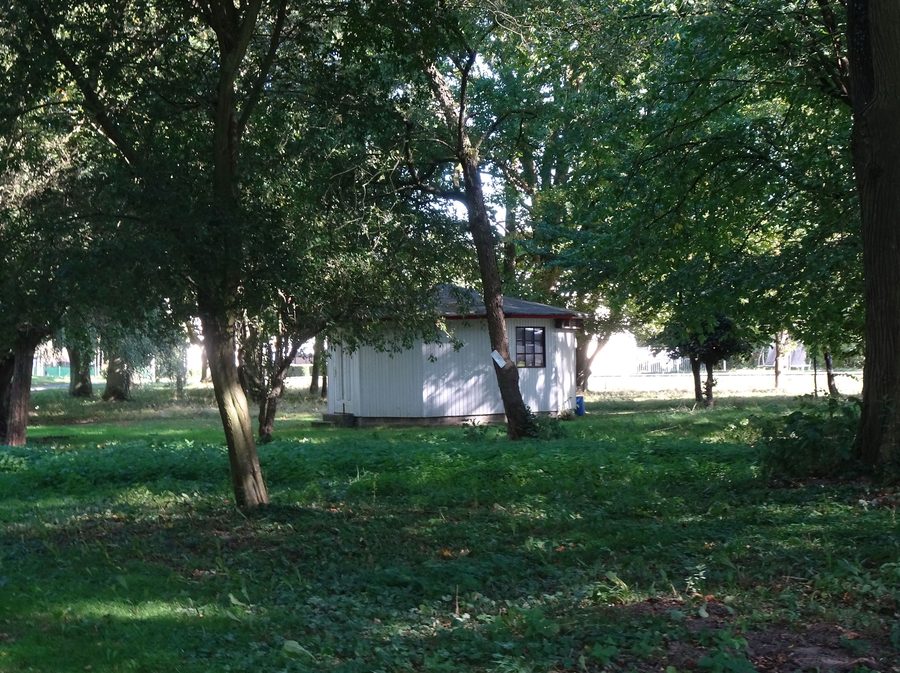 Denkmalgeschützter Park mit Pavillon in Trinwillershagen
Photo: Global Fish via Wikimedia Commons, CC BY-SA 4.0
Salt Towers and Guided Tour
The salt towers in Trinwillershagen also have distinctive architectural features. These include a tower with a 16-sided floor plan, internal graduation works and fogging systems. This combination gives the complex a distinctive architectural profile. Every Thursday, visitors from near and far are invited to a guided tour where they can learn about the stories and secrets of the salt towers. The dates listed for 2026 run through December 17. Before travelling, check that your chosen date is still on the schedule.
Church and Culture in Langenhanshagen
The church in Langenhanshagen is a Late Gothic fieldstone building dating from the first half of the 14th century. Its nave and chancel are rectangular. The interior includes a carved altarpiece from the 15th century; its later date adds a distinctive note alongside the building’s construction period. The church therefore offers a way to view its architecture and furnishings as belonging to different historical periods.
Every year in summer, the church serves as a studio for one week, with different artists taking part. Visitors can watch them at work; the exact dates may vary. Langenhanshagen is also home to a bell tower with a bell dating from 1704. A memorial stone commemorates the victims of the death march from Barth concentration camp.
The organ’s history reaches beyond the village, too: the organ loft and organ by Barnim Grüneberg of Stettin date from 1879 and are currently in the Organ Museum in Malchow. Together with the carved altarpiece, they show how different furnishings have their own stories alongside the history of the building.
Manor House and Garden in Wiepkenhagen
The manor house in Wiepkenhagen was built around 1880/90. The basic layout of a landscaped garden is still present on its grounds. The approximate date when the house was built and the surviving layout of the garden therefore stand alongside each other as two historical traces. This creates a different focus from the church architecture and culture of remembrance in Langenhanshagen.
Oil Mill and Cycling Tours
The Ostseemühle is located in Langenhanshagen, a village within the municipality of Trinwillershagen. It is a small, family-run oil mill in Mecklenburg-Vorpommern. Its oils and flours are made using gentle cold pressing and bottled by hand. On Tuesdays and Thursdays from 10:00 a.m. to 3:00 p.m., you can watch the demonstration pressing and sample various oils and flours. Since this offer is available only on certain days and at specific times, check the date before your trip.
Cyclists can use the municipality’s villages as starting points for tours along the Baltic coast. This makes it possible to choose a holiday apartment in Trinwillershagen based on the interests you want to shape your stay around.
Discover more destinations: Pruchten, Karnin, Bartelshagen Ii Bei Barth, Kenz-Küstrow, Barth, Lüdershagen, Fuhlendorf, Saal
For the broader travel overview: Amt Barth.

