
Discover Hofbieber: Rhön Trails, Milseburg and Culture
Accommodation in Hofbieber
Hofbieber is nestled among the gentle hills and forests of the Rhön Biosphere Reserve. Circular trails, a cycle route, scenic views, history and culture each offer something different. If you are looking for a holiday apartment, you might start by asking which experiences you want to shape your stay: a bike ride, trails through nature and history, or insights into art and regional traditions.
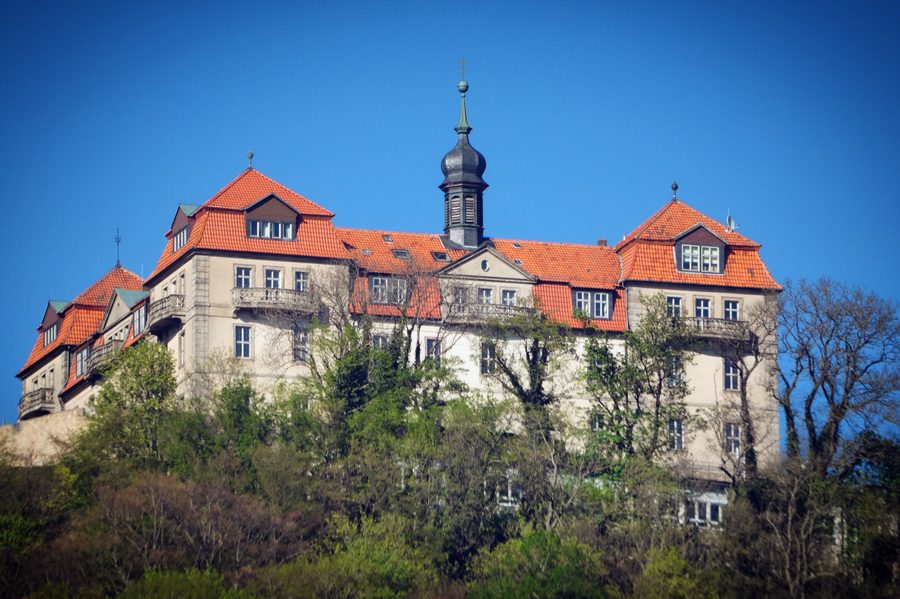 Schloss Bieberstein ist ein Barockschloss in der Pfarrgemeinde Hofbieber.
Photo: WATERL00 via Wikimedia Commons, CC BY-SA 4.0
Schloss Bieberstein ist ein Barockschloss in der Pfarrgemeinde Hofbieber.
Photo: WATERL00 via Wikimedia Commons, CC BY-SA 4.0
Exploring by bike or on Rhön circular trails
The Milseburg Cycle Path follows the route of the former Rhön Railway through Hofbieber to Hilders and is 27 kilometres long in total. The cycle path passes the Milseburg Tunnel, which is 1,172 metres long. This gives you a concrete point of reference if you would like cycling to be part of your holiday. Hofbieber also has 17 varied Rhön circular trails that connect nature, culture and history. They are well marked and have well-maintained rest areas and car parks, as well as educational trails. The circular trails and the cycle path offer different ways to discover the landscape and its stories; when choosing your accommodation, you can consider which option best suits your travel plans.
Milseburg: Landscape and history
Milseburg is located in the municipality of Hofbieber, within the Rhön Biosphere Reserve. The 835-metre-high mountain stands out for its distinctive trapezoidal shape and offers panoramic views. A prehistoric hiking trail leads up Milseburg. There you will find the remains of ramparts and walls from several defensive structures; the oldest are from a Celtic hillfort dating to the first century BC. This lets you combine views of the landscape with a glimpse into its early history. The Milseburghütte is part of the region’s culinary scene, serving hearty dishes made with high-quality ingredients.
Art, weights and milling technology
In addition to its ongoing exhibitions, the Kunststation Kleinsassen regularly hosts concerts, readings and talks. The exhibitions change frequently and feature works by artists from various disciplines, including internationally renowned artists. The Pfunds Museum in Kleinsassen has a different focus: across 250 square metres, spread over two floors and seven rooms, it displays more than 10,000 exhibits on weights, units, weighing and measures from the past 5,000 years.
The Wallingsmühle also offers an insight into traditional technology. Its historic milling equipment is fully preserved. During a tour lasting one to one and a half hours, visitors can see how grain is ground into flour using water power alone. The visit connects a practical process with the history of milling.
Discoveries for families and nature lovers
Above the districts of Obernüst and Boxberg is the “Freddy and the Green Belt” discovery station. It connects the history of Germany’s division with the nature of the Green Belt and invites families, hikers and nature enthusiasts to explore. Facilities include a weatherproof outdoor book, a sky swing and an interactive photo point. On the approximately one-kilometre-long Hofbieber Star Trail, the route runs from the car park at the barefoot experience trail to the barefoot trail. Ten information boards offer quizzes, activities or games for children.
The Milseburg sky-viewing site in Hofbieber-Danzwiesen also has a rotating wave lounger, binocular attachments, a movable sky map and a North Star finder. Bieberstein outdoor swimming pool is fed by spring water and offers a view of Bieberstein Castle. These open-air experiences complement the municipality’s cultural and historical attractions.
You can also explore the local pages for Petersberg, Gersfeld, Fulda, Künzell, Haselstein, Eiterfeld, Nüsttal and Ehrenberg.
For the main travel overview: Fulda.

