
Potsdam: City History, Culture and Parks
Accommodation in Potsdam
Potsdam brings together historic cityscapes with experiences in nature and culture. From architectural history and plant life to events and outdoor activities, there are many different ways to discover the city.
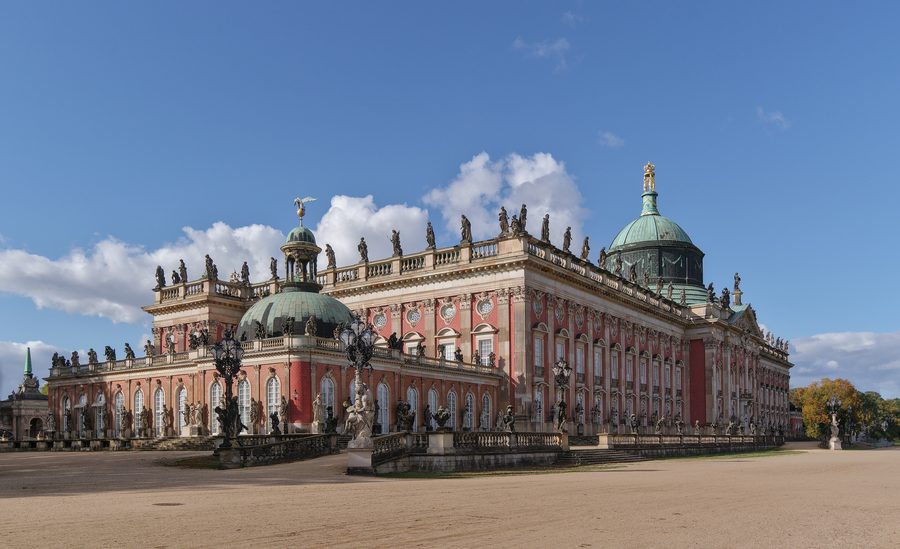 Das Neue Palais im Park Sanssouci steht exemplarisch für Potsdams preußische Residenzgeschichte und die UNESCO-geschützten Schlösser und Gärten.
Photo: Ursula Jaeger via Wikimedia Commons, CC BY-SA 4.0
Historic Places and Their Stories
The Dutch Quarter was built between 1734 and 1742 for Dutch craftspeople whom King Frederick William I had brought to Potsdam. Its origins draw attention not only to when the quarter was built, but also to the people it was intended for. In the mid-18th century, Frederick the Great gave the Old Market Square, near the Havel, the design of a Roman square. The Nauener Gate, one of the three city gates in Potsdam that have been preserved, is in the city centre. The quarter, square and gate each reveal a different side of the city’s history.
Sanssouci Palace was built from 1745 to 1747 by Georg Wenzeslaus von Knobelsdorff, based on the ideas and sketches of Frederick II. Sanssouci Park and its palaces are managed by the Prussian Palaces and Gardens Foundation Berlin-Brandenburg. This brings two distinct aspects of the site into focus: the palace’s architectural history and responsibility for the park.
Plant Life, Culture and Special Details
The Potsdam Botanical Garden cultivates around 10,000 different plant species from tropical and subtropical regions, both in greenhouses and across five hectares of outdoor grounds. Its varied educational and cultural programme invites visitors to learn more about plant life and combine experiences in nature with cultural activities. Specific programme offerings may vary.
The Belvedere on the Pfingstberg also brings together a special location and cultural events. Guided tours, theatre, concerts, cabaret and exhibitions take place there, especially in the summer months. If you have a particular event in mind, check the dates before your visit.
Another historical detail can be found in Bornstedt Cemetery: the tomb of the scholar and later court jester Baron Jakob Paul von Gundling (1673–1731). His colourful sandstone epitaph beneath the organ loft is one of the main attractions of the church and cemetery. The site connects a specific life story with a striking monument.
Outdoor Activities and Travel Planning
Volkspark Potsdam has a four-kilometre circular route, a skate park, water and sand play areas, basketball courts and playing fields. There are different ways to spend active time here: take a walk along the path, get moving at the skate park or play ball on the courts. If a particular facility is important to your plans, check before visiting whether it is currently available.
You can explore Potsdam on foot, by bicycle or on the water. Suggested routes link sights with views of the cultural landscape and the Havel. When looking for a holiday apartment in Potsdam, it can help to first decide what you want to focus on during your trip: historic places, seasonal cultural events, plant life or activities in the park. This allows you to choose accommodation based on the experiences you want to shape your days there.
Discover More Destinations
Discover more destinations: Gollwitz, Linthe, Ziesar, Seddiner See, Groß Briesen, Borkheide, Roskow, Teltow.
For the main travel overview: Potsdam-Mittelmark.

