
Discover Lamerdingen: the Gennach, churches and architectural history
Accommodation in Lamerdingen
Lamerdingen can be discovered through two distinctive features: the Gennach flows through the village, forming a linear green corridor with trees along its banks; at the same time, churches and a Baroque wayside shrine tell of a long history of architecture and faith. A stage of the Schlosspark cycle route in the Allgäu adds another local theme. When choosing a holiday apartment, you can consider whether landscape, architectural heritage or cycling should shape your stay.
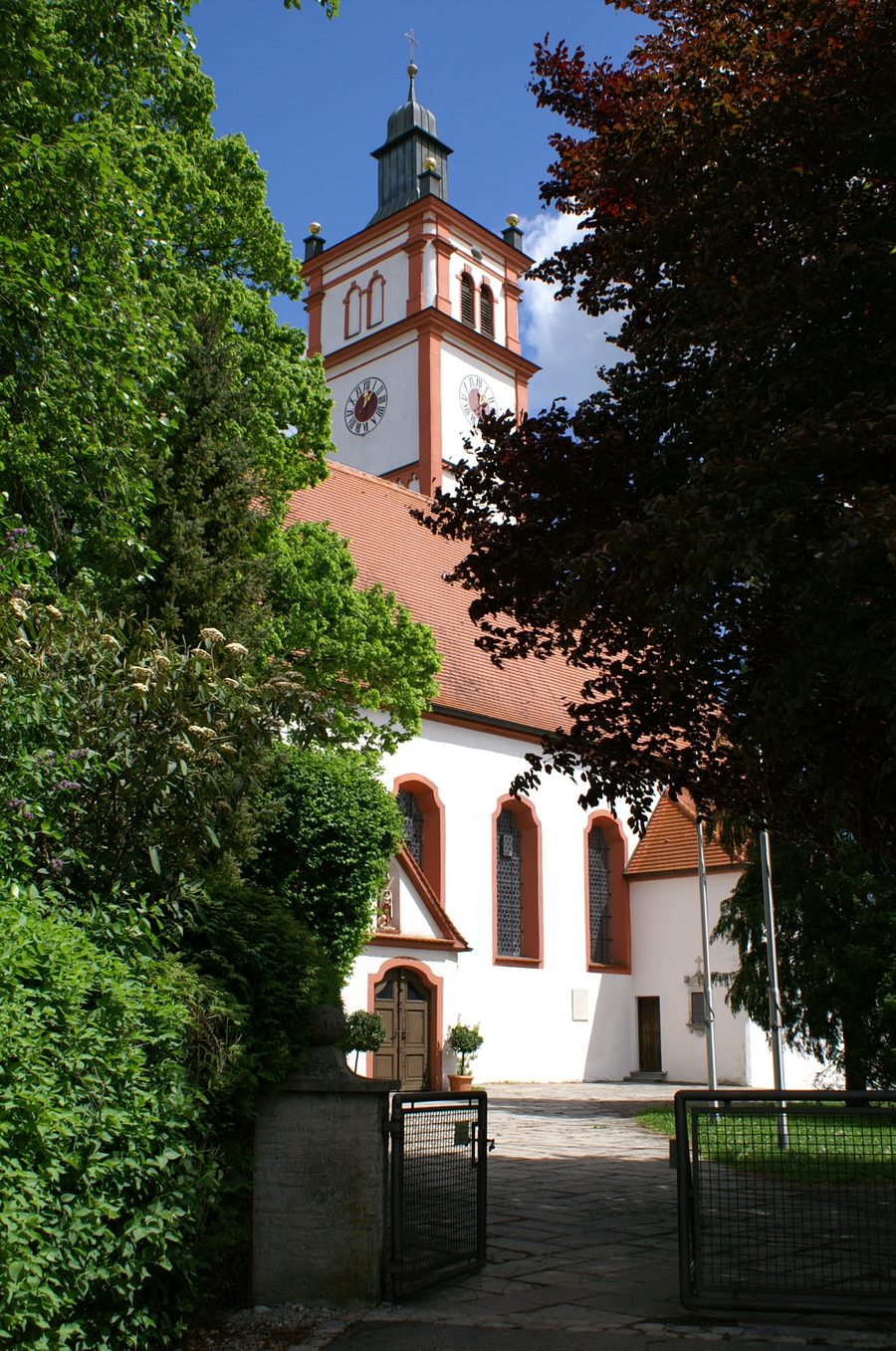 Die Pfarrkirche St. Martin prägt das Ortsbild von Lamerdingen.
Photo: Flodur63 via Wikimedia Commons, CC BY-SA 4.0
The Gennach and the Schlosspark cycle route
The Gennach flows through Lamerdingen; the trees along its banks form a linear green corridor. This is a specific landscape feature, distinct from the village’s architectural heritage. The third stage of the Schlosspark cycle route in the Allgäu runs via Buchloe to Lamerdingen and Gennach. If you plan to ride this stage, check the current route conditions before setting off.
Churches and architectural history
The parish church of St. Martin has stood in Lamerdingen since the 11th century and was first mentioned in 1067. Its late Baroque lantern tower is a distinctive architectural detail. Inside the church is the large fresco “Death and Transfiguration of St. Martin,” dedicated to the church’s patron saint.
St. Stephan in Großkitzighofen offers a different highlight: its tower is around 50 m tall and is considered the tallest building in the municipality of Lamerdingen. The church also contains a ceiling painting by Johann Baptist Enderle dating from 1737. The buildings also span different periods: St. Martin was already mentioned in 1067, while the ceiling painting in St. Stephan dates from 1737. The history thus extends from a medieval mention to a dated work from the 18th century.
The chapel wayside shrine in Lamerdingen is a significant architectural monument of Baroque popular piety, rare in its design; it is privately owned. Its renovation was completed in July 2017 and marked with a blessing ceremony.
In the wider destination of Ostallgäu
In the wider destination of Ostallgäu, the focus shifts to larger regional attractions. The RadReiseRegion Ostallgäu includes regional routes that extend across the whole of Ostallgäu; they are each 25 to 76 kilometres long, signposted throughout and dedicated to a theme of their own. Ostallgäu also has 32 local hiking routes showcasing special treasures in nature and in its towns and villages. The Forggensee cycle route runs around Lake Forggensee. At over 15 km², the lake is Bavaria’s fifth-largest and Germany’s largest reservoir; during the summer season, Forggensee boat tours run regularly. In the wider destination of Ostallgäu, the mountains to the southwest belong to the Vilser Gebirge and those to the southeast to the Ammergebirge. At 2,082 metres, the Hochplatte is the highest mountain in Ostallgäu.
Discover more destinations
Discover more destinations: Unterthingau, Mauerstetten, Westendorf, Pfronten, Germaringen, Lechbruck Am See, Ronsberg, Roßhaupten.
Back to the wider travel guide: Ostallgäu.

