
Vacation apartment in Schwäbisch Gmünd
Accommodation in Schwäbisch Gmünd
Schwäbisch Gmünd combines the history of a former imperial city and a Hohenstaufen city with a distinctive historic center and a varied landscape in the Ostalb district. Between the Rems Valley, the Welzheim Forest, and the first hills of the Swabian Alb, it offers a destination where sightseeing in town and nature impressions can be easily combined.
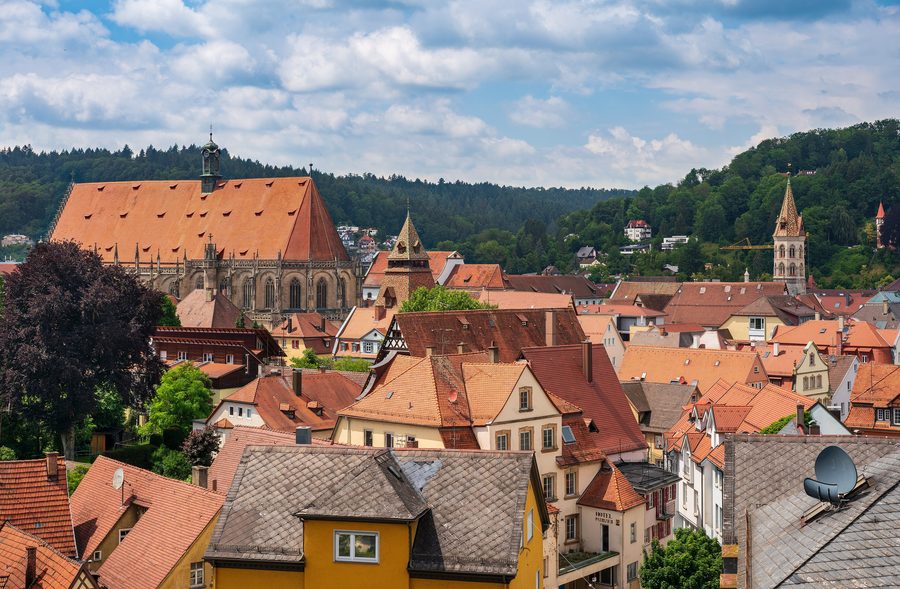 Blick vom Zeiselberg auf die historische Altstadt von Schwäbisch Gmünd
Photo: Roman Eisele via Wikimedia Commons, CC BY-SA 4.0
Blick vom Zeiselberg auf die historische Altstadt von Schwäbisch Gmünd
Photo: Roman Eisele via Wikimedia Commons, CC BY-SA 4.0
Quick facts about Schwäbisch Gmünd
- Historical classification as the oldest Hohenstaufen city in Baden-Württemberg, linked to a documented mention from 1162
- Former imperial city in the Ostalb district in eastern Württemberg
- Historic market square with half-timbered houses and the Marienbrunnen fountain
- Landscape area between the Rems Valley, the Welzheim Forest, and the first hills of the Swabian Alb
- Several protected natural areas within the city limits, including four nature reserves
Historic town with its own character
Its history as an imperial and Hohenstaufen city shapes how people view Schwäbisch Gmünd. As the oldest Hohenstaufen city in Baden-Württemberg, the town is associated with a documented mention from 1162. For an initial stroll, the historic market square is a good place to start: half-timbered houses and the Marienbrunnen fountain give the center a vivid townscape.
Historical and religious points of interest include the Heilig-Kreuz-Münster. The market square, half-timbered houses, Marienbrunnen fountain, and the Münster together offer several concrete places for a cultural tour of the town. Depending on your interests, they can be combined into a visit program of their own.
Gold and silver as local cultural heritage
One distinctive feature of the town is its tradition of gold and silver craftsmanship. The Forum Gold and Silber points to this cultural and artisanal connection with the city. Anyone who wants to learn about local traditions in addition to medieval town history can take this aspect into account when planning a visit. Information on current exhibitions, guided tours, and opening hours should be checked for the latest updates before visiting.
Combining a town visit with the landscape
Schwäbisch Gmünd lies in a landscape stretching from the Rems Valley across the ridge heights of the Welzheim Forest to the first hills of the Swabian Alb. The town area includes several protected natural zones, among them four nature reserves. This means a stay can generally be shaped around historic town highlights, cultural discoveries, and impressions of the surrounding landscape.
For your holiday planning, you can first decide on the focus you want: should the stay mainly showcase the historic town, place greater emphasis on landscape impressions, or combine both? If you plan specific hiking and cycling routes, walking times, or activity offers, check those options separately.
Which vacation apartment makes a good base?
When choosing a vacation apartment, the planned program should be the starting point. If you want to focus on the market square, half-timbered houses, the Heilig-Kreuz-Münster, and the town’s history, check the exact address in relation to the town visits you have planned. If landscape impressions are also important, include the accommodation’s surroundings and your planned destinations in your decision as well.
No general recommendation can be made for a central, quiet, or rural location. What matters most is the mix of cultural town activities and landscape you plan for your stay. As the next regional point of orientation, Ostalbkreis offers a view of the district as a whole.
Frequently asked questions about Schwäbisch Gmünd
What makes Schwäbisch Gmünd special as a travel destination?
The town combines its history as a former imperial city and Hohenstaufen city with a historic center, a tradition of gold and silver craftsmanship, and a varied landscape in the Ostalb district.
Which sights can be discovered in Schwäbisch Gmünd?
Concrete points of interest for a town visit include the historic market square with its half-timbered houses and Marienbrunnen fountain, the Heilig-Kreuz-Münster, and the Forum Gold and Silber. Opening hours and admission conditions can be checked in advance of your visit.
Is Schwäbisch Gmünd better suited to a city break or a nature holiday?
Both can be combined as the basic profile: historic town highlights stand alongside a landscape stretching between the Rems Valley, the Welzheim Forest, and the first hills of the Swabian Alb. Specific routes and activity offers should be checked separately when planning your stay.

.jpg)