
Osterburken
Accommodation in Osterburken
Roman history and paths through the Kirnau Valley give Osterburken two distinct sides: the Roman Museum brings finds and life along the Limes to life, while historic sites and the valley shape discoveries outdoors. During your stay, you can choose between museum visits, architecture and outdoor activities.
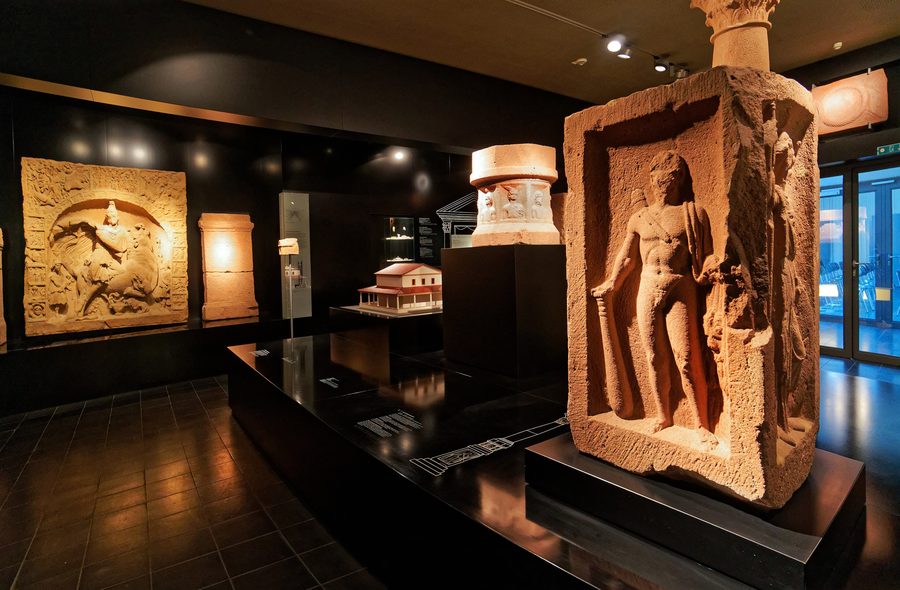 Ausstellung „Religion am Limes“ im Römermuseum Osterburken.
Photo: Holger Uwe Schmitt via Wikimedia Commons, CC BY-SA 4.0
Ausstellung „Religion am Limes“ im Römermuseum Osterburken.
Photo: Holger Uwe Schmitt via Wikimedia Commons, CC BY-SA 4.0
Roman Heritage in the Museum and Around Town
The Osterburken Roman Museum conveys what life was like for the Romans on the Limes 1,800 years ago, using finds from Osterburken and the surrounding region. The “Religion,” “Romans on the Limes” and “Archaeological Methods” sections offer different ways to explore the past. The covered excavation of the bath is also part of the museum: together, these areas bring history to life for visitors of all ages.
The many exhibits include, above all, finds from the northern Baden section of the Limes. These include the sculpture group from Schneidershecke and the Mithras altar from Osterburken. The museum thus brings together finds from the town and the wider Limes region. It is located at Römerstraße 4, 74706 Osterburken. It is fully accessible, with a wheelchair-accessible lift and an accessible toilet. Check these accessibility and facility details again before your trip.
You can also explore Roman heritage beyond the museum. The Osterburken fort, about 300 metres from the museum, has been preserved as a park. In Limes Park, a 14-metre-high steel frame built on the foundations of the fort gate marks the outline of the ancient structure. Osterburken was one of about 50 forts that served as bases for the troops.
A reconstruction of the Limes, with a watchtower and associated border installations, stands on a hill south of Osterburken. The walk-in Limes Tower is also on a hill south of the town and is visible from far away. Anyone interested in the Roman past can include these various sites in their day’s plans alongside a visit to the museum.
Churches and Other Collections
The Catholic parish church of St. Kilian in Osterburken was built between 1970 and 1974. St. Mauritius in Hemsbach, a district of Osterburken, offers a different historical perspective: the Romanesque church dates from the 12th century and preserves valuable medieval wall paintings. Until the end of the 18th century, the cult of the three holy virgins made St. Mauritius an important place of pilgrimage; this cult was once rare on the right bank of the Rhine.
The Osterburken Geological and Palaeontological Museum devotes most of its collection to fossils and minerals from the Muschelkalk (shell limestone). It complements the Roman and church-related themes with a look at the history of the Earth. Your preferred pace of sightseeing may influence your choice of accommodation: those focusing on several cultural stops may look for a holiday apartment in Osterburken, while those who mainly want to spend time outdoors may gravitate towards the trails and landscapes.
Exploring the Kirnau Valley
The Kirnau Valley nature and landscape conservation area covers around 205 hectares. It lies mainly along the valley running from southwest to northeast, from the built-up area of Osterburken to a point about two kilometres northeast of Rosenberg. Its approximate size and extent offer a guide for anyone who would also like to focus their stay on the landscape.
The Sportplatz–Hochwasserrückhaltebecken–Talmühle circular route follows Sportplatzweg past the SV Osterburken sports grounds and into the Kirnau Valley. It initially follows a paved path, then a grass path to the flood retention basin. There, it crosses the Kirnau and returns towards Osterburken along the left side of the valley. Details about the route and surface help distinguish this walk from an itinerary focused solely on museums or churches.
Another route description leads from Osterburken to Rosenberg. It also follows Sportplatzweg past the SV Osterburken sports grounds and into the Kirnau Valley, and is about four kilometres long. The route to Rosenberg first follows paved paths, then a grass path, and from the flood retention basin onwards, a paved path again. The approximate distance and changing surfaces offer a practical guide for planning your day, without implying a walking time.
Regional Flavours in the Neckar-Odenwald District
The wider travel area of the Neckar-Odenwald district also offers opportunities to discover regional foods. The annual “Brunch on the Farm” event features local products such as smoked trout, tangy cheese and homemade bread. At farmers’ markets and local-producer days in the Neckar-Odenwald district, visitors can talk to producers, ask questions and sample regional foods. Check dates, participating farms, and market times and locations before making plans.
Osterburken offers cultural experiences or more active outings, depending on your interests: the museum, fort and churches each provide a different focus, while the trails in the Kirnau Valley combine exercise and scenery. When looking for a holiday apartment, consider which of these themes you would like to prioritise during your stay.
Discover More Destinations
Discover more destinations: Obrigheim, Limbach, Hettigenbeuern, Rosenberg, Adelsheim, Haßmersheim, Schefflenz, Walldürn.
Back to the main travel guide: Neckar-Odenwald District.

