
Karlsruhe between Industrial Architecture and Natural History
Accommodation in Karlsruhe
Karlsruhe brings together different ways to explore: a listed industrial building, exhibitions on animal and geological history, a combination of zoo and city garden, as well as a walking route and a tour on a double-decker bus. This gives you a choice between culture, nature-related topics and different ways of exploring the city during your vacation. When looking for a holiday apartment, you can first consider which of these interests should have the greatest influence on your plans.
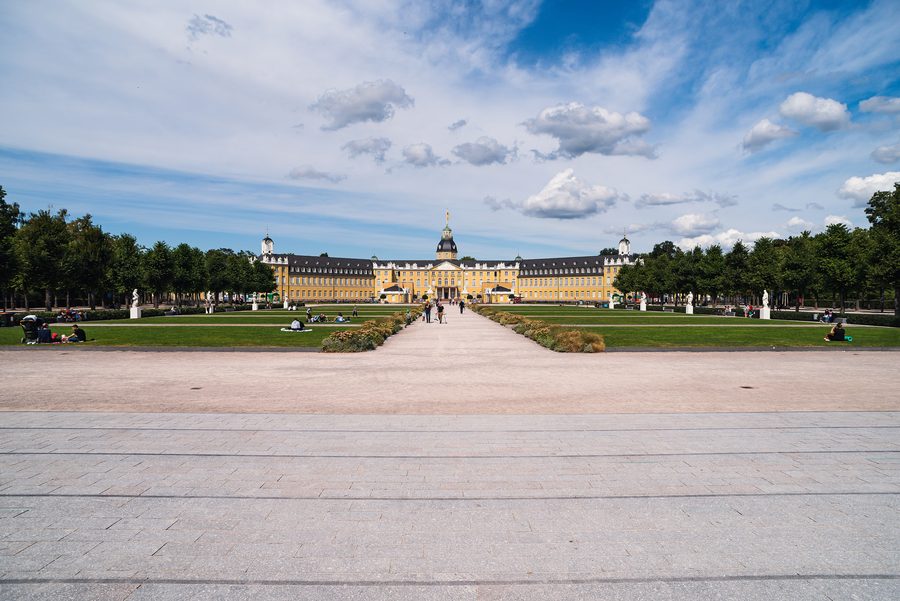 Das Karlsruher Schloss prägt die historische Mitte der Stadt.
Photo: Flocci Nivis via Wikimedia Commons, CC BY 4.0
Industrial Architecture and Exhibitions
Since 1997, the ZKM has been housed in the listed former industrial building Hallenbau A. The building was constructed between 1915 and 1918; at the time, it was among the most architecturally advanced buildings in Germany. The building’s history thus connects an early phase of industrial construction with its later use by the ZKM. For architecture enthusiasts, this sequence offers a concrete insight into the changing use of a historic building.
The State Museum of Natural History Karlsruhe features permanent exhibitions on native and exotic wildlife, as well as rocks, minerals and fossils. Biological and geological topics are presented side by side: wildlife on the one hand, rocks and fossils on the other. If you plan your vacation days around your interests, you can focus on something different here than on a visit centered primarily on architecture or urban history.
Zoo, Walking Route or Double-Decker
Karlsruhe Zoological City Garden combines a zoo with a city garden. This sets its described concept apart from the exhibitions at the Natural History Museum: there, the focus is on wildlife, rocks, minerals and fossils; at the Zoological City Garden, the zoo and garden are combined. This distinction can help with your day planning when deciding between exhibitions and the combination of a zoo and city garden.
The approximately ten-kilometer AugenBlick loop in Karlsruhe can be started at various points, for example at Turmberg. It therefore offers several possible starting points, while the Karlsruhe CityTour visits important city sights on a red double-decker bus. These are different ways of exploring: on the loop, you choose the starting point; on the CityTour, the ride on the double-decker is the main attraction. As seasonal tour details may change, check the dates in advance.
The Karlsruhe District as a Regional Setting
Within the broader travel destination of Karlsruhe, Karlsruhe District offers its own regional perspective. Its landscape stretches from the Rhine Plain in the west, through the Kraichgau hills in the east, to the foothills of the Northern Black Forest in the south. The district has a designated network of cycling routes spanning more than 1,500 kilometers; this figure may change as infrastructure is expanded. When choosing accommodation, it is therefore helpful to distinguish between a focus on the city’s attractions and a stay with greater emphasis on the district.
Historic Buildings and Museums in the District
The Frauenalb Monastery Ruins are located in the upper Albtal valley, just below Bad Herrenalb, within the municipal boundaries of Marxzell in Karlsruhe District. They are the most significant Baroque monastery building in northern Baden, but are currently closed to visitors. Bruchsal Palace is a prince-bishop’s residence in Bruchsal and is one of the most magnificent prince-bishop’s residences in Germany. It is especially known for Balthasar Neumann’s famous staircase, described as the “crown of all Baroque staircases.”
The Bruchsal Municipal Museum is located on the third floor of the Baroque palace. It documents the history of the Bruchsal area from the Stone Age to the present day. In Bretten, the Melanchthon House focuses on the history of the Reformation; after the Luther Hall in Wittenberg, it is the second-largest museum in Germany devoted to Reformation history. Also in Bretten is the Schweizer Hof, dating from 1707, which houses Bretten’s museum of local and regional history. Together, these sites offer a regional range of topics from prince-bishop’s residential architecture to Reformation and urban history.
Discover more destinations: Oststadt, Grötzingen, Durlach, Ettlingen, Malsch, Eggenstein-Leopoldshafen, Zaisenhausen, Stutensee.
Back to the main travel overview: Karlsruhe.

