
Discover Mulfingen: Path of Silence and Hohenlohe District
Accommodation in Mulfingen
The Path of Silence is a practical starting point for exploring Mulfingen on foot. It begins at the car park behind the sports halls in Mulfingen, passes the dam and continues to the Roggelshausen Reservoir. The easy circular hike is named the Path of Silence Mulfingen–Simprechtshausen–Heimhausen–Mulfingen. The route is listed as 13.41 km in the tour details and 13.2 km in the description. If you plan to hike during your holiday, keep both distances in mind separately rather than combining them into a single figure.
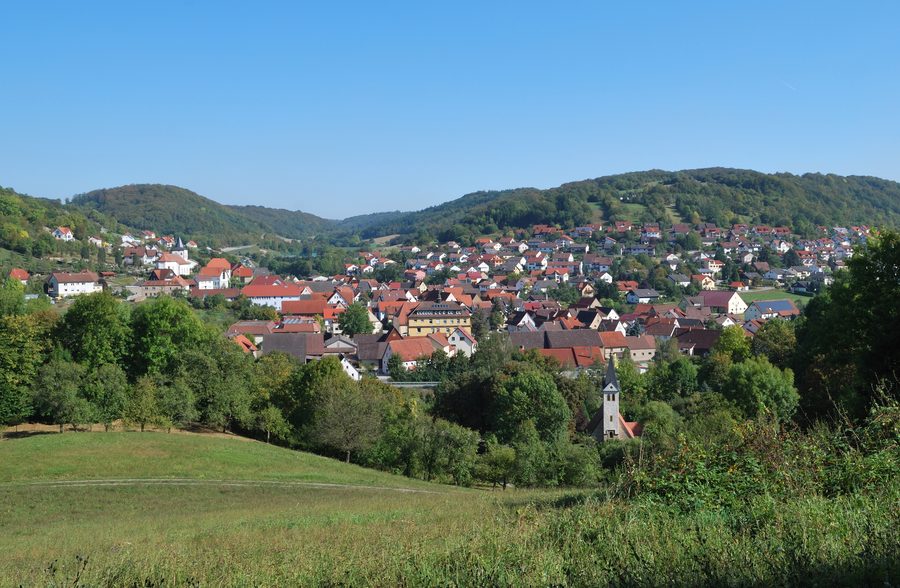
Trails and Local Highlights in Hollenbach
In Hollenbach, well-maintained field and forest trails invite you to hike and cycle through the Hohenlohe countryside. In the village centre, next to the church, stands a linden tree designated a natural monument; it is estimated to be about 700 years old. St Stephen’s Church features valuable frescoes from the 14th and 15th centuries. These offer distinct points of interest: outdoors, the estimated lifespan of a single tree; inside the church, artwork spanning two centuries. This places outdoor activity on field and forest trails alongside a specific natural and cultural monument as separate holiday themes.
Cycling and the Limes in the Hohenlohe District
In the wider destination of the Hohenlohe District, numerous cycling routes add to the options for an active holiday. Cyclists can experience the Hohenlohe hills, framed by the deeply incised river valleys of the Kocher, Jagst and Ohrn. The Kocher-Jagst Cycle Route passes through Krautheim. Three Limes viewing platforms offer sweeping views across the countryside; the UNESCO World Heritage Site of the Limes also runs in a straight line through the Hohenlohe District. Cycling routes, viewpoints and the Limes heritage each provide a different focus for exploring the region.
Architecture and History of the Region
The cultural sites in the Hohenlohe District also offer a range of historical themes. Schöntal Abbey lies in the Jagst Valley in Hohenlohe. Its abbey church has a Baroque double-tower façade, and the cloister contains the tomb of the knight Götz von Berlichingen. Forchtenberg has a medieval townscape, with an almost completely preserved town wall and numerous half-timbered houses.
Krautheim is home to the Hohenstaufen castle, with a 28-metre-high keep; after the climb, you can enjoy views over the Jagst Valley. The Johanniter Museum in Krautheim documents the history of the Order of St John. Neuenstein Castle tells a different architectural story: the Hohenstaufen moated castle was expanded into a magnificent Renaissance residence in the 16th century. The permanent exhibition presents the inventories of seven Hohenlohe castles.
Choose a Focus for Your Stay
Local food and drink can also shape the way you experience the region: visitors can buy and sample wine and spirits directly from Hohenlohe winegrowers and distillers; the participating businesses vary. When choosing a holiday apartment, it helps to first decide what you would like to focus on: hiking, cycling, architectural history or regional food and drink.
Discover more destinations: Forchtenberg, Ingelfingen, Schöntal, Sindringen, Weißbach, Niedernhall, Künzelsau, Krautheim.
Go to the overview of the wider destination: Hohenlohe.

