
Accommodation in Saudi Arabia
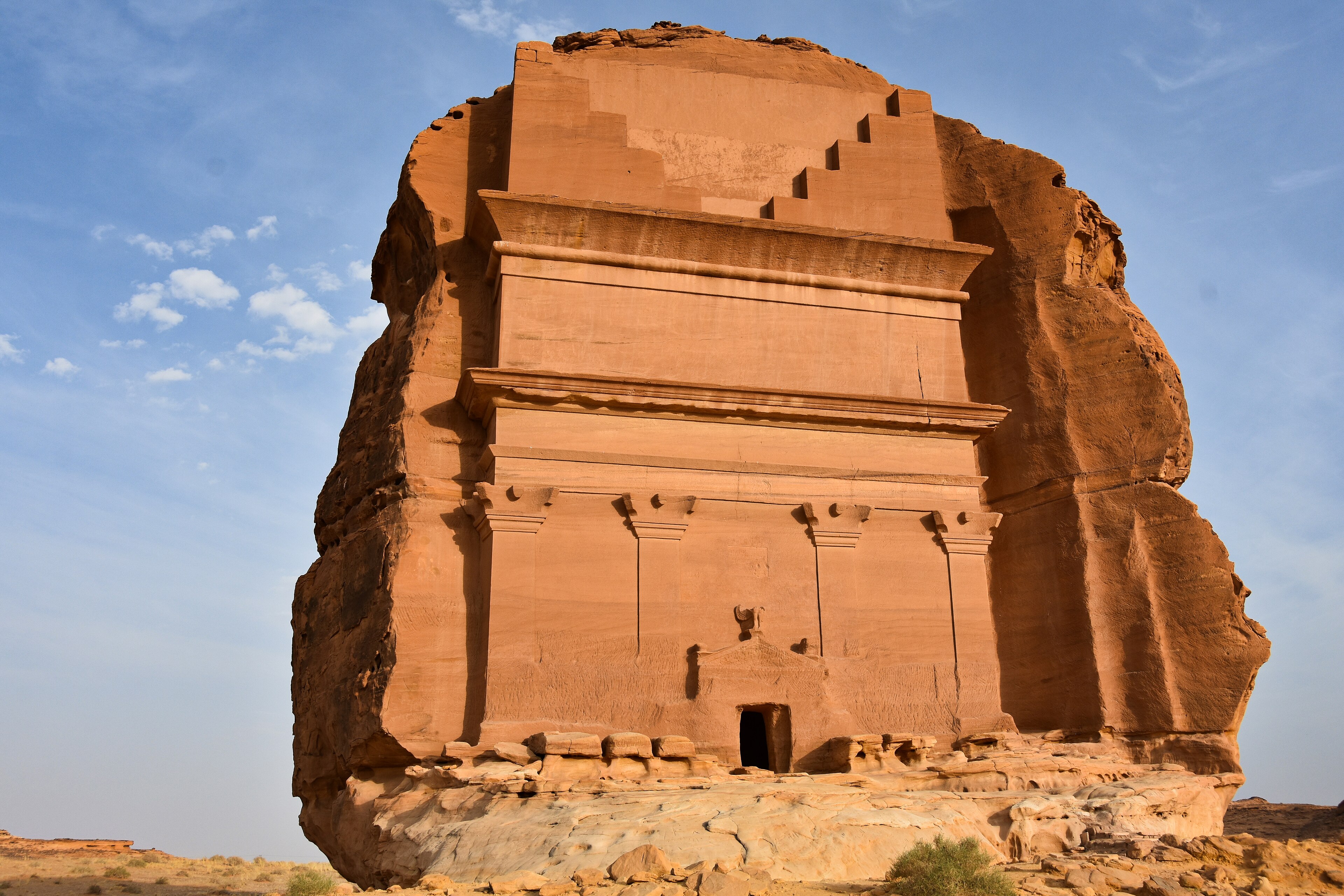 Qasr al-Farid in Hegra bei Al-Ula – ein monumentales nabatäisches Felsgrab.
Photo: Prof. Mortel via Wikimedia Commons, CC BY 2.0
Qasr al-Farid in Hegra bei Al-Ula – ein monumentales nabatäisches Felsgrab.
Photo: Prof. Mortel via Wikimedia Commons, CC BY 2.0
Saudi Arabia surprises with contrasts that can be combined into an varied family trip: in Hegra, Nabataean tombs rise out of the sandstone; Wadi Disah leads through a striking landscape between high rock walls; and in the southwest, the Asir highlands form a green natural contrast to desert and city scenery. Added to this are historic quarters on the Red Sea, modern metropolises, and a food culture that makes shared discoveries at the table possible.
Short & sweet
- Hegra near Al-Ula combines more than 100 Nabataean tombs carved into sandstone with an impressive rock landscape.
- Wadi Disah in the northwest shows a valley between high rock walls and a very different side of the Saudi landscape.
- The historic Al-Balad in Jeddah combines a UNESCO-protected district with the travel corridor along the Red Sea.
- Diriyah, with the At-Turaif district, stands for traditional Najdi adobe architecture and historic building culture.
- The Asir highlands offer mountain landscapes and trails as a natural contrast to the desert and city routes.
- Kabsa is a popular Saudi rice dish with regional variations; Jareesh is especially associated with the Najd region.
Between rock landscape, wadi, and highlands
For families who want to be amazed one day and spend time outdoors the next, Saudi Arabia’s appeal lies in its clear landscape contrasts. Hegra near Al-Ula brings history to life through monumental rock-cut architecture: the freestanding tombs carved into sandstone look different in the open landscape than they would in a classic museum. Nearby, Wadi Disah represents a narrower scene shaped by high rock walls. A focus on the northwest is therefore especially suitable for shared culture-and-landscape days, without reducing the trip to a pure city break.
In the southwest, the Asir highlands open up another travel idea. Asir National Park is described with mountain views, hiking trails, and diverse flora and fauna. If you value movement and nature observation more highly than a tightly packed city program, you can consider Asir as its own focus. Al-Bahah, Dschaizan, Khamis Mushayt, and Najran also belong to the southwestern or southern destinations that you can consider for further travel planning.
City history, coast, and Saudi cuisine
Saudi Arabia can also be discovered through its cities and historic building traditions. Diriyah, with the At-Turaif district, places traditional Najdi adobe architecture in clear contrast to Riyadh’s modern skyline. The central urban route therefore suits families who want to combine cityscapes, history, and cultural discoveries. On the west coast, Al-Balad in Jeddah leads through a historic port-city quarter on the Red Sea. Jeddah is thus a logical option for anyone who wants to combine city life and a coastal setting in one travel route.
The cuisine also gives the trip concrete occasions. Kabsa brings spiced rice and regional variations to the table. Jareesh, made from crushed wheat, is especially associated with Najd, while coffee and dates are regarded as a distinctive anchor of Saudi hospitality and food culture. For families, such shared meals can be a calmer counterpoint to days spent on culture and nature. An image of Kabsa makes this culinary approach immediately tangible.

Which travel route fits your family?
The differences are easier to understand if you do not plan the whole country at once, but first define the travel focus you want. The northwest, with Hegra and Wadi Disah, stands for archaeology and rock landscapes. Riyadh and Diriyah combine a modern city with historic building culture. Jeddah leads into the western coastal and cultural route, while Asir stands for mountain landscapes and nature days. Riad and Riyadh remain visible as two separate destinations, without presenting them as different cities.
If children of different ages are traveling with you, a single regional focus can help combine active discovery days and quieter sections within the same itinerary. Multiple routes offer greater variety, but they require more deliberate planning of the daily rhythm. For the northwest focus, Tabuk is an interesting onward destination in this travel route; you should always check the current routes and connections.
Derive the accommodation base from the itinerary
For city and cultural programs around Riyadh and Diriyah, a central urban location is worth considering if short distances matter in your daily schedule. On the west coast, the base should match the balance you want between a historic city program and days by the coast. For Hegra, Wadi Disah, and the northwest landscape route, it is sensible to plan enough space for culture and nature days instead of choosing accommodation only by the name of a place. In the Asir highlands, a quieter, nature-oriented location may suit the desired daily rhythm better than a purely urban setting. Before booking, check the exact location and the available meal-planning options if flexible family routines are important.
More destinations for your selection
For coastal travel ideas, you can look at Al Khobar, Asch-Scharqiyya, Dammam, Eastern Province, and Yanbu. Further inland and northern destinations include Al Ahsa, Al Jowf, Buraida, Al-Hudud Asch-Schamaliyya, Hail Province, Ḩāʼil, Quassim, and Northern Borders Province.
In the urban and cultural context, you will also find Al Madinah Province, Medina, and Mekka. These destinations complement the national selection, while the exact shape of your trip depends on the travel route you want and the daily rhythm that suits you best.

,_1st_cent._CE,_Saudi_Arabia_(8).jpg)
