
Accommodation in Cambodia
Accommodation in Cambodia
Cambodia is especially interesting for families because the country feels very different depending on where you base yourselves: in Phnom Penh you stay urban and central, in Siem Reap close to the temples, on the coast more quietly, and in the nature-focused provinces much more remote. If you choose accommodation according to your travel pace, you get days that fit children, distances, and breaks better.
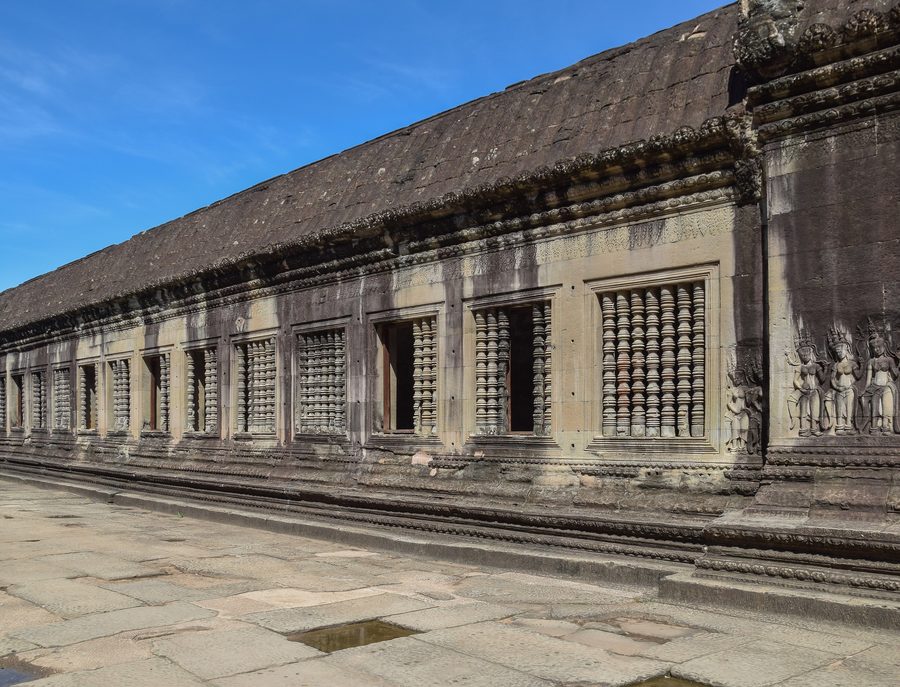 Angkor Wat, the landmark temple complex near Siem Reap.
Photo: Krzysztof Golik via Wikimedia Commons, CC BY-SA 4.0
Angkor Wat, the landmark temple complex near Siem Reap.
Photo: Krzysztof Golik via Wikimedia Commons, CC BY-SA 4.0
Quick facts
- For families, Cambodia offers very clearly different bases: city, temples, coast, river/inland, and nature.
- Phnom Penh stands for an urban atmosphere and royal heritage; Siem Reap for Angkor, culture, and the easiest access to the temples.
- Kampot and Kep bring a calmer pace, close to water and the coast, into the trip.
- Mondulkiri and Ratanakkiri are a good fit when landscape and peace matter more than urban density.
- Many legs of the journey seem manageable on the map; that often makes a route with only a few base changes easier.
How to choose the family base
The most helpful question is what should shape your vacation day: markets, city walks, and short distances; temples and culture; water and slowing down; or nature and a quieter setting. This choice noticeably changes the day’s logistics and therefore how well a location suits children of different ages.
For you, it is therefore not only important what you want to see, but also how much movement you really want in a day. A central base makes it easier to bundle experiences, while coastal or nature-focused bases can make the daily rhythm more relaxed.
City, culture, and temple access
Phnom Penh is the most urban choice: city atmosphere, royal heritage, and a daily rhythm centered on short, central routes. Siem Reap is the obvious base for Angkor and for culture, markets, and food that can be easily built into the travel day.
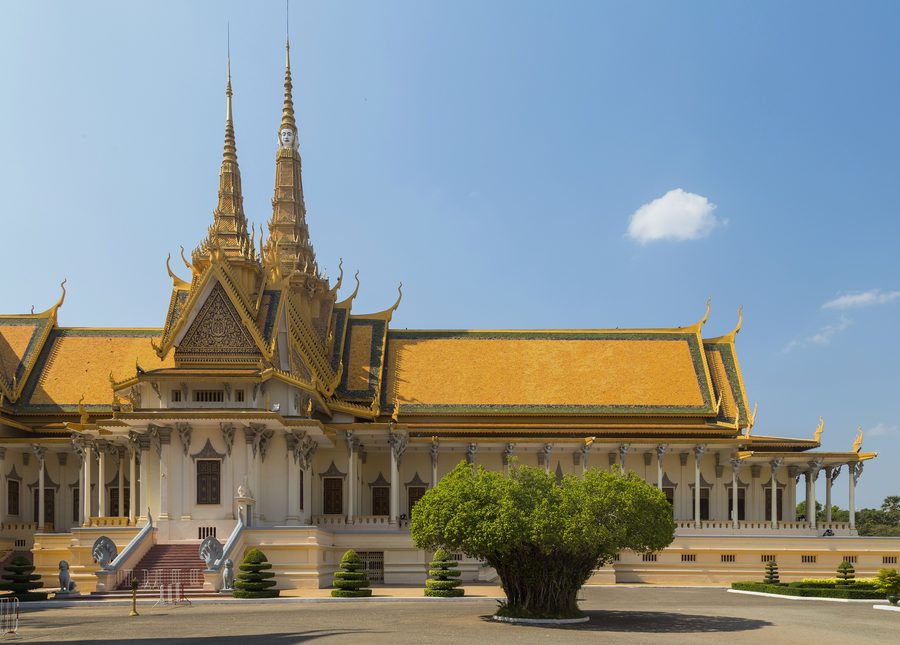
A temple-focused family holiday becomes especially tangible in Siem Reap, because culture and everyday life are close together here. The image of the temples is not just an excursion motif; it also shapes the question of how you combine accommodation, daily pace, and outings.
This central route includes Phnom Penh, Siem Reap, Battambang, Kampong Cham, Kampong Thom, Kandal, Samraong Tong, Takéo Province, and Tram Kak. They are especially useful for placing a central region with access to culture, practical daily routes, or a nearby temple axis.
Coast, water, and quieter days
If you want quieter days, the coast changes the feeling of the trip noticeably. Here it is less about tightly packed program days and more about water, slowing down, and a rhythm that suits families who do not want to change accommodation every day.
The coast- and water-oriented selection ranges from Kampot Province and Kep to Krong Preah Sihanouk, Kaôh Kŏng, and Koh Kong District, ending with Sihanoukville. For families looking for a slower vacation day, this is often the most fitting direction.
River, plains, and quieter inland days
Between the country’s river and inland areas, Cambodia becomes quieter and less urban. This works well if you want landscape, calmer stages, and a base that does not depend on city bustle or beach days.
This quieter logic includes Kompong Chhnang, Kracheh, Kratié, Prey Veng, Pursat, Steung Treng Province, and Svay Rieng. These pages are especially helpful when deciding whether you want a quieter stopover base or a more focused inland route.
Nature, highlands, and more remote routes
When peace and landscape come first, the nature-oriented group is the clearest alternative to Phnom Penh or Siem Reap. Here the focus is on regions that stand more for a slower, more remote travel feeling than for dense city programs.
The clearest anchors are Mondulkiri Province and Ratanakkiri; also included are Preah Vihear, Oddar Meanchey Province, Pailin, and Banteay Meanchey. For families prioritizing nature and peace over urban amenities, this is the right comparison group.
Food, markets, and culture in everyday life
For many families, the small, practical encounters are what matter most: markets, street food, Khmer cuisine, and Apsara dance give the country its own profile without requiring a special program. These experiences work particularly well when your base is not just a place to sleep, but a place with real daily life.
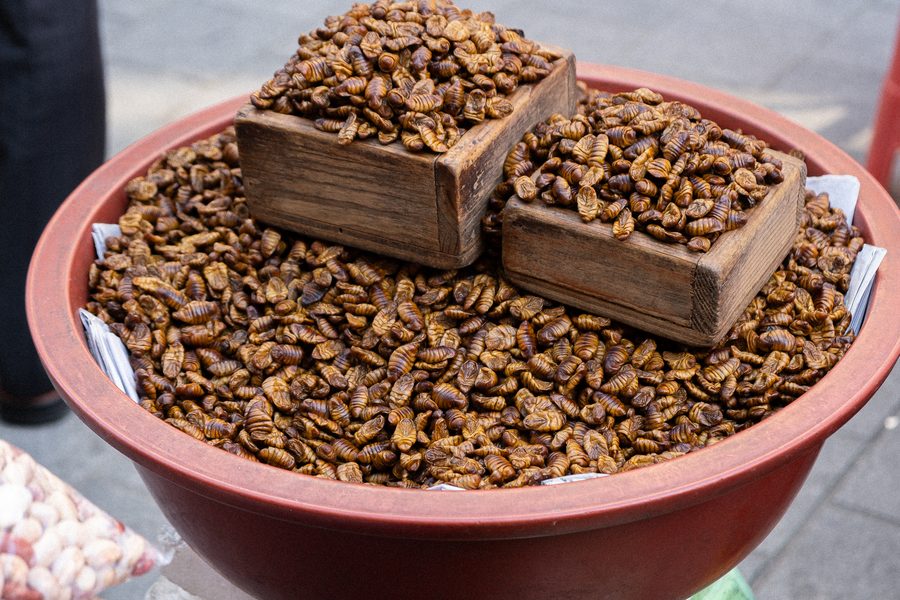
A central base makes such outings easier, because you can fit culture and food into the same day instead of changing accommodation for every experience. In this way, the choice of location becomes the key lever of the holiday.
FAQ
- Which base is the most versatile for families?
- Phnom Penh, if you want city life, culture, and central routes; Siem Reap, if temples, markets, and culture in everyday life matter more.
- When does the coast make sense?
- When you want quieter days, views of the water, and less pressure in the schedule. Then the coastal regions fit the desired pace best.
- When is nature the better choice?
- When peace and landscape matter more than a dense city program. Then Mondulkiri Province and Ratanakkiri are the clearest anchors.
In Cambodia, the strongest decision is usually not which place is the “most beautiful,” but which daily rhythm is best for your family. If you choose that way, accommodation stops being a side issue and becomes a useful part of the trip.


.jpg)
