
Accommodation in Venezuela
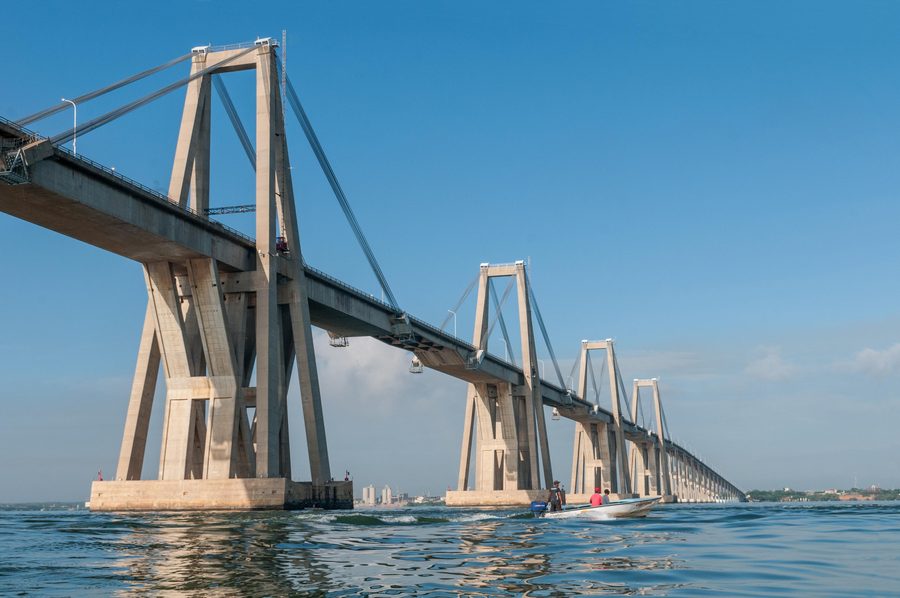 Der Maracaibo-See bei Cabimas mit der General-Rafael-Urdaneta-Brücke.
Photo: Wilfredor via Wikimedia Commons, CC0
Der Maracaibo-See bei Cabimas mit der General-Rafael-Urdaneta-Brücke.
Photo: Wilfredor via Wikimedia Commons, CC0
Venezuela combines Caribbean coasts and islands with northern mountain regions, the Maracaibo lowland, and the broad Llanos. For planning your trip, this contrast is especially useful: should a family holiday be shaped by the water, focus more on scenery and nature, or combine city impressions with a rural stay?
Venezuela at a glance
- The country lies on the northern coast of South America and includes not only the mainland but also islands and islets in the Caribbean.
- Coast, islands, the Maracaibo lowland, the northern mountain arc, and the Llanos stand for clearly different travel styles.
- Cities in the north, including Caracas, add an urban focus to the natural and coastal areas.
- Stilt houses on Lake Maracaibo shape a well-known naming story around Venezuela as “Little Venice.”
- In the Llanos, former cattle ranches, known as hatos, are described as a rural type of accommodation for nature-oriented stays.
Between the Caribbean, mountains, and wide inland plains
If you want water and islands as the thread running through your trip, Venezuela’s Caribbean north offers a different setting from the mountain regions or the interior. Coastal and island areas suit an itinerary in which shared days on and around the water set the tone. The mountains and the Llanos, by contrast, are more appealing to travelers who want to observe landscapes, be on the move, and focus the stay more strongly on nature.
Lake Maracaibo adds its own link between waterscapes and history. The area’s stilt houses are said to have reminded European sailors of Venice; from this tradition came the name Venezuela, interpreted as “Little Venice.” The regional detail Zulia can therefore be connected with a travel interest in this waterside and cultural reference.
The Llanos as a special form of travel
The Llanos are very different from the coast and the mountains: here, broad plains define the landscape. Hatos, meaning former cattle ranches, are described as an accommodation option for nature-based tourism. Wildlife watching and excursions into the surrounding area are part of this travel style, without being tied to a specific program or a particular business.
For families, this option can be attractive when shared days in nature matter more than a dense urban program. A rural base in the Llanos creates a different daily rhythm from accommodation in an urban area. You can explore the pages Barinas and Portuguesa more closely for this direction.
Which accommodation base fits the itinerary?
First choose the desired travel style, and only then the location of the accommodation. A base near the coast or an island suits a water-oriented stay. A city location is more suitable if urban impressions are the main focus or are to be combined with other stages of the trip. For nature-oriented days in the Llanos, a rural accommodation type such as a hato is another option in its own right.
Posadas are also described in both urban and rural settings. What matters, then, is whether you want to start a day in nature right away, experience waterscapes, or prefer an urban starting point. Before booking, check the exact location and the facilities offered by the accommodation if short distances or self-catering are important for family life.
More destinations in Venezuela
Once you have found the right travel style, you can consider the following places for your further selection:
- Anzoátegui, Aragua, Boconó, and Bolívar
- Carabobo, Colonia, Delta Amacuro, and Dependencias Federales
- Díaz, Falcón, Capital District, and Lara
- Mérida, Miranda, Nueva Esparta, and Sucre
- Táchira, Vargas, and Vargas
Frequently asked questions about Venezuela
Which travel styles can be combined in Venezuela?
The Caribbean coast and islands stand in contrast to a travel picture shaped by mountain regions, the Maracaibo lowland, and the Llanos. This means you can choose between water-oriented, landscape-focused, urban, and rural priorities.
What makes a stay in the Llanos special?
The wide plains and the described accommodation type of the hatos give the Llanos a nature-based character. Wildlife watching and excursions into the surrounding area can take center stage there more than an urban program.
Why is Lake Maracaibo so illustrative for Venezuela?
The stilt houses on the lake combine a waterscape with a well-known naming tradition. They make the regional difference between the northwest and other Venezuelan travel styles especially clear.

