
Accommodation in Argentina
Accommodation in Argentina
Argentina is a country for families who want to discover not just one destination, but a whole range of travel experiences: Buenos Aires combines city life and tango, the northeast offers rivers and the Iguazú Falls, while the northwest, Cuyo and Patagonia each reveal their own landscapes of highlands, wine regions, steppe and southern vastness. These contrasts are precisely what help you first choose the focus you want and then find a suitable accommodation base.
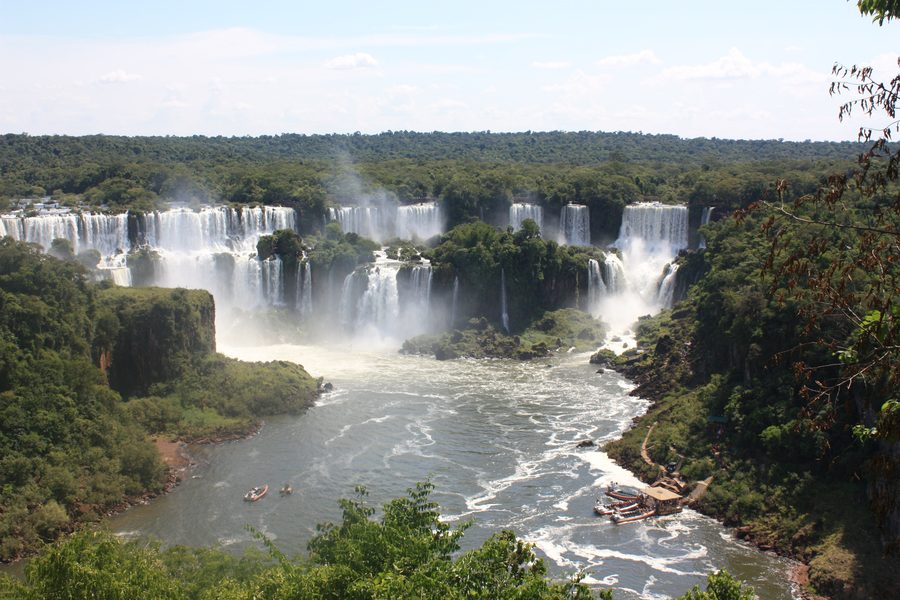 Die Iguazú-Wasserfälle in der Provinz Misiones prägen den subtropischen Nordosten Argentiniens.
Photo: Arian Zwegers from Brussels, Belgium via Wikimedia Commons, CC BY 2.0
Die Iguazú-Wasserfälle in der Provinz Misiones prägen den subtropischen Nordosten Argentiniens.
Photo: Arian Zwegers from Brussels, Belgium via Wikimedia Commons, CC BY 2.0
Argentina at a glance
- City life, subtropical waterfalls, the Andes and southern expanses all lie within one country with several climate and vegetation zones.
- Buenos Aires is an important cultural center; the Tango Argentino originated there.
- The northeastern Mesopotamia region lies between the Río Paraná and the Río Uruguay.
- In Misiones, the Iguazú Falls are among the defining natural highlights of the northeast.
- Northwestern Argentina stretches from the Puna high plateau through mountain regions to subtropical forest areas.
- Cuyo combines the central Andes and dry landscapes with irrigated wine growing.
- The Sierras Pampeanas form a distinct low-mountain region in central and western Argentina.
- Patagonia stands for dry, wind-shaped openness and diverse natural destinations all the way to Tierra del Fuego.
Four travel images that make Argentina special
When traveling with children, it can be helpful to look at Argentina first in terms of the mix you want between culture, nature, activity and quieter discoveries. An urban start in Buenos Aires sets a clear cultural tone: tango is part of the city’s history here and makes a stay feel very different from a trip shaped by mountains or waterfalls.

In the northeast, a completely different travel feeling emerges. The Mesopotamia region between the Paraná and Uruguay rivers and the subtropical landscape of Misiones lead to water- and nature-based experiences. The Iguazú Falls are a particularly striking focal point: instead of city districts and cultural attractions, water, forest and an impressive landscape take center stage.
The northwest is the choice for families who want to combine mountains, high plateau and changing landscape zones. The Puna, the Andean regions and subtropical forest areas do not create a single uniform panorama, but a sequence of clearly different impressions. In addition, numerous buildings from the colonial period add a cultural layer to the landscape experience.
Cuyo and the Sierras Pampeanas, in turn, create a western travel image with a character of its own. In Cuyo, the central Andes and dry steppe and hill landscapes meet irrigated wine production. The Sierras Pampeanas, by contrast, are a low-mountain region. For planning purposes, this distinction is helpful when you are choosing between Andean and wine landscapes, dry expanses, or a trip with a low-mountain character.
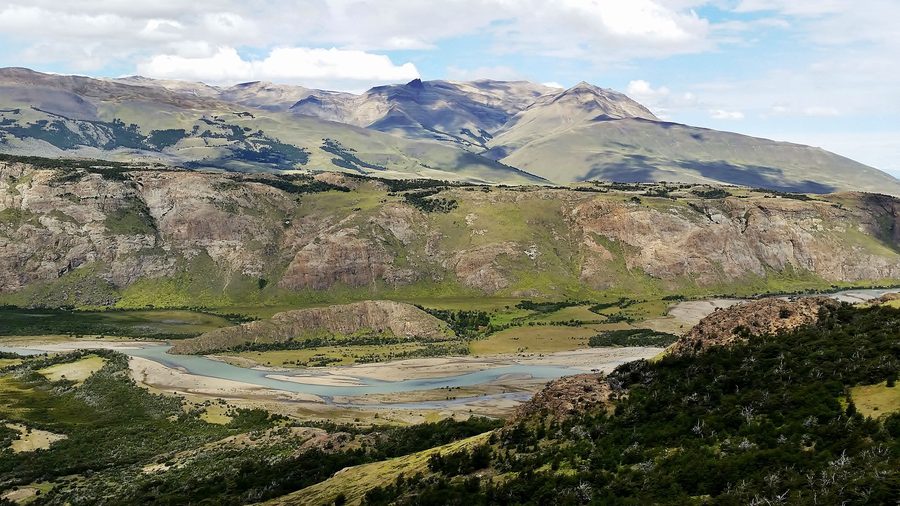
Patagonia and Tierra del Fuego should be understood as a separate southern focus. The region is shaped by vast open spaces, dry and wind-swept landscapes, and a wide range of natural destinations. A scene from Patagonia therefore should not simply be treated as a brief add-on to a city trip or to the northern landscapes.
Which region suits your family travel plan?
For a city-based cultural stay, Buenos Aires is the most obvious regional focus; the page for holiday rentals in Buenos Aires leads you to the corresponding selection. If you want to compare a city with other major travel entry points, you can also find Córdoba (holiday rentals in Córdoba) and Santa Fe (holiday rentals in Santa Fe) in the country overview.
For rivers, subtropical nature and waterfalls, Misiones (holiday rentals in Misiones), as well as Corrientes (holiday rentals in Corrientes) and Entre Ríos (holiday rentals in Entre Ríos), belong in the northeastern comparison. Formosa (holiday rentals in Formosa) complements the regional pages there.
You can explore the northwestern travel image further through Jujuy (holiday rentals in Jujuy), Salta (holiday rentals in Salta), Catamarca (holiday rentals in Catamarca), La Rioja (holiday rentals in La Rioja), Tucumán (holiday rentals in Tucumán) and Santiago Del Estero (holiday rentals in Santiago Del Estero).
For Cuyo and the Sierras, there are Mendoza (holiday rentals in Mendoza), San Juan (holiday rentals in San Juan) and San Luis (holiday rentals in San Luis). The pages for Chaco (holiday rentals in Chaco) and La Pampa (holiday rentals in La Pampa) are also part of the direct Argentina selection.
In the south, the regional pages lead to Neuquén (holiday rentals in Neuquén), Río Negro (holiday rentals in Río Negro), Chubut (holiday rentals in Chubut), Santa Cruz (holiday rentals in Santa Cruz) and Tierra Del Fuego (holiday rentals in Tierra Del Fuego). This keeps the southern natural region visible as a decision of its own.
Choosing the right accommodation base for the travel image
The regional contrasts make it clear that accommodation should not be considered separately from the travel plan. A city base in Buenos Aires supports a stay focused on culture and tango. For Iguazú, rivers and subtropical nature, a regional base in the northeast matches the chosen nature focus. In the northwest or in Cuyo, the accommodation sits closer to the decision between high plateau, mountains, dry landscapes, sierras or wine growing.
If you want to combine several of these travel images, a sequence of regional focuses makes more sense than the idea of a single nationwide base. A holiday apartment or apartment can be especially interesting when self-catering and a longer stay matter; if you are moving from place to place more often, what matters most is that the accommodation fits the relevant stage of your journey. When making a specific choice, check the exact location and the facilities currently offered directly with the provider.
Frequently asked questions about Argentina
What different travel experiences does Argentina offer families?
You can distinguish between urban culture in Buenos Aires, subtropical river and waterfall landscapes in the northeast, high plateau and mountains in the northwest, Cuyo with dry landscapes and wine growing, and Patagonia and Tierra del Fuego as the southern natural region.
Can Argentina be explored from one fixed base?
A fixed regional base works well for a clear focus. Anyone who wants to combine the city, the northeast, the Andean regions and Patagonia is better off planning several regional stops rather than one single accommodation for the whole country.
Which region is best for waterfall and river landscapes?
The northeast, with the Mesopotamia region between the Paraná and Uruguay rivers as well as Misiones and the Iguazú Falls, represents this travel image. It differs clearly from the dry Andean regions, the wine landscapes of Cuyo and the southern vastness of Patagonia.

.jpg)

