
Discover Trinidad and Tobago
Accommodation in Trinidad and Tobago
Trinidad and Tobago combines two clearly different island experiences: in Trinidad, Port of Spain, Carnival, and steelpan meet rainforests and savanna landscapes; Tobago offers a calmer contrast with beaches, smaller towns, and densely vegetated nature. For a family trip, this mix is especially appealing because you can place different emphasis on culture, shared discovery days, and more relaxed nature or beach moments.
 Regenwald im Forest Reserve auf Tobago – Teil des Naturprofils rund um das Main Ridge Forest Reserve.
Photo: Aivar Ruukel via Wikimedia Commons, CC BY-SA 2.0
Regenwald im Forest Reserve auf Tobago – Teil des Naturprofils rund um das Main Ridge Forest Reserve.
Photo: Aivar Ruukel via Wikimedia Commons, CC BY-SA 2.0
Quick & useful
- Trinidad and Tobago offers the contrast between culture, nature, and beaches across two islands.
- Trinidad combines rainforest in the north with savanna landscapes in the south.
- Port of Spain stands for Carnival, music, costumes, and lively street culture.
- Steelpan instruments were developed in Trinidad and shape the country’s cultural soundscape.
- Tobago offers a calmer travel character with beaches, smaller towns, and the Main Ridge Forest Reserve.
- Roti and doubles provide a concrete introduction to the cuisine shaped by African, Indian, European, and Caribbean influences.
Trinidad or Tobago – which island character suits you?
If city life, music, and cultural impressions are the main focus, Trinidad is the first place to look. Port of Spain makes the island’s cultural emphasis especially vivid: Carnival, calypso, and steelpan are part of the image that makes Trinidad unmistakable. Added to that is the landscape range between northern rainforest and southern savanna.
Tobago sets a different tone. The smaller island is described as a calmer counterpart with beaches, smaller towns, and a more relaxed travel character. The Main Ridge Forest Reserve adds a striking natural highlight. If, for the family, you would rather combine beach time, forest, and a less urban stay, this is the right focus.
Together, both islands are especially appealing if you do not want to choose between culture and relaxation. The island combination links Trinidad’s music and city profile with Tobago’s beach and nature side. The split can therefore follow the experiences that really matter most to your family.
Nature, music, and cuisine to discover together
Trinidad’s landscapes invite different kinds of discovery: rainforest and savanna not only create varied scenery, but also give a trip different thematic focal points. For families with varied interests, this can mean alternating an active day in nature with cultural impressions in the city instead of making every day feel the same.
Tobago’s Main Ridge Forest Reserve stands for the island’s densely vegetated nature. That makes Tobago interesting for travelers who do not want to see beach days in isolation, but want to combine them with forest and landscape experiences. Nature remains the main anchor; you should choose specific routes, trails, or activities on site to suit your day’s plans.
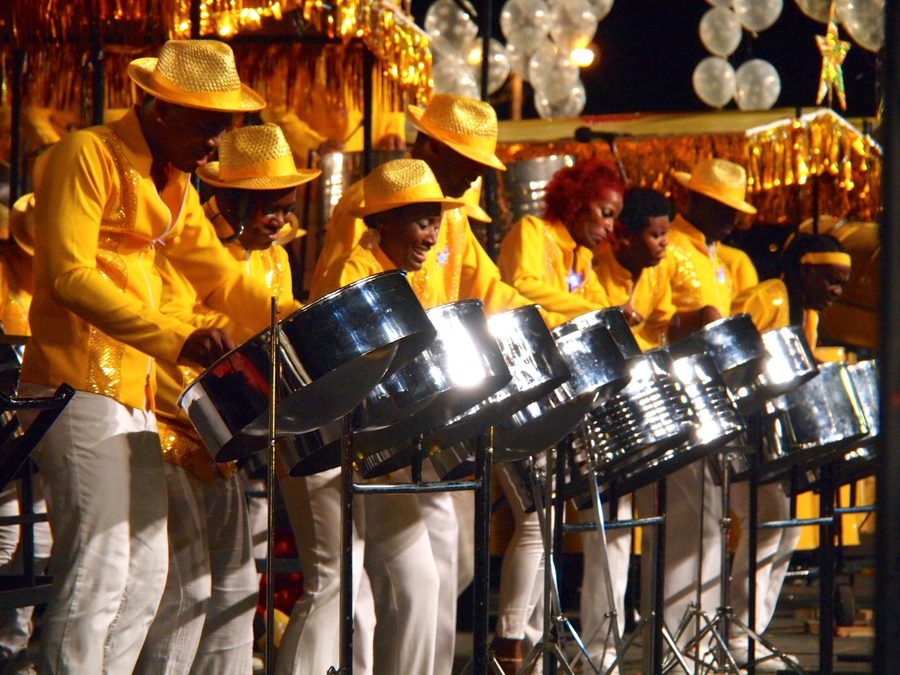
Sound is also part of the destination. Steelpan was developed in Trinidad and is more than a decorative cultural reference: music creates direct access to the country’s past and present. Together with Carnival and calypso, it becomes an experience field that gives a trip a local rhythm – especially if you want to get to know not only landscapes, but also everyday life and festival culture.
The cuisine also makes the cultural diversity tangible. African, Indian, European, and Caribbean influences shape the culinary tradition. Roti and doubles are two concrete examples that can fit naturally into a day out as a curious discovery. If children have different preferences, these small food breaks offer an easy way to get to know local life without committing the whole day to just one theme.
Choose your accommodation base based on your travel interest
The right accommodation begins with the island choice, not with an abstract checklist. On Trinidad, a base makes sense if Port of Spain, Carnival, steelpan, and the diversity of landscapes are your priorities. On Tobago, a base is a good fit for plans that give more space to beaches, smaller towns, and the Main Ridge Forest Reserve. If you want to experience both, you can treat stays on each island as separate focal points. For family travel, it is worth paying special attention to the exact location and the required facilities when making a final choice.
The 15 regions to choose from
On Trinidad, the selection includes Arima, Chaguanas, Couva-Tabaquite-Talparo, Diego Martin, Penal-Debe, Rio Claro-Mayaro, San Fernando, San Juan-Laventille, Sangre Grande, and Tunapuna-Piarco. Also included are Port of Spain as the cultural center, and Trinidad as the overarching island choice.
On Tobago, the options are Eastern Tobago, Tobago, and Western Tobago. The different island profiles help with orientation: Trinidad stands for culture, city life, and varied landscapes, while Tobago stands for beaches, smaller towns, and densely vegetated nature.
Frequently asked questions about Trinidad and Tobago
What distinguishes Trinidad and Tobago as travel destinations?
Trinidad is more strongly associated with Port of Spain, Carnival, calypso, steelpan, and varied inland landscapes. Tobago is described as a smaller and quieter travel pole with beaches, smaller towns, and densely vegetated nature.
What cultural and culinary impressions shape the country?
Carnival and steelpan give the trip a distinctive music and festival-culture profile. The cuisine brings together several cultural influences; roti and doubles are tangible examples of local street-food traditions.
When does a combination of both islands make sense?
A combination makes sense if you value cultural and urban impressions on Trinidad just as much as beaches and nature on Tobago. This creates a varied island mix without turning Trinidad and Tobago into a single uniform destination.


