
Accommodation in the Dominican Republic
Accommodation in Dominican Republic
The Dominican Republic offers very different travel experiences in a small area: coastal towns meet mountain landscapes, modern cities meet historic cultural centers. For a trip with children or with a group, it is therefore worth choosing a clear focus: should shared days take place mainly by the sea, at waterfalls, on active outings, or among museums and colonial architecture?
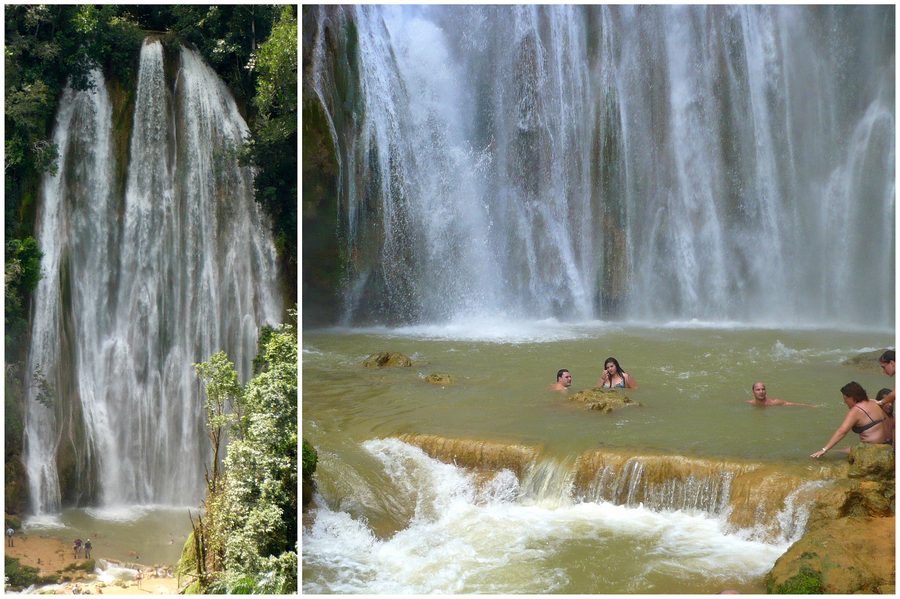 Der Wasserfall El Limón bei Samaná steht beispielhaft für die üppige Natur im Nordosten der Dominikanischen Republik.
Photo: Wikimedia Commons contributor via Wikimedia Commons, CC BY-SA 2.0
Der Wasserfall El Limón bei Samaná steht beispielhaft für die üppige Natur im Nordosten der Dominikanischen Republik.
Photo: Wikimedia Commons contributor via Wikimedia Commons, CC BY-SA 2.0
At a glance
- Coast, city and mountain landscape open up different travel experiences.
- La Bandera combines rice, beans and meat into a concrete introduction to Dominican cuisine.
- Taíno, Spanish and African influences shape the food culture.
- Merengue makes Dominican music culture easy to picture.
- Samaná stands for lush nature and waterfalls.
- Santo Domingo creates a clear contrast to coastal regions with its urban history and colonial heritage.
- Puerto Plata and Cabarete represent a more active profile on the north coast.
Landscapes for very different travel days
Anyone who wants to enjoy coastal air in the morning, discover nature later and get to know local culture in between will find several suitable starting points in the Dominican Republic. The country's diversity is not just a simple collection of places: a coast-oriented trip emphasizes different aspects than a stay focused on city history or a nature-based plan.
In the northeast, Samaná combines lush landscapes with waterfalls; the El Limón waterfall is located there as well. That suits a travel plan in which visible nature and shared excursions play an important role alongside days by the coast. The north coast around Puerto Plata and Cabarete, by contrast, is associated with surfing, kitesurfing, mountain views and a more active coastal rhythm.
City, culture and cuisine as part of the trip
A stay in Santo Domingo gives the trip an urban focus. The Zona Colonial, colonial architecture, historic monuments and museums provide a cultural framework that is clearly different from a stay on the coast. In this way, a shared city day can add history and architecture to days spent in the landscape and at the beach.
Food also makes the country tangible. La Bandera - rice, beans and meat - is a vivid example of Dominican food culture. Its influences are linked to Taíno, Spanish and African traditions. Merengue offers another point of access: music and food bring local culture into the holiday even when the day is not centered exclusively on nature or the beach.
Which focus suits your trip?
For a clear coastal focus, La Romana can be included as a southeastern travel profile. Those who want nature to take center stage will find in Samaná a different approach than on the more active north coast. Santo Domingo fits a program centered on history, museums and colonial architecture. Puerto Plata and Cabarete are a better fit for those looking for water-based and active days.
These differences help when choosing a base for a trip through the Dominican Republic: a location near Samaná supports excursions to landscapes and waterfalls, Santo Domingo combines culture and city history, while Puerto Plata or Cabarete place the emphasis on water and active days. For a mixed travel plan, you should match the exact location of the accommodation to whether shared days will be spent more by the sea, in nature or in the historic center.
More regions of the Dominican Republic
Additional provincial profiles expand the overview and help you narrow down your own travel plan further. These include Abreu, Azua, Barahona, Dajabón, Duarte, El Seibo, Elias Pina, Espaillat, Independencia, La Altagracia, La Vega, Los Alcarrizos, María Trinidad Sánchez, Monseñor Nouel Province, Monte Cristi, Monte Plata, Pedernales, Peravia, San Cristóbal, San Pedro De Macorís, Sanchez Ramirez, Santiago and La Romana.
Questions about trip planning
Which travel profiles can be combined in the Dominican Republic?
Coast, nature, active days and city history can be planned as different focuses. Samaná stands for landscapes and waterfalls, Puerto Plata and Cabarete for a more active coastal profile, and Santo Domingo for history and culture.
Which dishes and cultural influences make the country especially vivid?
La Bandera of rice, beans and meat is a concrete example. The cuisine combines Taíno, Spanish and African influences; Merengue adds music to the culinary experience.
Which base suits interests in nature or culture?
Samaná combines nature experiences and waterfalls, while Santo Domingo sets a cultural focus with the Zona Colonial, monuments and museums. Puerto Plata and Cabarete add a more active north-coast rhythm to the selection.

