
Kyrgyzstan: Alpine Lakes, Mountains and Cultural Heritage
Accommodation in Kyrgyzstan
Kyrgyzstan combines high-altitude lakes and mountain landscapes with ancient sacred sites and living traditions. Depending on whether you prefer to spend time by the water, experience a landscape on foot or explore history, different focuses may suit your trip. These contrasts can help you choose the right region for your holiday rental.
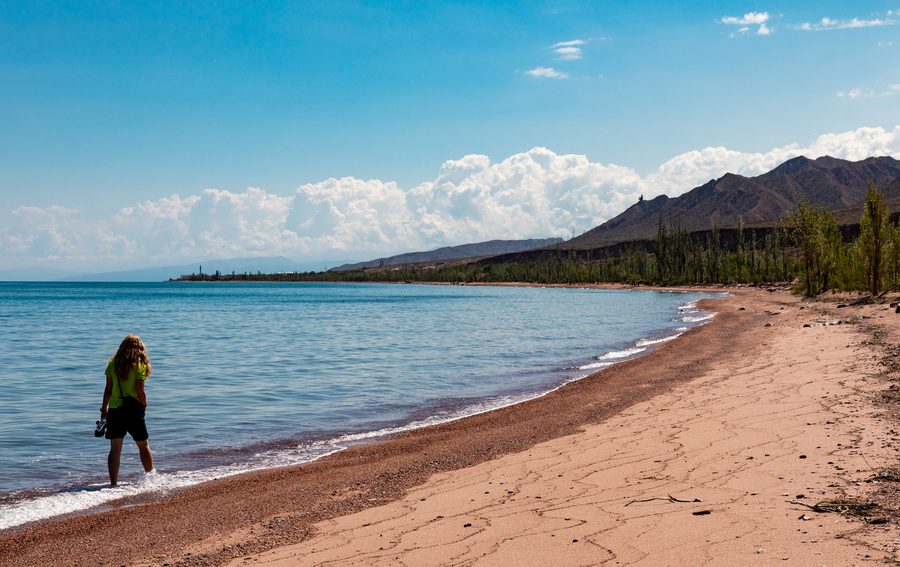 Issyk-Kul Lake and its mountain backdrop in Kyrgyzstan.
Photo: Ninara from Helsinki, Finland via Wikimedia Commons, CC BY 2.0
Lakes and Summer Pastures
Lake Issyk-Kul lies at an altitude of 1,607 metres in the Tian Shan and is the world’s second-largest alpine lake. Despite its altitude, it does not freeze over. Its northern shore, with Cholpon-Ata, Bosteri and Tamchy, is the developed part of the lake: sandy beaches and holiday resorts define the character of the shoreline. There are also water sports and an open-air petroglyph museum in Cholpon-Ata. If water and life along the shore are the main focus of your trip, this side of the lake offers a clear focus; the availability of individual facilities may vary.
Song-Kul offers a different setting: the alpine lake lies at an altitude of 3,016 metres and is surrounded by vast jailoo, the summer pastures. Comparing the two lakes makes the choice clearer: at Issyk-Kul, the focus is on a developed shoreline and beaches, while Song-Kul is a lake set amid open summer pastures. Spending a night in a yurt on a jailoo is another possible travel experience; the availability of individual yurt camps varies.
Forests, Wilderness and Mountains
In the Sary-Chelek Biosphere Reserve, an ancient walnut-fruit forest surrounds a turquoise lake. Juniper groves and wild apple and pear trees add to the landscape. The protected area covers 23,868 hectares and is home to more than 160 tree species. Its wildlife includes brown bears, lynxes, wild boars and porcupines, as well as more than 150 bird species; snow leopards have been recorded at higher elevations, but sightings are not guaranteed.
The changes in elevation are also striking: Ala-Archa National Park stretches from a wooded gorge at 1,500 metres to glaciated peaks above 4,800 metres. A flat, two-hour walk along the river and technical alpine routes are two different activities available there. For longer treks and climbing routes, the Karavshin Gorge is another focus: its routes range from alpine grade 4 to big-wall grade 6b; multi-day treks pass through wilderness and include glacier crossings. Check local access and route conditions before planning such activities.
The Arslanbob area is home to a natural walnut forest covering 600,000 hectares, described as the largest on Earth. Horse rides through alpine meadows are among the possible activities there. Arslanbob also has the Big and Small Waterfalls. When choosing where to visit in Kyrgyzstan based on landscape, you can distinguish between lakes, forests and high-mountain routes rather than grouping all travel experiences under a single picture of nature.
Sacred Sites and History
Sulaiman-Too comprises 17 sacred sites that are still in use and connected by footpaths around the mountain peaks. Historical features include ancient sacred sites, caves with petroglyphs and two largely reconstructed mosques dating from the 16th century. Saimaly-Tash offers a different glimpse into early visual history: it is home to around 10,000 stones bearing rock art, with the earliest depictions dating to the Eneolithic and Bronze Age. The site has been continuously used as a sacred place from the 3rd millennium BCE to the present day. The petroglyphs can only be visited in July and August; check the weather and local conditions in advance.
Burana is the remains of Balasagun, one of the largest medieval cities in the Chüy Valley. Tash Rabat, meanwhile, is a stone caravanserai on the Silk Road dating from the 15th century. Its 31 domed rooms, central hall and underground passageways give the building a distinct architectural character. In Osh, the settlement’s history as a major Silk Road trading centre stretches back more than 3,000 years.
Manas Ordo comprises a museum dedicated to the Manas Epic and a burial site dating from the 1st century. The epic is said to contain more than half a million lines; each manaschi, a professional storyteller, has their own version. Along with the sacred sites and stone monuments, this offers a way to explore different layers of Kyrgyz cultural history.
Traditions and Choosing Your Holiday Rental
Kyrgyz traditions can also be discovered through crafts and food. At visitors’ request, a Kyrgyz family can demonstrate how to set up a boz ui, a traditional nomadic dwelling, and explain its components and raw materials. Tourists can make shyrdaks with local craftswomen and decorate them to their own specifications; these activities are coordinated locally. Kymys, a fermented drink made from mare’s milk, is another local specialty to try.
When looking for a holiday rental in Kyrgyzstan, let the kind of trip you want guide your choice of location: the developed northern shore of Issyk-Kul is a good focus for sandy beaches and water sports, while the landscapes described at Song-Kul, Sary-Chelek and Ala-Archa offer different nature and activity experiences. If cultural heritage is your main interest, places such as Sulaiman-Too, Burana, Tash Rabat and Osh each have their own historical themes. First choose the experiences that matter to you, then look for suitable accommodation in your preferred region.
Discover More Destinations
Discover more destinations: Osh Region, Jalal-Abad, Batken Province, Bishkek, Chüy Region, Naryn Region, Talas Region, Issyk-Kul Region, Manas.

