
Accommodation in Guyana
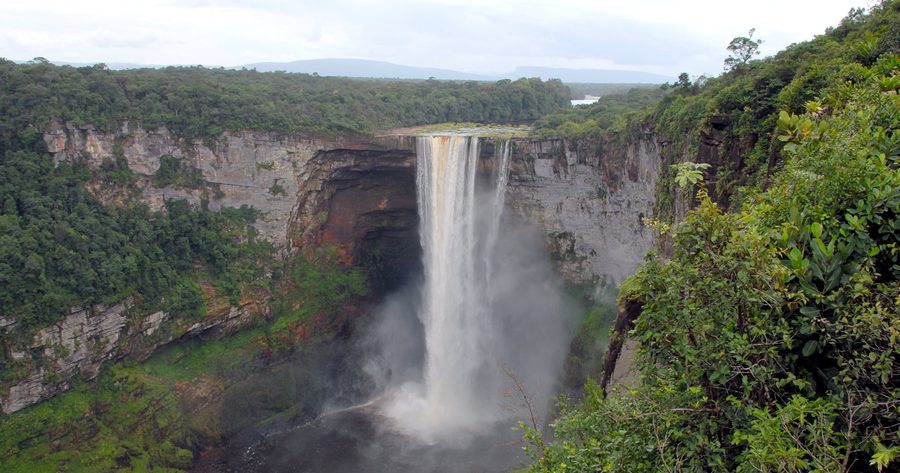 Kaieteur Falls, one of Guyana's signature inland attractions.
Photo: Bill Cameron via Wikimedia Commons, CC BY-SA 3.0
Kaieteur Falls, one of Guyana's signature inland attractions.
Photo: Bill Cameron via Wikimedia Commons, CC BY-SA 3.0
Guyana combines a coastal introduction around Georgetown on South America’s Atlantic coast with a large interior of rainforest, rivers, and savanna. For choosing accommodation, that contrast is exactly what matters: do you want to arrive first on the coast and in the capital, or do you want to head straight for nature destinations such as Kaieteur Falls and the Rupununi?
Quick facts about Guyana
- Guyana lies on the Atlantic coast of South America.
- The official language is English, and the capital is Georgetown.
- Guyana has a low coastal strip; Georgetown is located there on low-lying coastal land and is shaped by canals.
- The Essequibo is the most important river, and Kaieteur Falls are among the notable inland destinations.
- The Rupununi Savanna is another distinctive landscape.
The cultural background is equally clear: English, left-hand traffic, and cricket are part of everyday life, while indigenous culture, wildlife, and outdoor experiences come more to the fore in the interior. This is not a country for a quick bullet-point stop, but one for a deliberately chosen route.
Coast, capital, and interior: what shapes travel here
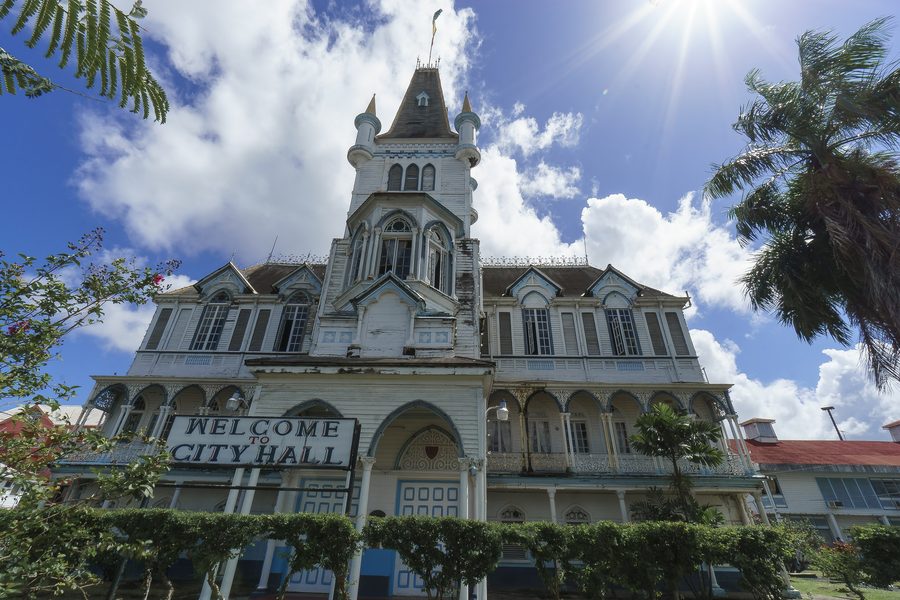
As the capital and the administrative and economic center on the Demerara River, Georgetown is the obvious first anchor. If you want to begin your trip with a coastal phase, this is the reference point for arrival and for the first days on the Atlantic side.
Inland Guyana has a different focus: rainforest, rivers, and individual natural highlights shape the picture. Potaro-Siparuni is most clearly associated with Kaieteur Falls; Cuyuni-Mazaruni and Pomeroon-Supenaam remain important as additional inland or national reference points if you want to place the country in a broader context. If you are looking for the contrast between coast and interior, you can quickly see how the choice of base affects the travel experience.
How to classify the regions for your accommodation choice
If you want to start near the coast, Demerara-Mahaica and Essequibo Islands-West Demerara are the most obvious regions to consider around Georgetown. They are a good fit if you want your first stay to focus on arrival, the city, and the coast.
For the nature-oriented part of the journey, Cuyuni-Mazaruni and Potaro-Siparuni lead more strongly into the inland landscape of rainforest and waterfalls. Pomeroon-Supenaam also remains part of the national overview as another region of Guyana when you want to understand the country’s full range.
Coastal locations make the trip more urban and logistically easier; inland locations shift the stay more toward remote nature and longer travel stages. That difference is exactly what helps you decide whether you want to experience Guyana more as an arrival and coastal country or as a nature destination in the interior.
Frequently asked questions about Guyana
Why is the mix of Georgetown and the interior worthwhile in Guyana?
Because it lets you combine a coastal start with a clear nature section and experience the country’s two very different sides.
Is Georgetown a sensible first stop in Guyana?
Yes, if you want to begin with a capital-and-coast phase. Georgetown is the administrative and economic center on the Demerara River.
Which natural destinations shape Guyana between Kaieteur Falls and the Rupununi Savanna?
Above all the Essequibo, Kaieteur Falls, the rainforest areas, and the Rupununi Savanna. These are the landscape anchors of inland Guyana.

_2007.jpg)
.jpg)