
Holiday accommodation in Montenegro
Accommodation in Montenegro
Montenegro is a destination for families who do not want to choose between the sea, historic places, and mountain scenery: along the Adriatic coast, Mediterranean landscapes and old coastal towns meet, while in the north around Žabljak an entirely different world opens up with peaks, forests, lakes, and gorges. In between, central Montenegro offers its own inland and urban perspective. This very contrast makes the choice of location important.
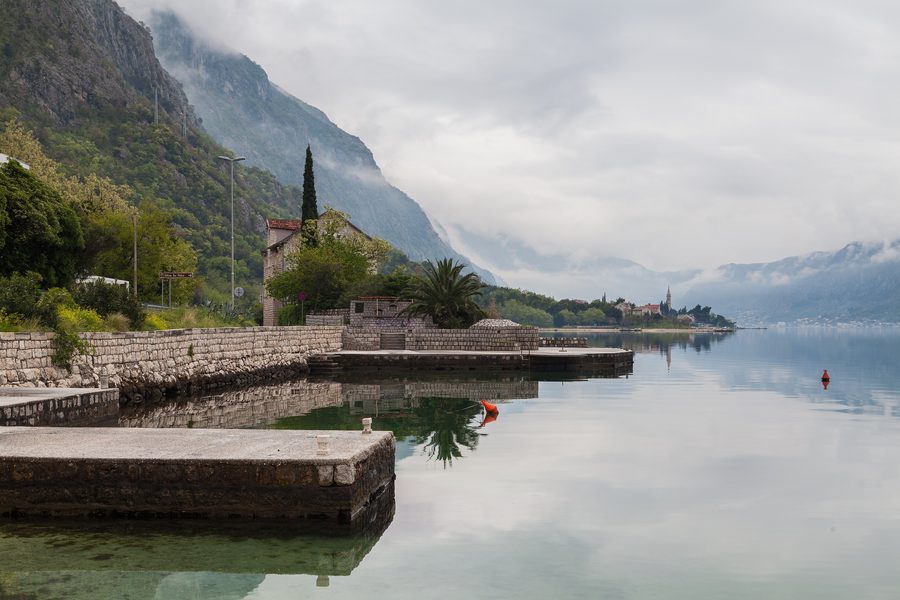 Die Bucht von Kotor verbindet ruhiges Wasser, steile Kalksteinberge und Siedlungen am Ufer.
Photo: Diego Delso via Wikimedia Commons, CC BY-SA 3.0
Die Bucht von Kotor verbindet ruhiges Wasser, steile Kalksteinberge und Siedlungen am Ufer.
Photo: Diego Delso via Wikimedia Commons, CC BY-SA 3.0
In brief
- Montenegro combines the Adriatic coast, historic coastal towns, national parks, and mountain landscapes.
- In the Bay of Kotor, water, steep limestone mountains, and historic settlements on the shore come together.
- Around Žabljak, Durmitor, mountain peaks, forests, gorges, and lakes shape the northern landscape.
- The coast, central Montenegro, and the mountains stand for different travel priorities.
- Regional cuisine is described cautiously as differently influenced: more Mediterranean on the coast, heartier in the north.
Montenegro’s appeal lies in the variety of its landscapes
If you want to see water and steep mountain slopes in the morning, the Bay of Kotor offers a particularly impressive landscape. Historic settlements on the shore provide a concrete setting for walks and sightseeing, while the bay at the same time shows Montenegro’s maritime side.
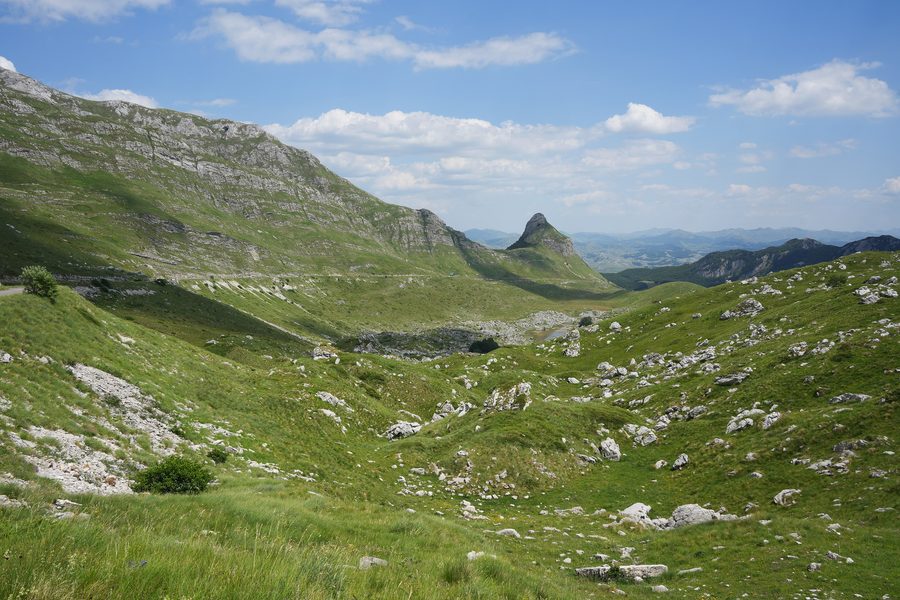
The coast is only one side of the country. In the Durmitor area around Žabljak, mountain peaks, forests, lakes, and gorges define the surroundings. This creates a clear contrast to days by the water and to historic coastal towns: here, nature itself takes center stage, with room for active pursuits as well as quieter landscape impressions.
Experiences between coast, culture, and mountain nature
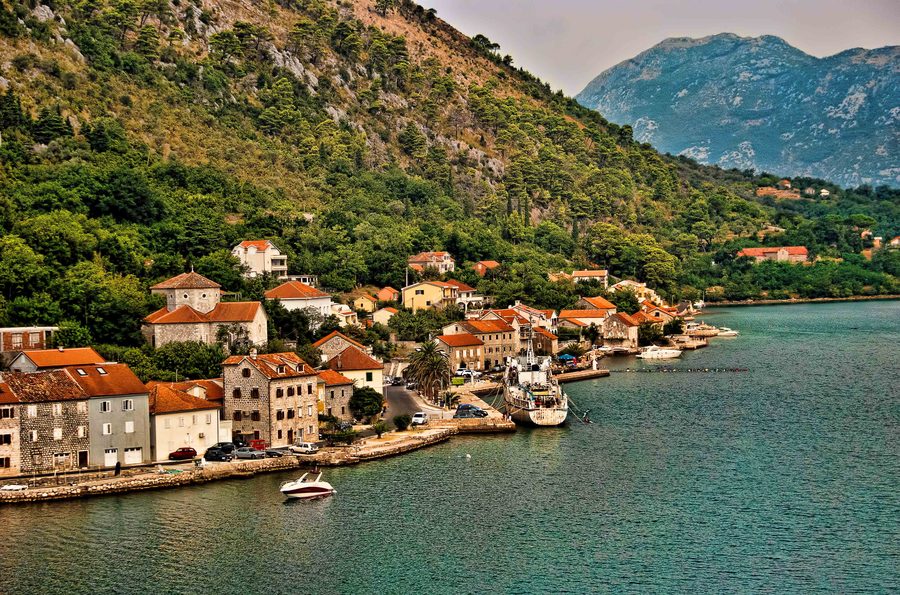
For shared days with different interests, the coast can be a versatile starting idea: water, historic townscapes, and Mediterranean landscapes are closely linked here in the mind’s eye. The Bay of Kotor especially appeals to travelers who want to combine scenery and culture. Kotor, Budva, and other coastal towns are named in the regional overviews as key reference points on this side of Montenegro.
In the north, the character changes noticeably. Durmitor, lakes, forests, and gorges are suitable as guiding themes for a trip where nature observation and movement matter more than seaside promenades. Regional differences are also described in culinary terms: the coast is classified as more Mediterranean in character, while the north is more closely associated with heartier meat dishes. This is an additional impression for curious travelers, not a substitute for choosing according to landscape and travel interests.
Which region suits your travel plan?
A coastal or bay base works well if the holiday is meant to be shaped by the sea, historic places, and Mediterranean landscapes. The destination pages for Bar, Budva, Herceg-Novi, Kotor, Tivat, and Ulcinj provide suitable points of reference for that. Kotor is explicitly linked to the bay, the water, the mountains, and historic settlements; Budva is mentioned as a coastal town in the travel comparison. For the other places, the classification remains deliberately limited to their coastal or bay location.
If you want mountain scenery, lakes, forests, and gorges to be the main focus, you can center the north. This includes Andrijevica, Berane, Bijelo Polje, Kolašin, Mojkovac, Plav, Pljevlja, Plužine, Rožaje, Šavnik, and Žabljak. Žabljak can be especially clearly associated with the Durmitor landscape area; the other places appear as additional northern and mountain-adjacent options.
Central Montenegro is a third option for travelers who do not want to experience the country exclusively from the coast or from the mountains. Cetinje, Danilovgrad, Nikšić, and Podgorica belong to this inland group. Podgorica is classified as the center of the central region. These places are a useful thread for travel planning with a stronger inland focus or as an additional regional chapter.
Choose your accommodation base by the experiences you want
The most important decision is not only coast or mountains, but which landscape area will actually take up the most space in your day-to-day plan. Accommodation on the coast or in a bay supports a travel idea centered on water, historic townscapes, and a Mediterranean setting. A base in the north or near the mountains, on the other hand, directs the stay toward Durmitor, lakes, forests, and gorges.
If both sides are equally important, splitting the trip into several regional priorities is a sensible option. The coast, central Montenegro, and the mountains are described as different experience areas; therefore, a single base should not automatically be seen as the solution for every wish. For families with children of different ages, it may help to decide in advance whether shared days should take place mainly by the water, in historic places, in nature, or in a mix of all three.
Discover Montenegro by region
Start with the landscape image that should shape your trip, and then use the matching destination pages to make the concrete choice. That way, Montenegro remains visible as a diverse country, while the search for accommodation begins where your planned experiences actually lie.


_(9687373142).jpg)