
Discover Ireland
Accommodation in Ireland
Ireland is a destination for families who want to experience the landscape not just as scenery, but together with stories, language, and local life. Along the Atlantic coast, the sea, fishing communities, and island culture come together; in the cities, literature and gastronomy open up different ways of seeing the country. The result is not a single travel picture, but a choice between a coastal itinerary, a cultural city, and a rural discovery.
Ireland at a glance
- The sea, the coasts, and the islands have shaped Irish culture for a long time.
- In Achill Island, Connemara, and western parts of the Dingle Peninsula, Irish can be heard in coastal communities.
- Ireland’s storytelling tradition ranges from folklore and heroic tales to contemporary storytelling in pubs and at festivals.
- Four Nobel Prize winners for literature stand for the island’s exceptional literary heritage.
- Ulster-Scots brings a distinct musical and dance tradition into the travel picture in County Antrim and along the Ards Peninsula.
- Larger cities combine internationally influenced gastronomy with a diverse cultural offering.
- In rural Ireland, traditional, often regional and seasonal produce plays an important culinary role.
- Tourist appeal ranges from cities and the historic east to natural and coastal areas along the Wild Atlantic Way.
Between the Atlantic, language, and landscape
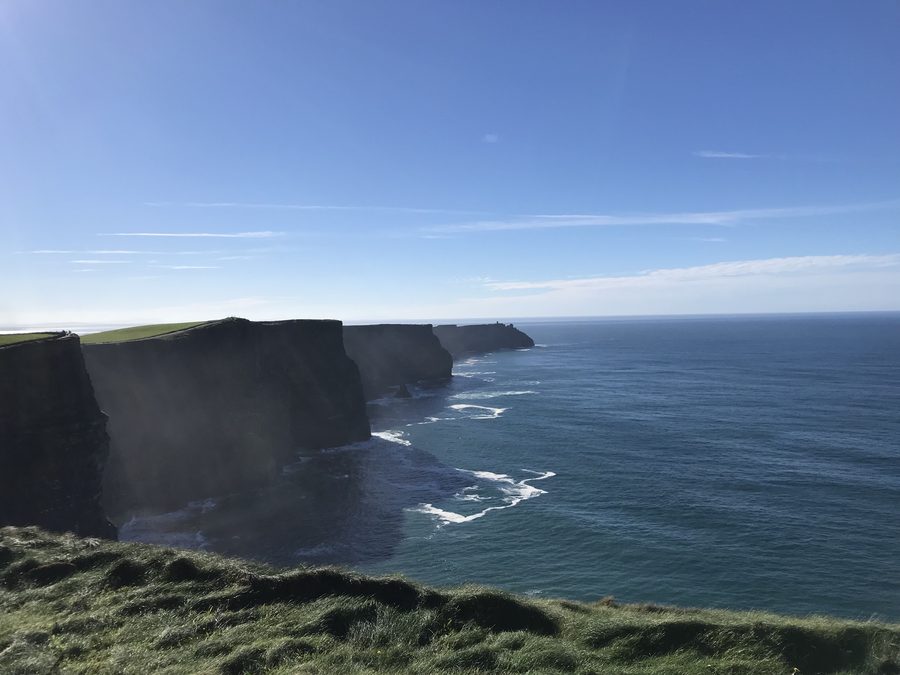
Anyone discovering Ireland through its coast encounters more than striking views. The sea is part of the country’s cultural history: fishing communities, islands, myths, and coastal ways of life belong together. The Cliffs of Moher in County Clare present one impressive cliff landscape, but not the whole country. For shared days filled with sweeping scenery, it is appealing to combine coastal areas with smaller cultural observations.
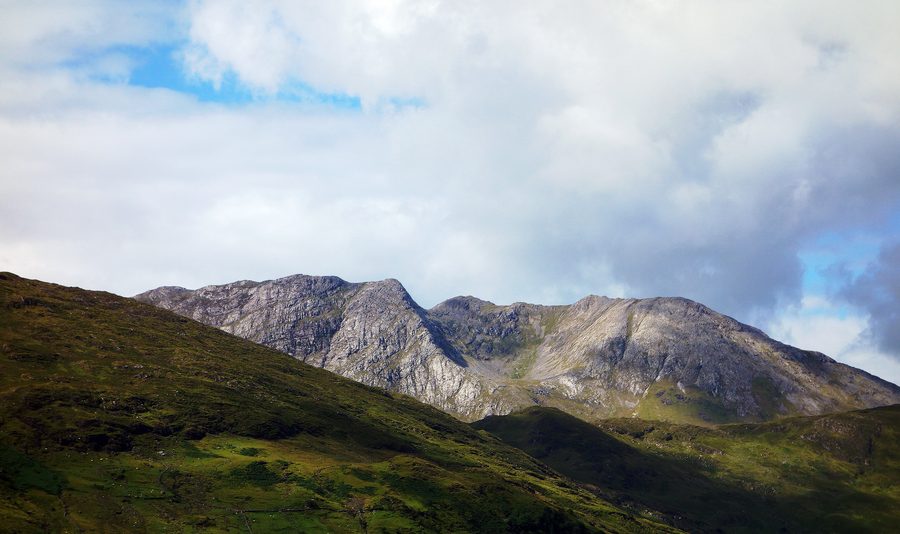
In Connemara and on Achill Island, the link between language and coast becomes especially tangible. Irish can be heard in everyday life in some coastal communities there. Connemara’s landscape therefore stands not only for nature, but also for a distinct regional cultural area.
Stories, literature, and regional culture
Ireland can also be explored through its stories. Folklore and heroic tales are part of this tradition, as are contemporary forms of storytelling in pubs and at festivals. For families, this can be a lovely addition to days spent in nature: a shared conversation about a story or a literary place gives the travel day a different rhythm.
Dublin and the historic east set a cultural accent that you can explore more closely when choosing Leinster. The region can be loosely associated with Dublin, literature, and the literary festival in Kells. In the north, Ulster points to another cultural thread: in Antrim and along the Ards Peninsula, Ulster-Scots lives on in music and dance.
Choose regions according to the travel experience you want
If you are interested in western coastal communities, Connemara, and the connection between landscape and the Irish language, you can take a closer look at Connacht. Munster opens a south-western perspective on the western parts of the Dingle Peninsula and its Gaelic-influenced coastal culture.
For a city-and-literature perspective, Leinster is worth considering. Ulster adds the Ulster-Scots tradition mentioned above in Antrim and on the Ards Peninsula. This allows you to shape the trip around the experience that should take center stage: coastal culture, literature, music, or a blend of landscape and local life.
City, coast, or rural base?
Your accommodation location should follow the main focus of your trip. If literature, history, cultural activities, and restaurants are to make up a large part of your days, staying in or near a cultural city can make sense. For coastal scenery and Gaelic-influenced local culture, it is worth looking more closely at a base in the west or south-west.
Culinarily, the choice of setting can also change the character of the trip: larger cities are associated with internationally influenced gastronomy, while rural cooking more often relies on traditional, regional, and seasonal produce. Anyone who wants to experience both can consciously include city and country days in the travel plan. Before booking, check whether the specific location fits the experiences you actually want to place at the center of your stay.
Frequently asked questions about Ireland
What makes Irish culture tangible on a trip?
The combination of coast, the Irish language, storytelling tradition, and literature makes culture easy to experience in many places. Western coastal communities, stories, and literary references offer different ways to discover it together.
How do city and rural days differ in culinary terms in Ireland?
In larger cities, internationally influenced gastronomy is more prominent. In rural Ireland, cuisine is more often associated with traditional as well as regional and seasonal produce.
Which cultural traces can be discovered in the west, south-west, and north-east?
In the west and south-west, Irish can be heard in certain coastal communities, such as in Connemara and in parts of the Dingle Peninsula. In the north-east, Antrim and the Ards Peninsula point to Ulster-Scots with music and dance traditions.


